
 29959 views
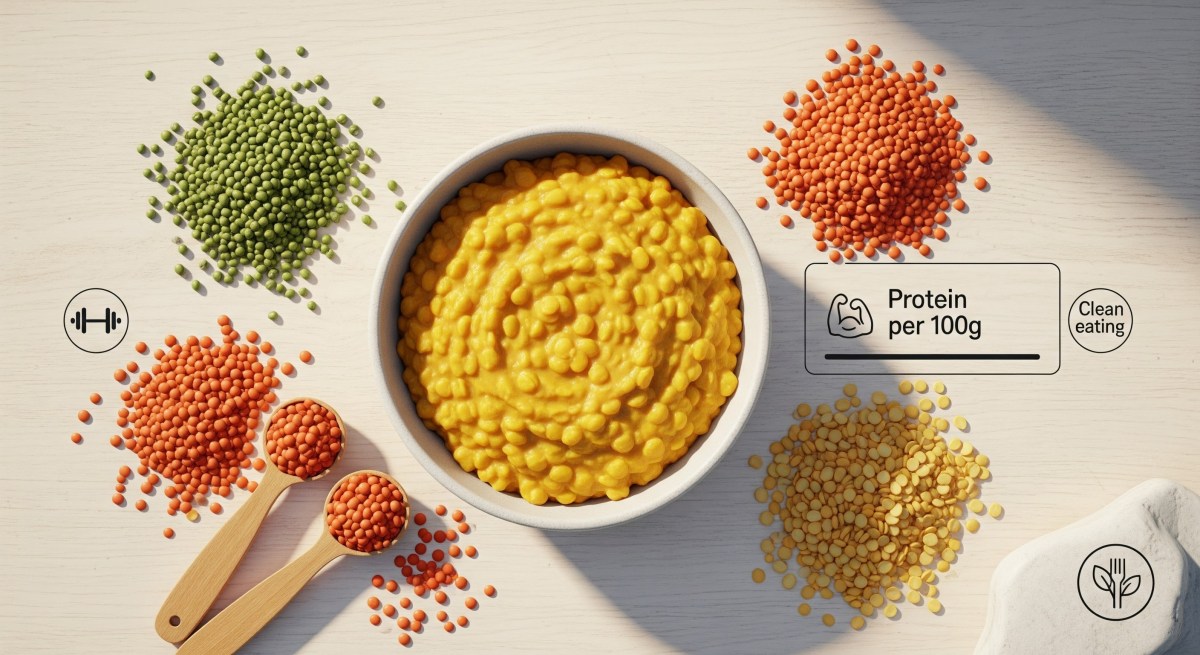
Dal is one of the most important nutritional staples in Indian homes. Whether it’s moong, arhar, masoor, chana, or urad, every family relies on dal as an affordable, everyday source of protein. Yet, when you search ‘how much protein in dal’, the numbers online can get confusing. Some sites quote raw values, some cooked, and some talk about bowls, katoris, or per 100 grams without explaining the difference.
This guide clears all of that up. Here, you’ll get the correct, research-backed numbers for protein in dal per 100g, protein in different types of dal, the difference between raw vs cooked protein, and how much protein is in 1 bowl, 1 katori, moong dal, arhar dal, and more. You’ll also learn which dal is highest in protein, how much dal you should eat daily, and which type is best for weight loss, diabetics, and muscle building.
Let’s begin with the most important question: how much protein is in dal?
Protein in Dal per 100g (Raw vs Cooked)
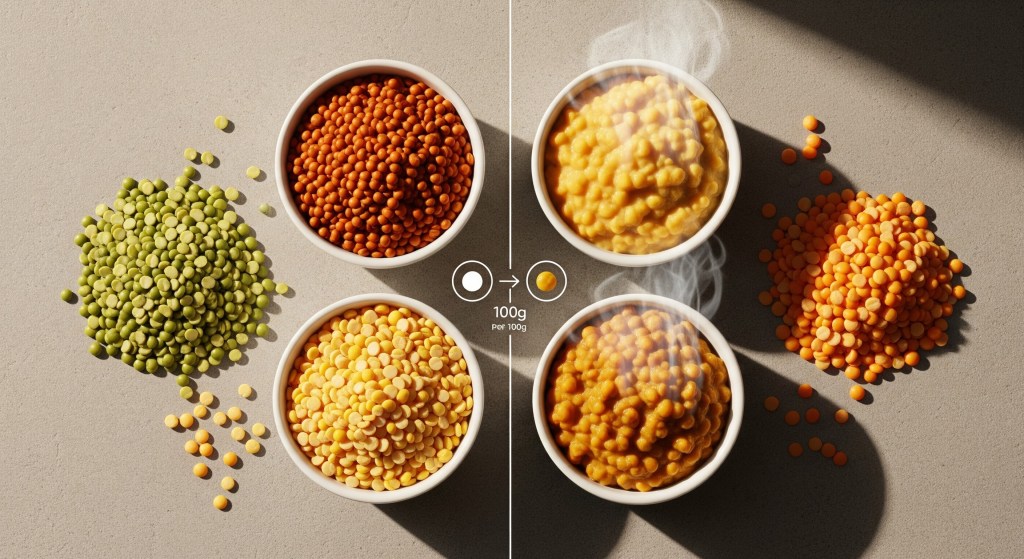
When people search for ‘protein in dal per 100g’ or ‘how much protein in 100 gm dal’, they usually see two very different numbers. That’s because raw dal and cooked dal have completely different weights.
Cooked dal absorbs water and expands 2–3 times, so the protein per 100g cooked becomes much lower; not because protein is lost, but because the weight increases.
Let’s break it down clearly.
Protein in Raw Dal (100g)
Raw dal contains 22–25g of protein per 100g, depending on the dal variety. These high numbers appear because raw dal has no water, making it nutrient-dense on paper. But nobody eats raw dal; this value is mainly useful for food calculations and dal type comparisons.
Protein in Cooked Dal (100g)
Once cooked, dal absorbs water and expands. The protein in dal per 100g cooked, therefore, becomes much lower.
Protein in 100 gm dal (cooked): 7–9g
This is the number that actually matters for daily meals. Important: No protein is destroyed during cooking. It only appears lower due to dilution.
Protein in 1 Bowl Dal (150–200g)
Most Indians eat dal by the bowl, not by weight or cups.
A standard bowl of home-style dal weighs around 150–200g.
Protein in 1 bowl of dal: 10–14g
A thicker dal will have more protein per bowl, while a watery dal will have less protein per bowl because of dilution. This helps settle one of the most frequently asked questions online: exactly how much protein is in 1 bowl of dal?
Protein in One Katori Dal
A katori is smaller than a standard bowl, and it usually holds about 120g of cooked dal. This serving provides roughly 7–9g of protein, depending on the type of dal and how thick it is.
Protein in Moong Dal
Moong dal is one of the easiest dals to digest, which is why it’s commonly recommended during recovery, light eating days, or when you want something gentle on the stomach.
- Protein in moong dal (100g cooked): 7–8g
- Protein in 1 bowl moong dal: 9–12g
- Protein in 100 gm moong dal (raw): ~24g
If you want a simple, nutritious way to include moong dal in your routine, try our Moong Dal Tadka recipe.
Protein in Arhar (Toor) Dal
Arhar dal is one of the most protein-rich dals commonly eaten across India. A cooked 100g serving provides about 8–9g of protein, while a standard bowl (150–200g) offers roughly 12–14g, making it a reliable daily protein source for most households.
Which Dal Is High in Protein? (Ranked Highest to Lowest)
When you compare the major dals eaten across India, their protein content varies slightly. Here’s how they rank after cooking:
- Urad dal – Highest protein (~9g per 100g cooked)
- Arhar/Toor dal – High protein (~8–9g per 100g cooked)
- Chana dal – High protein (~8–9g per 100g cooked)
- Masoor dal – Moderate (~7–8g per 100g cooked)
- Moong dal – Moderate, but the easiest to digest (~7–8g per 100g cooked)
So if you’re specifically looking for the dal with the most protein, urad dal and arhar dal clearly stand at the top.
Complete Nutritional Profile of Dal (Per 100g Cooked)
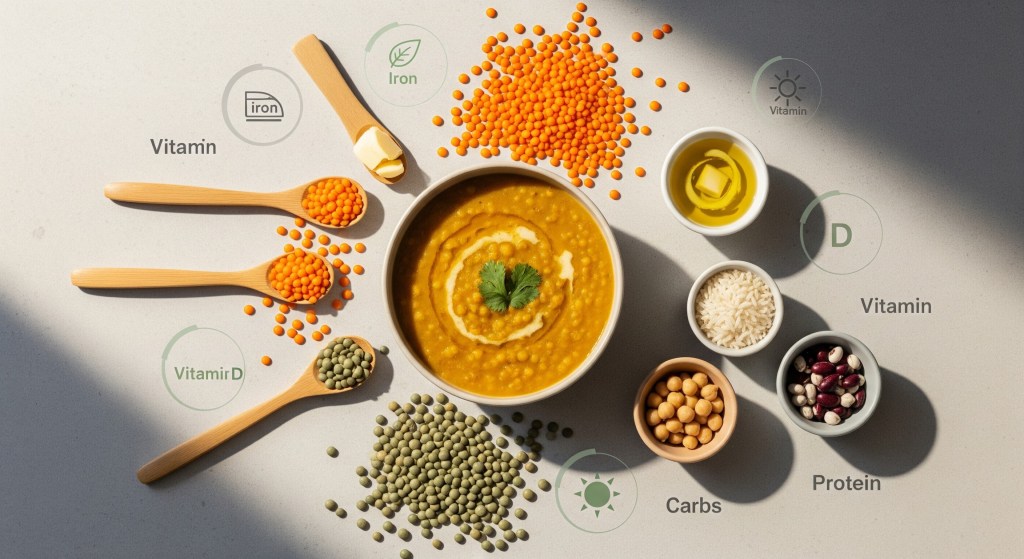
While protein is important, dal is more than just a protein source. It is rich in:
- Dietary fibre (great for digestion)
- Potassium
- Iron
- Folate
- Magnesium
- Plant-based antioxidants
A typical 100g serving of cooked dal has:
| Nutrient | Amount |
| Calories | 110–140 kcal |
| Protein | 7–9g |
| Carbs | 18–20g |
| Fibre | 4–6g |
| Fat | <1g |
This makes dal a balanced, low-fat, high-fibre Indian staple.
Amino Acid Profile & Protein Quality
Dal is a strong vegetarian protein source, but like most legumes, it isn’t a complete protein on its own. It’s naturally high in lysine, an amino acid important for muscle repair, but it falls short in methionine and cysteine, which your body also needs to build proteins efficiently. Because of this, dal has a moderate protein quality rating, with a PDCAAS score of around 0.70–0.78.
The solution is simple: pair dal with foods that complement its amino acid gaps.
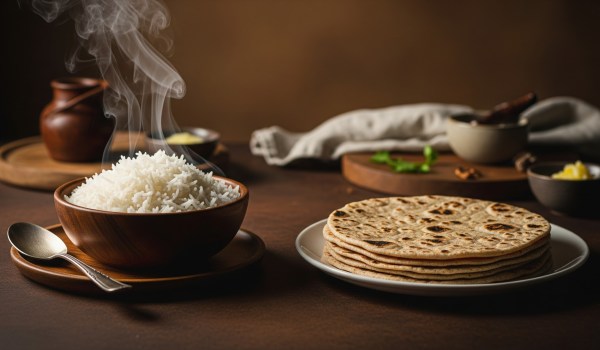
• Rice
• Rotis
• Millets
• Or even paneer or curd if you’re vegetarian and looking to improve overall protein quality
Together, these combinations create a complete, balanced protein that your body can use more effectively.
Science Box: Digestion, Anti-Nutrients & Foaming Explained
Dal can feel heavy or cause gas for some people because it naturally contains oligosaccharides, carbohydrates that ferment in the gut. Soaking the dal for at least an hour (and even longer for chana dal) helps reduce these compounds, making it easier to digest. Pressure cooking further breaks down anti-nutrients like phytates and tannins, improving both softness and nutrient absorption.
Why is Dal foam while cooking:
That layer of foam on top is completely normal. It comes from saponins, harmless plant compounds that create bubbles when heated. You can skim it off, but it doesn’t affect safety or nutrition.
Why dal sometimes won’t soften:
If your dal stays firm no matter how long you cook it, the usual reasons are:
• The dal is old
• You’re using hard water (high in calcium and magnesium)
• The dal wasn’t soaked long enough
All three can slow down softening and increase cooking time.
Is Dal Good for Weight Loss?
Yes, dal is one of the most weight-loss-friendly foods in the Indian diet. It’s low in calories, naturally high in fibre, and provides enough plant protein to keep you full for long stretches. Studies on legumes also show that meals containing dal help reduce hunger at the next meal, which makes it easier to control overall calorie intake. Dal pairs well with both rice and roti as long as portions are sensible.
For the best satiety, choose a thicker dal. Diluted or watery dal lowers the protein in dal per 100g and won’t keep you full for as long.
Is Dal Good for Diabetes? (GI & GL Explained)
Yes, dal is an excellent choice for diabetics because most varieties have a low glycaemic index (GI), meaning they release sugar slowly into your bloodstream. This helps keep post-meal glucose levels stable. For reference:
- Moong dal: GI ~29
- Masoor dal: GI ~25–30
- Arhar/Toor dal: GI ~30–35
Even when you pair dal with a small serving of rice, the overall GI stays moderate because the fibre and protein in dal slow down carbohydrate absorption.
The best dals for diabetics:
• Moong dal: easiest to digest, lowest GI
• Masoor dal: light, quick to cook, stable impact on blood sugar
A simple and safe plate structure is:
1 bowl of dal and 1 small portion of rice or 1 roti, plus vegetables for extra fibre. This combination keeps blood sugar stable while still providing a satisfying, balanced meal.
How Much Dal Should You Eat Daily?
Here’s a practical daily guideline:
- Weight loss: 1 bowl (150–200g cooked
- Muscle gain: 1.5 bowls + additional protein source
- General health: 1 bowl
- Children: ½–1 bowl
- Diabetics: 1 bowl, paired with vegetables to slow glucose rise
Dal can safely be eaten every day.
How to Cook Dal for Best Nutrition
Getting the most nutrition out of dal is less about complicated techniques and more about a few simple habits that improve digestibility, flavour, and protein absorption.
- Soak (recommended for most dals)
Soaking (especially for chana, masoor, and arhar) reduces gas-causing compounds and helps the dal cook faster and soften evenly. - Pressure cook or boil thoroughly
Dal needs enough heat and time to break down anti-nutrients and become easy to digest.
• Pressure cook: 2–4 whistles, depending on the dal
• Boil: 20–40 minutes
Avoid undercooking, as it makes dal harder to digest and lowers nutrient availability. - Add digestion-friendly spices
Spices like hing, ginger, jeera, and ajwain help reduce bloating and make dal lighter on the stomach, without changing its protein content. - Add salt at the right stage
Adding salt too early can tighten the dal’s outer layer and slow softening. Add it midway or towards the end of cooking for the best texture. - Avoid over-diluting dal
Very watery dal lowers the protein in dal per 100g and won’t keep you full for long. A thicker consistency provides better satiety and maintains the protein density of your serving.
Portion & Protein Table
| Serving Size | Protein |
| 50g dry dal | 11–12g |
| 100g dry dal | 22–25g |
| 100g cooked dal | 7–9g |
| 1 katori cooked dal | 7–9g |
| 1 bowl cooked dal | 10–14g |
| 1 plate dal-chawal | 12–16g |
Conclusion
Dal isn’t just comfort food; it’s a balanced, affordable, nutrient-dense staple that provides solid plant protein, fibre, and essential minerals. While raw dal looks high in protein on paper, the numbers that matter are the cooked values: 7–9g per 100g and 10–14g per bowl, depending on the type of dal and thickness.
Whether your goal is weight loss, diabetes control, general health, or muscle gain, dal fits easily into a healthy routine.
Want to check calories and macros for various dal dishes or any other Indian food?
Try the Alpha Coach Food Calorie Calculator, our web-based, free tool for thousands of Indian dishes.
 6
6






Leave a Reply