
 10675 views
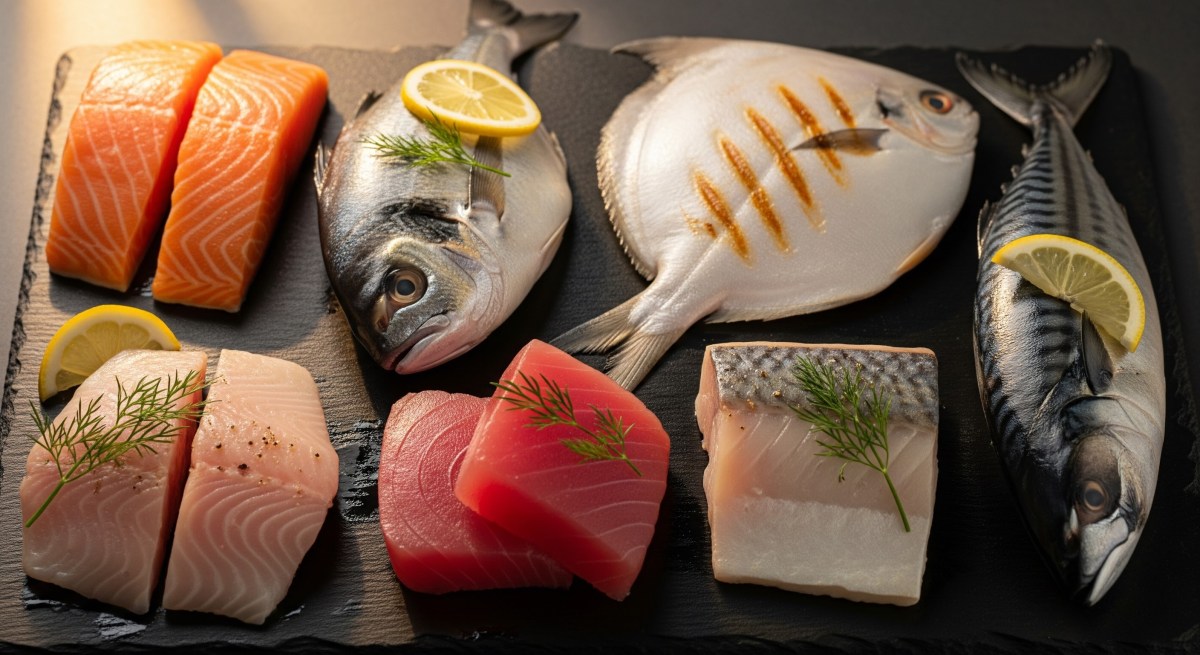
Fish is widely considered one of the healthiest sources of protein. From traditional fish curries to grilled fillets and fitness diets, fish is often recommended for its lean protein and overall nutrition. Yet when people search for protein in fish, the numbers they find online can vary widely, leading to confusion.
The main reason is that fish is not a single food. Different fish types contain different amounts of protein. Lean fish like tuna or cod are naturally higher in protein per 100g, while fatty fish like salmon or mackerel contain slightly less protein but more healthy fats. On top of that, protein values are quoted per 100g, per serving, or per kilogram, without explaining how cooking affects weight.
Many people also wonder whether fish really contains enough protein to support weight loss or muscle building, or which fish is the highest in protein. Without context, these questions are hard to answer clearly.
This article simplifies everything. You’ll get clear, research-backed answers for protein in fish per 100g, fish protein content across common fish types, which fish are high in protein, and how much protein you actually get from real-world portions and meals.
Protein in Fish per 100g
When people ask “how much protein in fish,” they are usually looking for a simple number. The most practical way to compare fish is by looking at the protein in fish per 100g, which allows for easy comparison across different types.
How Much Protein in Fish per 100g?
On average, most fish provide 18–25 grams of protein per 100g. This range exists because different fish have varying amounts of fat and water.
- Lean fish tend to be at the higher end of this range
- Fatty fish are slightly lower in protein per 100g because a greater proportion of their weight comes from fat
So when you see protein in 100g of fish listed online, the exact number depends heavily on the type of fish being measured.
This means that protein in fish per 100g typically ranges from about 18–25 grams, with the exact amount varying depending on the type of fish.
Why Protein Content Varies Between Fish Types
Fish muscle structure, fat content, and water retention all influence protein concentration. Lean fish have tightly packed muscle fibres with very little fat, which results in a higher protein density per 100g. Fatty fish, on the other hand, store more energy as fat, slightly reducing protein concentration by weight.
This does not make fatty fish inferior. They simply trade a small amount of protein density for beneficial fats like omega-3s, which support heart and metabolic health.
Cooking also affects how protein values appear. When fish is cooked, water is lost, and the flesh becomes denser. As a result, cooked fish often shows more protein per 100g than raw fish, even though no protein is actually lost during cooking.
Understanding this explains why fish protein content can look inconsistent across sources and why comparisons only make sense when the fish type and preparation method are clearly defined.
High Protein Fish: Which Fish Has the Most Protein?
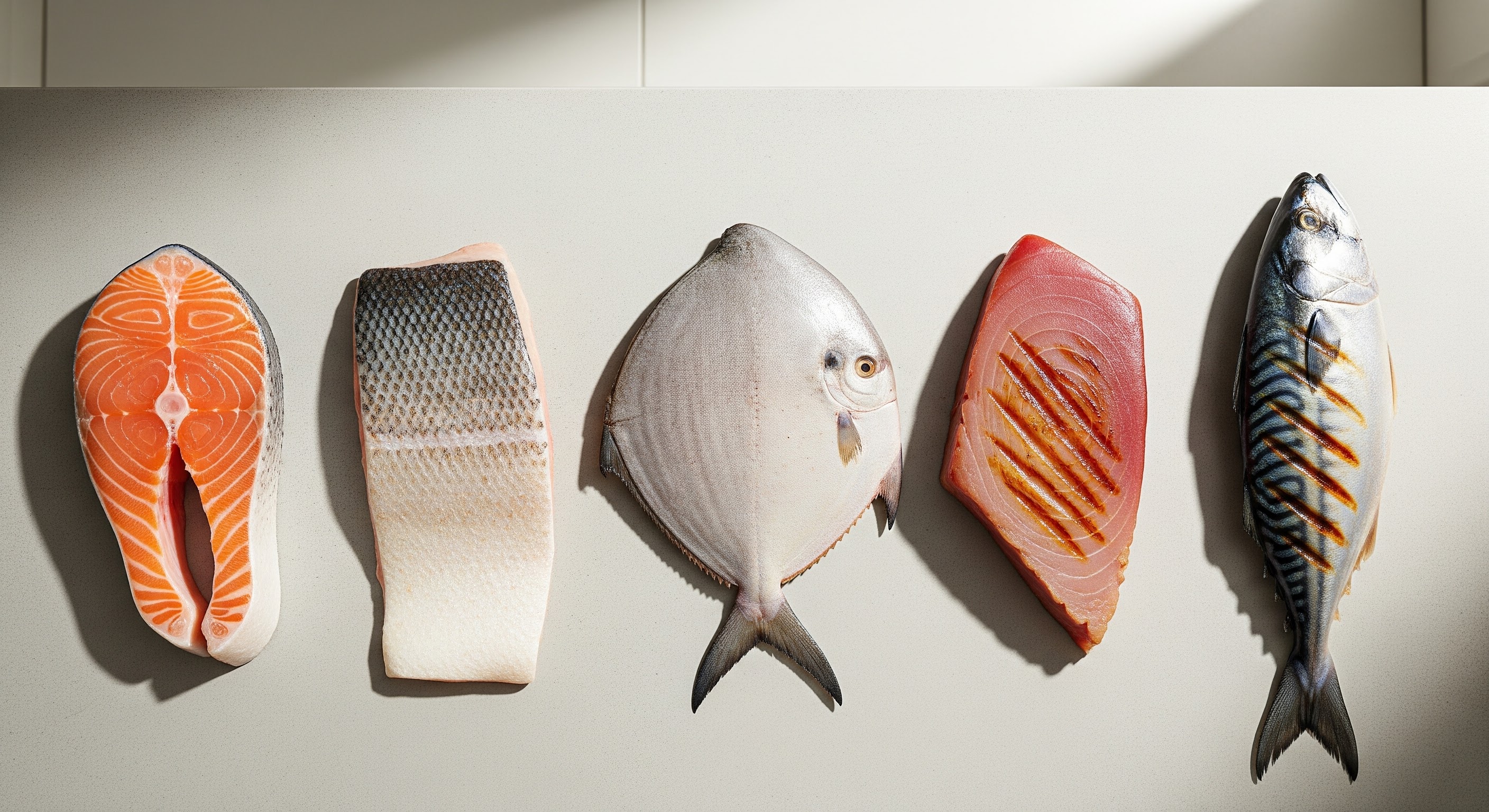
Not all fish provide the same amount of protein. If your goal is to maximise protein intake, choosing the right fish type makes a real difference.
Lean Fish (Highest Protein per 100g)
Lean fish generally offer the highest protein density because they contain very little fat.
Examples of high protein fish include:
• Tuna – ~24–26g protein per 100g
• Rohu – ~22–24g protein per 100g
• Cod – ~20–22g protein per 100g
• Basa – ~18–20g protein per 100g
These fish are ideal if you’re specifically looking for protein-rich fish with fewer calories.
Fatty Fish
Fatty fish contain slightly less protein per 100g but provide valuable healthy fats.
Common examples include:
• Salmon – ~20–22g protein per 100g
• Mackerel – ~18–20g protein per 100g
• Sardines – ~19–21g protein per 100g
While their protein density is slightly lower, fatty fish are rich in omega-3 fatty acids that support heart, brain, and metabolic health.
What to Choose?
If your priority is maximum protein per calorie, lean fish are the better option. If your goal is overall nutrition and long-term health, fatty fish deserve a regular place in your diet.
Protein Content of Common Fish Types (Per 100g)
To make comparisons easier, here’s a clear overview of protein in fish per 100g (raw) for commonly eaten fish.
Protein in Fish per 100g
| Fish Type | Protein (g) | Calories (kcal) | Fat (g) |
| Rohu | ~22–24 | ~110–120 | ~2–3 |
| Tuna | ~24–26 | ~120–130 | ~1–2 |
| Salmon | ~20–22 | ~200–210 | ~13–14 |
| Pomfret | ~18–20 | ~115–125 | ~3–4 |
| Mackerel | ~18–20 | ~185–195 | ~13–15 |
| Sardine | ~19–21 | ~200 | ~11–13 |
| Basa | ~18–20 | ~90–100 | ~2–3 |
Values are approximate and can vary based on species, freshness, and preparation.
How to Use This Table
- Compare the protein in fish per 100g across fish types
- Identify high-protein fish for weight loss or muscle gain
- Balance protein intake with calories and fat based on your goal
Lean fish maximise protein density, while fatty fish offer added nutritional benefits beyond protein alone.
How Much Protein in 1 kg of Fish? (Raw vs Cooked)
A common question is how much protein you actually get from a larger quantity of fish, especially when buying or cooking in bulk.
How Much Protein in 1 kg of Fish?
On average, 1 kg of raw fish provides about 180–250 grams of protein, depending on the type of fish. Lean fish fall at the higher end of this range, while fatty fish are slightly lower because more of their weight comes from fat.
This means:
• 1 kg lean fish: ~220–250g protein
• 1 kg fatty fish: ~180–220g protein
Raw vs Cooked Fish: Does Protein Change?
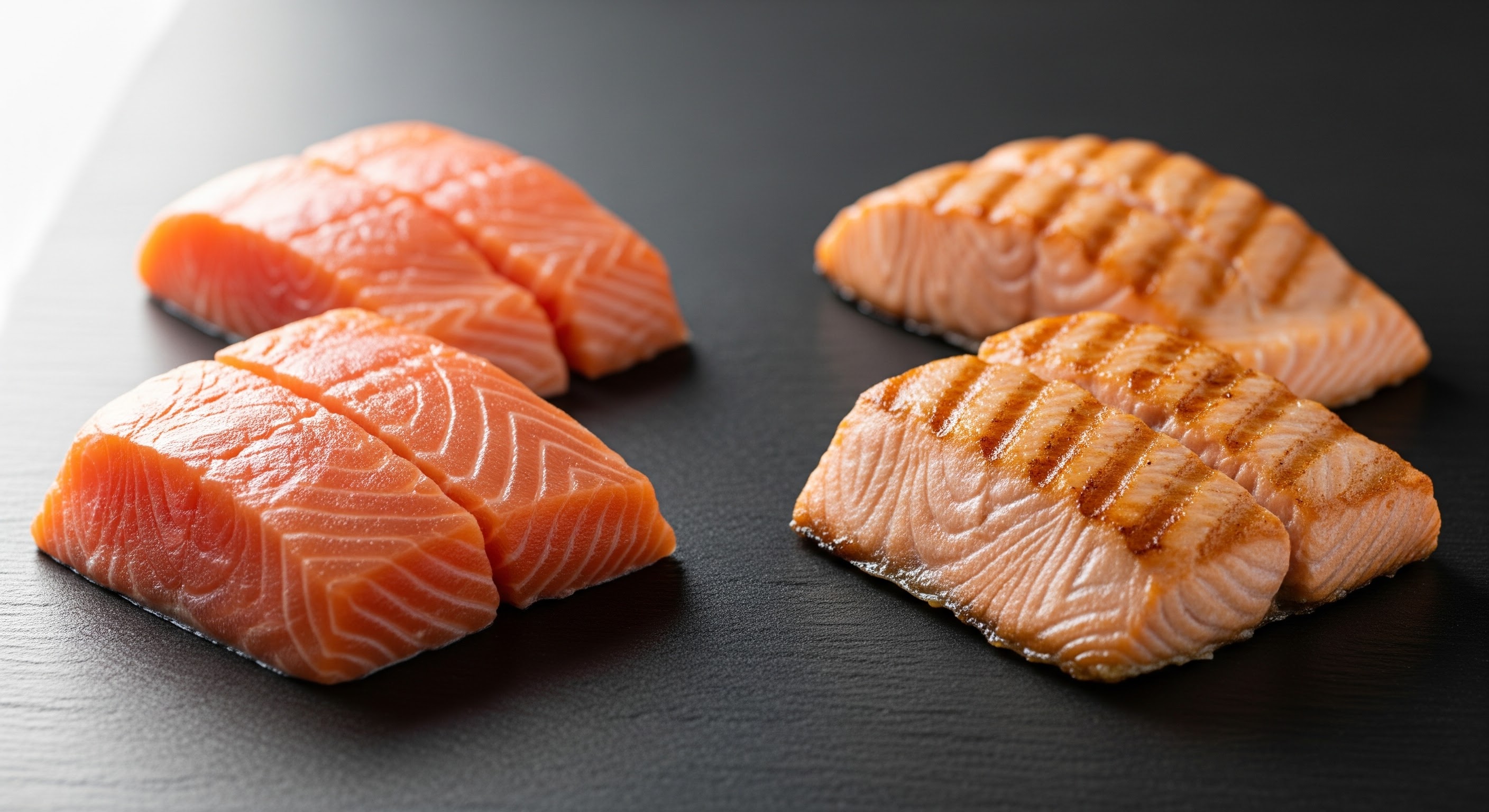
Cooking fish does not destroy protein. What changes is the weight.
When fish is cooked, it loses water and becomes denser. As a result, cooked fish often appears to contain more protein per 100g than raw fish, even though the total protein in the fish remains the same.
So whether you measure raw or cooked, the absolute protein from 1 kg of fish stays unchanged; only the concentration per 100g shifts.
Protein in Fish by Portion Size
Most people don’t eat fish by the kilogram. They eat it in portions. While 100g is the standard reference size used in nutrition databases and food labels, it is not how fish is typically consumed in real meals. That’s why understanding portion sizes makes protein intake much easier to plan.
How Much Protein in Fish?
A standard serving of cooked fish usually weighs 150–200g, depending on preparation and appetite.
- Protein in a 150g serving: ~27–45g
- Protein in a 200g serving: ~36–50g
The exact number depends on:
• The type of fish (lean vs fatty)
• How much water is lost during cooking
Lean fish fall at the higher end of this range, while fatty fish provide slightly less protein per gram but more calories from fat.
Fish Curry vs Grilled Fish
Preparation style matters for calories, but protein stays similar.
- Grilled or pan-seared fish: predictable protein, lower calories
- Fish curry: similar protein, but higher calories due to oil and gravy
If protein intake is your priority, portion size matters more than the cooking style.
Protein Quality of Fish
Fish is not just a protein source; it is a high-quality protein.
Is Fish a Complete Protein?
Yes. Fish contains all nine essential amino acids, making it a complete protein that supports muscle repair, recovery, and overall health.
Why Fish Protein Is Highly Utilisable
Fish protein scores high on protein quality measures such as PDCAAS and DIAAS, which assess amino acid completeness and digestibility.
In practical terms, this means:
• Fish protein is easy to digest
• A high proportion is absorbed
• Smaller portions can deliver meaningful protein benefits
This makes fish an excellent protein choice for:
• Muscle gain
• Weight management
• Recovery and general health
Is Fish a Good Protein Source for Different Goals?
Fish fits well into many diets, but the type and portion should match your goal.
Fish for Weight Loss
Lean fish are ideal for weight loss because they provide protein with fewer calories. They help increase satiety while keeping energy intake controlled.
Fish for Muscle Gain
Both lean and fatty fish work well for muscle gain. Lean fish maximise protein intake, while fatty fish add calories and omega-3 fats that support recovery.
Fish for General Health
For general health, a mix of lean and fatty fish works best. This provides protein along with healthy fats, vitamins, and minerals that support long-term wellbeing.
100g vs Portion Size: What Matters More?
- 100g is best for comparing different fish objectively
- 150–200g is more useful for planning meals and protein intake
Both are important. Using per-100g values helps you choose the right fish, while portion-based numbers help you understand how much protein you’re actually eating.
The cooking method mainly affects calories, not protein. Grilled fish stays lean, while fish curry delivers similar protein with extra calories from oil and gravy.
How Much Fish Should You Eat Daily?
How much fish you should eat depends on your overall protein needs, calorie targets, and the type of fish you choose. For most people, fish can be eaten regularly as part of a balanced diet.
Practical Daily Guidelines
- General health:
100–200g of cooked fish per day fits well into a balanced diet and contributes meaningful protein along with micronutrients. - Weight loss:
Lean fish in the 150–200g range helps increase protein intake while keeping calories controlled. - Muscle gain / active individuals:
200–250g of fish per day can support higher protein requirements, often paired with other protein sources. - Fatty fish intake:
Fatty fish like salmon or mackerel can be included 2–3 times per week to benefit from omega-3 fats, even if lean fish is used on other days.
The key is variety, and mixing lean and fatty fish across the week helps balance protein intake, calories, and overall nutrition.
Conclusion
Fish is a reliable, high-quality protein source that fits easily into a healthy diet. While protein in fish per 100g typically ranges from 18–25 grams, the exact number depends on the type of fish and how it’s prepared. Lean fish offer more protein per calorie, while fatty fish trade a small amount of protein density for healthy fats that support overall health.
For most people, the best approach is variety by using lean fish to meet protein goals and including fatty fish regularly for their additional nutritional benefits. When portion sizes are sensible and preparation is simple, fish can be a consistent and effective way to meet daily protein needs.
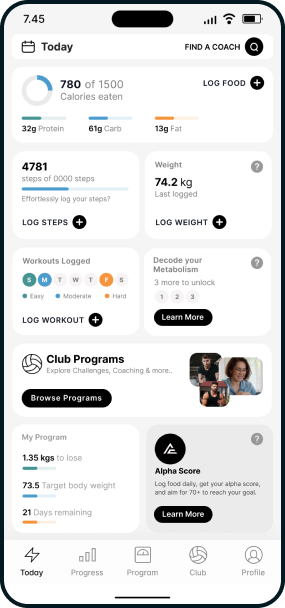
If you want an easy way to track protein and calories across different fish types and meals, the Alpha Coach App can help you apply this information accurately in daily life.
FAQs
- Egg White vs Whole Egg: Protein, Calories & Nutrition Breakdown
- Protein in Chicken: How Much Protein in 100g
- Healthy Party Snacks for Wedding Season: Festive foods
- How Much Protein is in Rajma Per 100g? Nutrition Facts
Disclaimer: The information provided in this blog is for informational purposes only. It is curated from authentic and trusted sources across the web, along with my own subject knowledge. I am not a certified nutritionist, dietitian, or medical professional. Therefore, I recommend consulting a qualified health coach or medical expert before making any significant changes to your diet or lifestyle.
 1
1













Leave a Reply