

 3918 views
Chickpeas (chana) are one of the most commonly eaten foods in Indian diets. From chole and kala chana curry to boiled chana salads and roasted chana snacks, chickpeas are everywhere. Because they’re filling and plant-based, many people assume chickpeas are a high-protein food.
Chickpeas have earned their reputation because they sit at the intersection of health, affordability, and tradition. In many Indian homes, adding chole or kala chana to a meal feels like an automatic upgrade: more filling, more nutritious, and assumed to be higher in protein. This belief is reinforced by diet charts, gym meal plans, and even casual advice that suggests “just eat chana” if you don’t eat meat.
This leads to very common questions online, like:
- How much protein do chickpeas have?
- Protein in chickpeas per 100g
- Are chickpeas high in protein?
That’s why understanding protein in chickpeas requires moving beyond labels and looking at exact quantities, real serving sizes, and how chickpeas fit into a full day of eating and not just one meal.
How Much Protein Do Chickpeas Have per 100g?
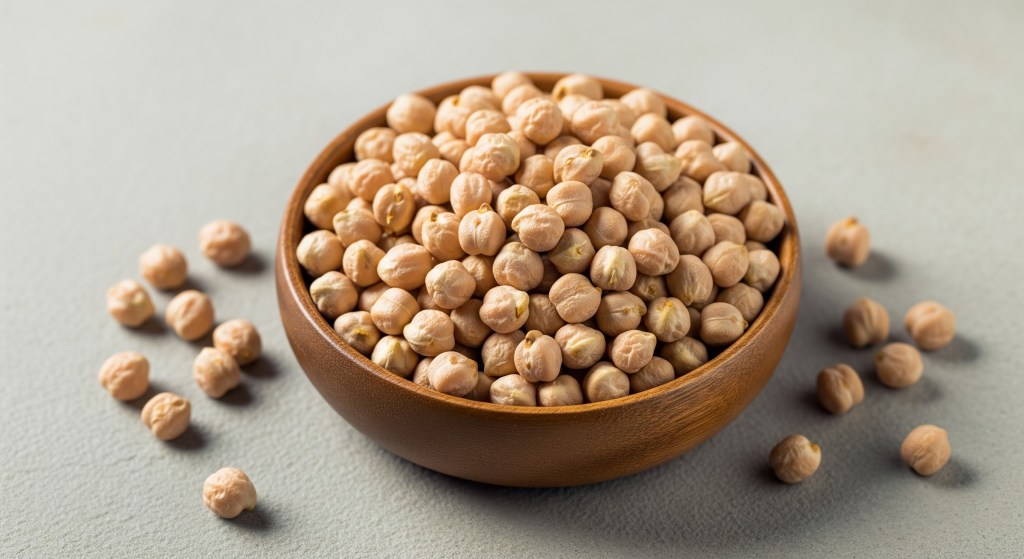
Protein in chickpeas per 100g (dry/raw)
Protein in chickpeas per 100g (dry/raw) is approximately 19–21 grams. Read about the nutritional value and macronutrient composition of chickpeas here.
This answers the most searched variations that we have seen being asked, like: how much protein in chickpeas, how much protein do chickpeas have, protein in 100 gm chickpeas
This value refers to dry chickpeas before soaking or cooking.
Protein in 100 gm chickpeas (cooked/boiled)
After soaking and boiling, chickpeas absorb water and become heavier. Because of this, the protein in cooked chickpeas per 100g looks much lower.
On average:
- Protein in boiled chickpeas per 100g is around 8–9 grams
- Protein in cooked chickpeas per 100g appears lower due to water absorption.
This does not mean protein is lost.
Nutrition Snapshot: Chickpeas per 100g
Per 100g dry chickpeas, you get approximately:
- Protein: 19–21 g
- Calories: 360–370 kcal
- Carbohydrates: ~60 g
- Fat: ~5–6 g
- Fibre: ~15–17 g
Are Chickpeas a Carb or a Protein?
This is one of the most misunderstood topics.
Chickpeas are best described as a carbohydrate-rich food with meaningful protein and very high fibre. While they do provide protein, the majority of their calories come from carbohydrates. This is why chickpeas are so filling and satisfying, but also why they cannot be relied on as a primary protein source in higher-protein diets.
Understanding this distinction helps set realistic expectations. Chickpeas can improve protein intake compared to rice or roti alone, but they do not function like paneer, eggs, tofu, or soy-based foods. When you view chickpeas in the right category, it becomes much easier to use them effectively instead of assuming they “cover” protein needs automatically.
They are not a pure protein source, and this clarification alone helps answer: ‘are chickpeas carbs or protein’ or ‘are chickpeas high in protein.’
Are Chickpeas High in Protein Compared to Other Plant Foods?
Yes, but with context.
Compared to rice or roti, chickpeas are much higher in protein. Compared to other legumes like rajma or lentils, chickpeas are similar. Compared to soybeans or soya chunks, chickpeas are much lower.
This is why chickpeas are best described as moderate-protein, high-fibre foods and not high-protein foods.
Kala Chana vs Kabuli Chana: Protein per 100g
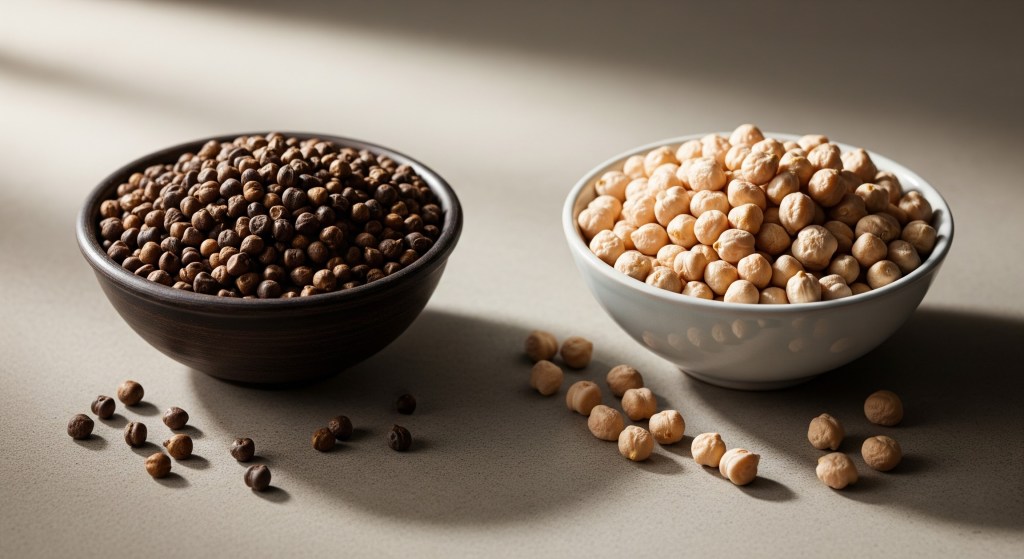
A common question people look up is whether kala chana protein per 100g is different from kabuli chana protein per 100g.
From a protein standpoint, the difference is minimal. Kala chana protein per 100g (dry) is almost the same as kabuli chana protein per 100g, with no meaningful advantage for either when measured purely on protein content.
Where kala chana does differ slightly is in fibre. It tends to be higher in fibre and therefore feels more filling and heavier for many people. Kabuli chana, on the other hand, is softer and often easier to digest in larger portions.
Because the protein difference is small and not decisive, choosing between kala chana and kabuli chana should come down to digestion, portion tolerance, and how you like to include them in meals.
Protein in Cooked vs Raw Chickpeas
Many people search for protein in cooked chickpeas, protein in boiled chickpeas, or protein in chickpeas after cooking, and the confusion usually comes from how cooking changes weight.
The confusion around protein in cooked chickpeas usually comes from how nutrition labels work. Protein values are almost always listed per 100 grams by weight, not per serving or per ingredient used.
When chickpeas are soaked and boiled, they absorb a large amount of water and increase significantly in weight. For example, 50 grams of dry chickpeas can easily turn into a large cooked portion. When you then look at protein per 100g cooked chickpeas, the number appears lower because water has increased the weight and not because protein has disappeared.
This is why dry weight is the anchor point when estimating protein intake. The total protein you consume depends on how many dry chickpeas you started with, regardless of how large they look after cooking. This distinction alone explains why many people feel they are eating enough protein but still fall short.
How Much Protein Do You Get From a Serving of Chickpeas?
People don’t usually measure chickpeas in dry grams. Instead, they ask questions like how much protein chickpeas have in a bowl or how much protein chickpeas have per serving.
Here’s what typical portions look like in real life:
- 50g dry chickpeas (before soaking) → approximately 9–10g protein
• 1 bowl cooked chickpeas → approximately 7–8g protein
• 1 cup cooked chickpeas → approximately 14–15g protein
This is where most people tend to overestimate their protein intake. A cooked bowl of chickpeas may look large and filling, but the actual protein contribution is moderate unless the dry quantity used is higher.
Understanding serving sizes makes chickpeas far more effective to use in a balanced, protein-aware diet.
Protein in Roasted Chickpeas
A very common snack query is around the ‘protein in roasted chickpeas’
or ‘Do roasted chickpeas have more protein?’
Roasted chickpeas do not provide protein. Water loss makes the protein per 100g of roasted chickpeas look higher, but calories per 100g also increase. Portion control still matters.
Chickpeas for Muscle Gain
People often search whether chickpeas for muscle gain are effective or ask if chickpeas are good for bodybuilding as a primary protein source.
Chickpeas can certainly contribute to overall protein intake, but they are not sufficient on their own for muscle gain. The protein density is relatively low, which means very large portions would be required to meet higher protein targets. This also brings along a high carbohydrate load, which may not suit everyone’s goals.
For best results, chickpeas work well when paired with higher-protein foods such as curd, paneer, eggs, tofu, or other protein-rich options, depending on dietary preference. When used this way, they support muscle-building diets without being relied on as the sole protein source.
Chickpeas for Weight Loss
Many people look up ‘are chickpeas good for weight loss’ or search for ‘chickpeas protein for weight loss’ when trying to plan meals.
Chickpeas can support weight loss because they are high in fibre and quite filling, which helps control hunger and reduce overeating. However, portion size still matters. Chickpeas are carbohydrate-rich, so eating them in very large quantities can push calories higher than intended.
Best ways to include chickpeas for weight loss:
• Boiled chickpeas
• Kala chana salad with minimal oil
Less ideal options:
• Deep-fried chickpeas
• Oil-heavy chole or gravies
Do Chickpeas Cause Gas or Bloating?
It’s very common for people to ask, ‘Do chickpeas cause gas?’ or complain about ‘chickpea bloating’, especially when they start eating them more regularly.
Yes, chickpeas can cause gas or bloating in some people, particularly if they are not soaked long enough, not cooked thoroughly, or eaten in large portions. Chickpeas are high in fibre and contain certain carbohydrates that ferment in the gut.
Simple steps like soaking chickpeas overnight, cooking them well, starting with smaller portions, and using digestive spices can usually reduce or prevent bloating.
Chickpeas vs Dal vs Rice/Roti
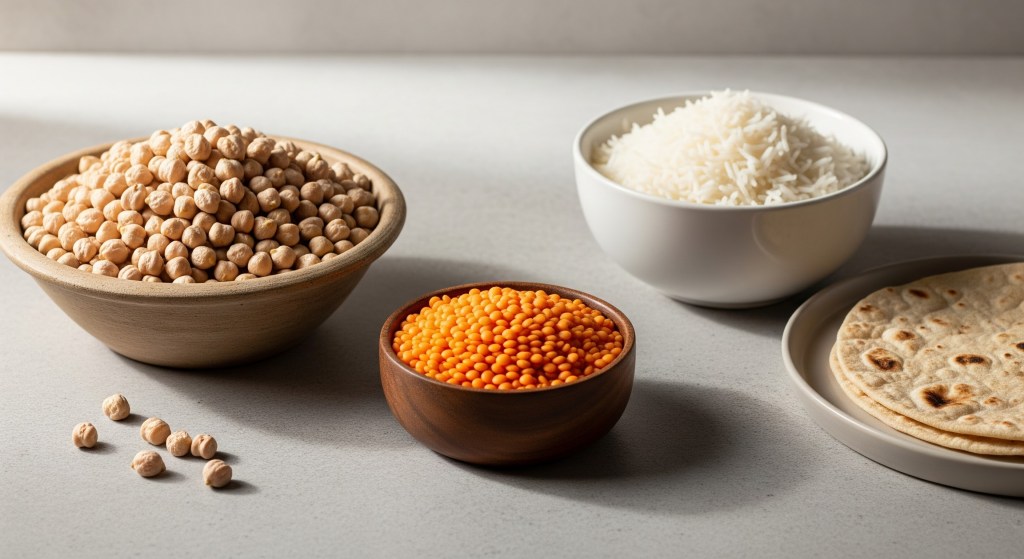
This answers implicit Indian diet questions. Chickpeas are an upgrade over rice or roti alone, but they do not replace a dedicated protein source. Dal and chickpeas both have roles and can be rotated.
Chickpeas are a nutritious source of plant-based protein, but including a variety of protein-rich foods can help you build a more balanced diet. Besides chickpeas, you can also explore watermelon seed paneer, a unique dairy-free option that provides plant-based protein, healthy fats, and essential minerals. Learn more about the benefits of watermelon seed paneer.
Protein per 100g vs Real Daily Intake
Looking at protein per 100g is useful, but it rarely reflects how people actually eat. Most Indian meals combine multiple ingredients, cooked together, served in varying portions, and eaten without weighing.
A typical plate may include roti, rice, vegetables, dal, and some chickpeas. On paper, this sounds protein-rich. In reality, most of the plate is carbohydrates and water weight, with protein contributing a smaller share than expected.
This gap between perceived intake and actual intake is one of the most common reasons people plateau. Translating protein numbers into real meals and then into a full day of eating is what creates clarity and consistent results.
Data Transparency Note
Nutrition values are approximate and vary by variety, preparation method, and cooked weight. Always distinguish between dry and cooked quantities when estimating protein intake.
Making Chickpeas Work for Your Goals
Chickpeas are nutritious, filling, and versatile. They provide protein, but not as much as most people assume. When you understand how much protein chickpeas actually have, how cooking changes the numbers, and how large your portions really are, chickpeas become far more useful in a balanced diet.
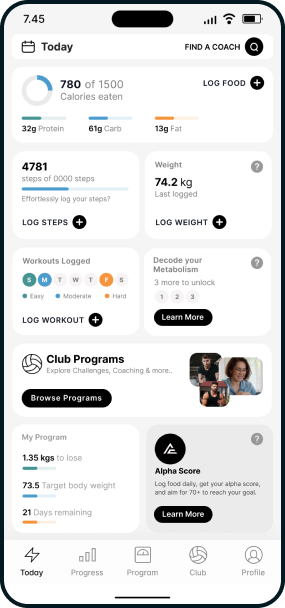
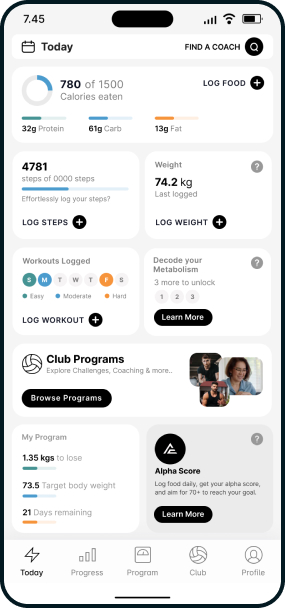
To remove guesswork and track real protein intake from Indian foods, use the Alpha Coach Food Calorie Calculator and make food decisions that actually support your goals.
FAQs
 2
2







Leave a Reply