
 4650 views
Why Protein in Chicken Numbers Is So Confusing
Chicken is one of the most commonly eaten protein sources in India. From daily home meals to gym diets and weight-loss plans, chicken is often treated as the “default” protein. Yet when people search for protein in chicken, the numbers online can feel wildly inconsistent. Some sources say 22 grams per 100g, others say 30+ grams. Some talk about raw chicken, others about cooked. Some mention chicken breast, while others quote values for mixed cuts.
The confusion usually comes from three things.
First, raw and cooked chicken are measured very differently. Cooking changes weight, not protein.
Second, different cuts of chicken have very different protein and calorie profiles.
Third, most people don’t eat chicken by the gram; they eat portions like 200g, 250g, or an entire plate.
This guide clears all of that up.
Here, you’ll find clear, practical answers to how much protein is in chicken per 100g, how much protein is in chicken breast, boiled chicken, 200g, 250g, and even 1kg of chicken. You’ll also see calorie values, macronutrients, and how chicken fits into goals like weight loss, muscle gain, and diabetes control.
Let’s start with the most important distinction: raw vs cooked chicken.
Protein in Chicken per 100g (Raw vs Cooked)

When people search for protein in 100g of chicken or how much protein is in 100 g of chicken, they often see two very different numbers. This difference exists because raw chicken and cooked chicken weigh very differently.
Protein in Raw Chicken
Raw chicken contains a large amount of water. Because of this, its protein content per 100g appears lower on paper.
On average:
• Protein in raw chicken per 100g: ~20–22g, depending on the cut
These values are useful for food industry calculations and comparisons, but they don’t reflect what you actually eat. Nobody consumes raw chicken.
Protein in Cooked Chicken
Once chicken is cooked, it loses water and becomes more protein-dense by weight. Importantly, no protein is destroyed during cooking. The protein simply becomes concentrated because the meat shrinks.
On average:
• Protein in cooked chicken per 100g: ~24–32g
The exact number depends on:
• The cut (breast vs thigh)
• The cooking method (boiled, grilled, roasted)
• How much moisture is retained
This means cooked chicken will always show more protein per 100g than raw chicken.
Protein in Boiled Chicken
Boiled chicken is one of the most commonly recommended options for fat loss, medical diets, and clean eating. But many people wonder whether boiling affects protein content.
How Much Protein in Boiled Chicken per 100g?
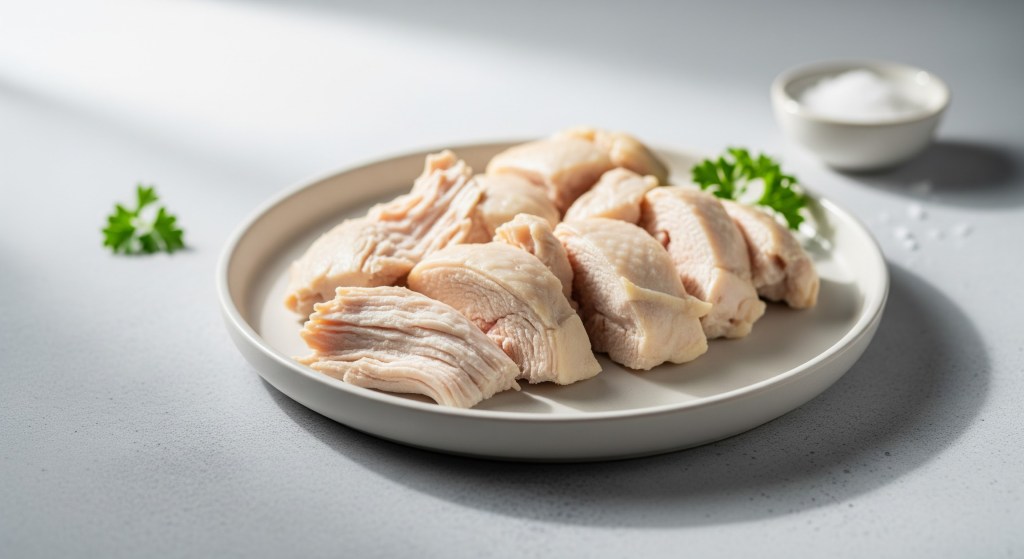
Boiling chicken does not reduce its protein content. Like other cooking methods, boiling mainly changes water content and fat loss, not protein.
On average:
• Protein in boiled chicken per 100g: ~26–30g, depending on the cut
Chicken breast remains the highest-protein option even when boiled, while thighs remain slightly lower due to higher fat content.
Does Boiling Reduce Protein in Chicken?
No. Protein does not “leach out” into water in any meaningful amount. The structure of protein may change with heat, but the total protein remains intact and fully usable by the body.
What boiling does:
• Reduces added fat (no oil needed)
• Keeps calories predictable
• Makes portion control easier
This is why boiled chicken is commonly used in weight-loss and clinical nutrition plans, though the total protein stays the same. For everyday eating and tracking, cooked values are the numbers that actually matter, because that’s how chicken is consumed.
Protein in Chicken by Cut (Breast vs Thigh)
Not all chicken cuts are nutritionally the same. The protein and calorie content of chicken varies significantly depending on which part you eat.
Protein in Chicken Breast
Chicken breast is the highest-protein and leanest cut of chicken.
On average:
• Protein in chicken breast (100g cooked): ~30–32g
• Protein in 250g chicken breast: ~75–80g
Because of its high protein density and low fat, chicken breast is commonly recommended for muscle building, fat loss, and high-protein diets.
Protein in Chicken Thigh
Chicken thighs contain slightly less protein and more fat than breast meat.
On average:
• Protein in chicken thigh (100g cooked): ~24–26g
While lower in protein density, thighs are often more flavourful and forgiving to cook.
Chicken Thigh Calories vs Breast Calories
The main difference between these cuts is the calories from fat.
- Chicken breast (100g cooked): ~160–170 kcal
- Chicken thigh (100g cooked): ~200–210 kcal
Both cuts are excellent protein sources. The choice depends on your goal:
• For maximum protein with fewer calories, opt for chicken breast.
• For taste and satiety with slightly more fat, opt for the thigh section.
Later in this guide, we’ll break down portion sizes and daily intake so you can use either cut effectively.
Protein in Common Chicken Portions
Most people eat chicken in portions, not by raw weight. Below is a clear breakdown of how much protein you get from common cooked chicken serving sizes, which is what actually matters for daily meals.
Protein in 100g of Chicken
- Protein in 100g chicken (cooked): ~24–32g
Chicken breast sits at the higher end, while thighs and mixed cuts are slightly lower.
Protein in 200g of Chicken
- Protein in 200 gm chicken: ~48–64g
A typical meal portion can meet a large part of daily protein needs for most adults.
Protein in 250g of Chicken
- Protein in 250 gm chicken: ~60–80g
Commonly used in high-protein or muscle-building diets, especially when breast meat dominates.
Protein in 1kg of Chicken
- Protein in 1 kg chicken (cooked): ~240–320g
Represents total protein across the full quantity and should be consumed across multiple meals.
Chicken Calories & Macronutrient Breakdown
Chicken is widely chosen not just for its protein, but also for its predictable calorie and macronutrient profile. However, the calories in chicken vary significantly depending on the cut and cooking method. This section breaks that down clearly.
Chicken Calories per 100g (Cooked)
On average:
• Chicken breast: ~160–170 kcal
• Chicken thigh: ~200–210 kcal
• Mixed chicken cuts: ~180–200 kcal
The difference in calories comes mainly from fat. Chicken breast is leaner, while thighs and other cuts contain more fat, increasing calorie density.
How Many Calories in 1kg Chicken
When people ask how many calories are in 1 kg of chicken, they’re usually planning meals or tracking weekly intake.
On average:
• Calories in 1 kg cooked chicken: ~1,600–2,100 kcal
The range depends on:
Cut selection, cooking method and whether skin is included
This number represents total calories across the entire quantity, not a single serving.
Carbohydrates in Chicken
- Carbohydrates in chicken: 0g
This applies only to plain chicken meat. Any carbohydrates in chicken dishes come from added ingredients like marinades, sauces, flour, breadcrumbs, onions, or gravies.
Because of this, chicken is commonly included in: Low-carb diets, keto-style eating and diabetes-friendly meal plans
Chicken Fibre Content
- Chicken fibre content: 0g
Chicken is an animal-based food and does not contain dietary fibre. Fibre must come from vegetables, fruits, whole grains, or legumes. Pairing chicken with vegetables improves digestion and overall meal balance. This predictable macronutrient profile is why chicken is widely used in weight loss, muscle gain, and blood sugar–controlled diets.
Complete Nutritional Profile of Chicken (Per 100g Cooked)
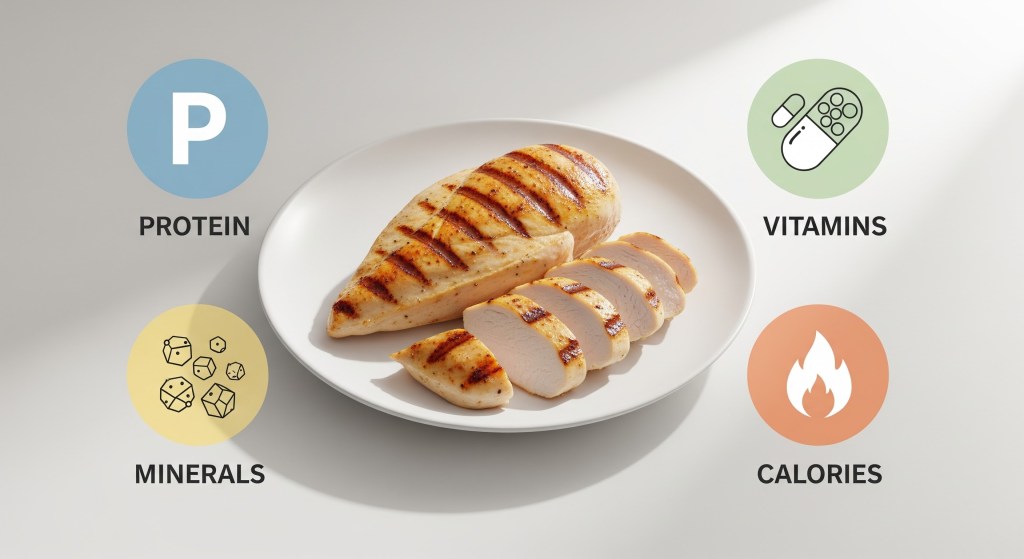
Below is a typical nutritional profile for 100g of cooked chicken (skinless, mixed cuts). Values may vary slightly depending on the cut and cooking method, but this gives a reliable everyday reference.
Nutritional Profile (Per 100g Cooked Chicken)
- Calories ~160–200 kcal
- Protein ~24–32g
- Fat ~3–8g
- Carbohydrates 0g
- Fibre 0g
Key Micronutrients in Chicken
In addition to macros, chicken is a good source of:
- Vitamin B12 – supports nerve function and red blood cell formation
- Vitamin B6 – important for protein metabolism and brain health
- Niacin (Vitamin B3) – supports energy production
- Phosphorus – essential for bones and teeth
- Selenium – supports thyroid function and immunity
Chicken also provides highly bioavailable iron and zinc, though in smaller amounts compared to red meat.
Protein Quality of Chicken
Protein quality matters just as much as protein quantity. While many foods provide protein, not all proteins are equally useful to the body. What sets chicken apart is the quality and completeness of its protein.
Is Chicken a Complete Protein?
Yes. Chicken is a complete protein, meaning it contains all nine essential amino acids that the human body cannot produce on its own. These amino acids are required for: muscle repair and growth, hormone and enzyme production, immune function and tissue maintenance.
Amino Acid Profile & Protein Utilisation
Chicken scores very high on protein quality measures such as PDCAAS and DIAAS, which assess how well dietary protein meets human amino acid needs and how easily it is digested and absorbed.
In practical terms, this means:
• A higher percentage of chicken protein is absorbed
• Less protein is “wasted” during digestion
• Smaller portions deliver meaningful biological benefit
Chicken vs Plant Protein
Unlike most plant-based protein sources, chicken does not require food pairing to complete its amino acid profile. While plant proteins can absolutely be part of a healthy diet, chicken provides a simpler, more direct way to meet essential amino acid needs. This protein quality advantage is why chicken is often used as the benchmark protein source in nutrition planning.
Is Chicken Good for Weight Loss, Muscle Gain & Diabetes?
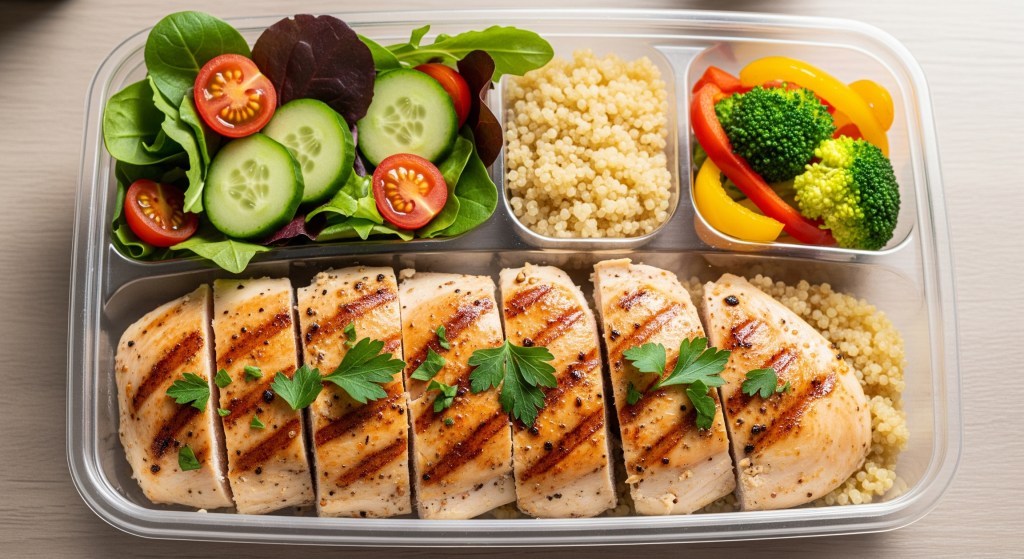
Chicken fits easily into multiple health goals because of its high protein content, low carbohydrate load, and predictable calorie profile. However, how it helps depends on portion size, cut choice, and cooking method.
Chicken for Weight Loss
Chicken is one of the most weight-loss-friendly protein sources available.
It works because:
• High protein improves satiety and reduces hunger
• Low carbohydrate content helps control calorie intake
• Lean cuts like chicken breast provide protein with fewer calories
For weight loss, a moderate portion (150–200g cooked) paired with vegetables works well. Avoid frying or heavy gravies, as added fats and sauces can quickly increase calories.
Chicken for Muscle Gain
For muscle building, chicken is highly effective because it delivers:
• High-quality complete protein
• Excellent amino acid availability
• Easy portion scaling
Larger portions, such as 200–250g cooked chicken, especially breast meat, are commonly used to support daily protein targets. Because chicken protein is efficiently absorbed, it supports muscle repair and growth when combined with resistance training.
Chicken for Diabetes
Chicken is an excellent protein option for people with diabetes.
Key reasons:
• Zero carbohydrates in plain chicken
• No direct impact on blood sugar levels
• Helps slow glucose spikes when eaten with carbs
When paired with vegetables, whole grains, or a small portion of rice or roti, chicken helps create a balanced meal with better glycaemic control. Cooking methods matter here as well; grilled, boiled, or roasted chicken is preferable to fried or breaded preparations.
How to Cook Chicken for Best Nutrition
How you cook chicken has a major impact on its final calorie count, fat content, and how easy it is to digest. While protein remains largely intact across cooking methods, added fats and coatings can quickly change the nutritional profile.
Best Cooking Methods for Protein Retention
The following methods preserve protein while keeping calories predictable:
- Boiled chicken: No added fat, easy to digest, ideal for weight loss and medical diets
- Grilled chicken: Retains protein with minimal fat when oil use is controlled
- Baked or roasted chicken: Good option when cooked without heavy sauces
Cooking Methods That Add Unnecessary Calories
Some popular preparations significantly increase calorie and fat content:
- Deep-frying adds large amounts of oil
- Breaded or battered chicken introduces refined carbohydrates
- Creamy gravies and thick sauces increase both fat and calories
- Cooking with skin-on chicken raises calorie density
These methods don’t reduce protein, but they make portion control harder.
Simple Cooking Tips for Better Nutrition
- Remove the skin before or after cooking to reduce fat
- Use minimal oil (1–2 teaspoons per serving)
- Add salt later in cooking to avoid moisture loss
- Use spices, herbs, lemon, garlic, and ginger for flavour instead of sauces
Keeping preparation simple allows chicken to remain a lean, high-protein food that fits easily into weight loss, muscle gain, and a diabetes-friendly diet.
How Much Chicken Should You Eat Daily?
How much chicken you should eat depends on your goal, overall protein needs, and the rest of your diet. Chicken is safe to eat regularly, but portion sizes should be adjusted based on context rather than treated as one-size-fits-all.
Practical Daily Guidelines
- Weight loss:
~150–200g per day
Provides satiety and protein without excess calories, especially when paired with vegetables. - Muscle gain:
~200–250g per day
Often split across meals to support recovery and muscle growth. - General health:
~150–200g per day
Easily meets daily protein needs for most adults when combined with other foods. - Diabetics:
~150–200g per day
Best consumed with vegetables and a controlled portion of carbohydrates.
There is no strict upper limit for healthy individuals, but extremely large portions in a single meal are unnecessary. Distributing protein across meals generally improves digestion and utilisation.
Portion & Protein Table
Serving Size | Protein | Calories
100g cooked chicken | ~24–32g | ~160–200 kcal
200g cooked chicken | ~48–64g | ~320–400 kcal
250g cooked chicken | ~60–80g | ~400–500 kcal
250g chicken breast | ~75–80g | ~400–425 kcal
1kg cooked chicken | ~240–320g | ~1,600–2,100 kcal
Values vary by cut and cooking method. These are practical, everyday estimates.
Conclusion
Chicken is one of the most reliable and efficient protein sources available. While raw values can be misleading, the numbers that matter are cooked values: ~24–32g of protein per 100g, depending on the cut and preparation. Chicken breast offers the highest protein density, while thighs provide slightly more calories from fat.
Whether your goal is weight loss, muscle gain or blood sugar control, chicken fits easily into a balanced diet when portions are sensible and cooking methods are simple.
Want to check exact protein and calorie values for different chicken dishes or portion sizes?
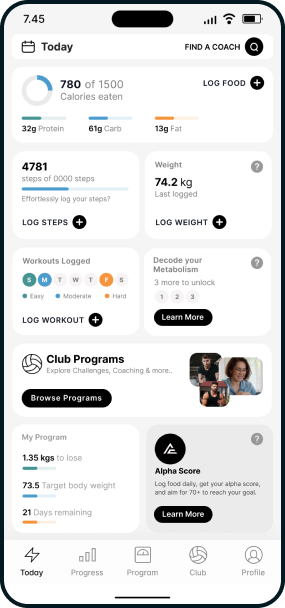
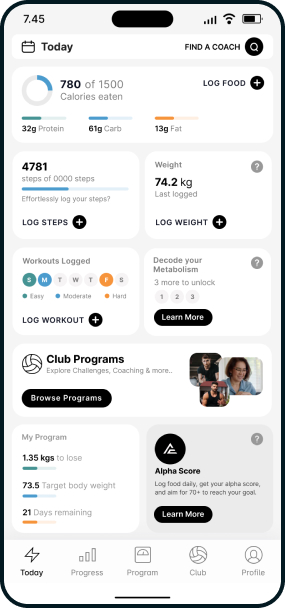
Use the Alpha Coach Food Calorie Calculator to track Indian meals accurately and effortlessly.
FAQs
Chicken-Based Recipes
- Moong Dal Chicken Curry
- Flaxseed Chicken Tenders
- Grilled Chicken Avocado Salad
- Ragi Chicken Porridge
- Chicken Caesar Wrap
- Pumpkin Seed Chicken Stir-Fry
 3
3










Leave a Reply