

 281 views
For most women, “core workout” instantly translates to “ab workout.”
We picture crunches, planks, or those elusive “lower belly” moves we’ve seen online, all in the hope of getting a flatter stomach. However, you conveniently forget that core is so much more than your abs. It’s the powerhouse that keeps you upright, stable, and moving efficiently every single day.
Every time you stand tall, lift a bag of groceries, or laugh so hard your sides ache, your core is quietly doing its job. It connects your upper and lower body, supports your spine, helps you breathe better, and even plays a role in digestion and hormonal balance. When it’s strong, you feel lighter, more stable, and more confident. When it’s weak, you feel… everything else: back pain, slouched posture, fatigue, and that constant sense of “I just don’t feel strong anymore.”
If we’re being honest, our modern lives aren’t doing our cores any favours.
Hours at a desk, long commutes, chronic stress, childbirth, and hormonal shifts all cause those deep stabilising muscles to switch off. Over time, we start compensating with the wrong muscles, tightening our neck, lower back, and hips until everyday movement feels harder than it should.
That’s why “working on your core” shouldn’t be about chasing a visible six-pack. It should be about rebuilding the foundation that supports everything else: your posture, energy, mood, and confidence.
Common Core Training Myths Every Woman Should Know
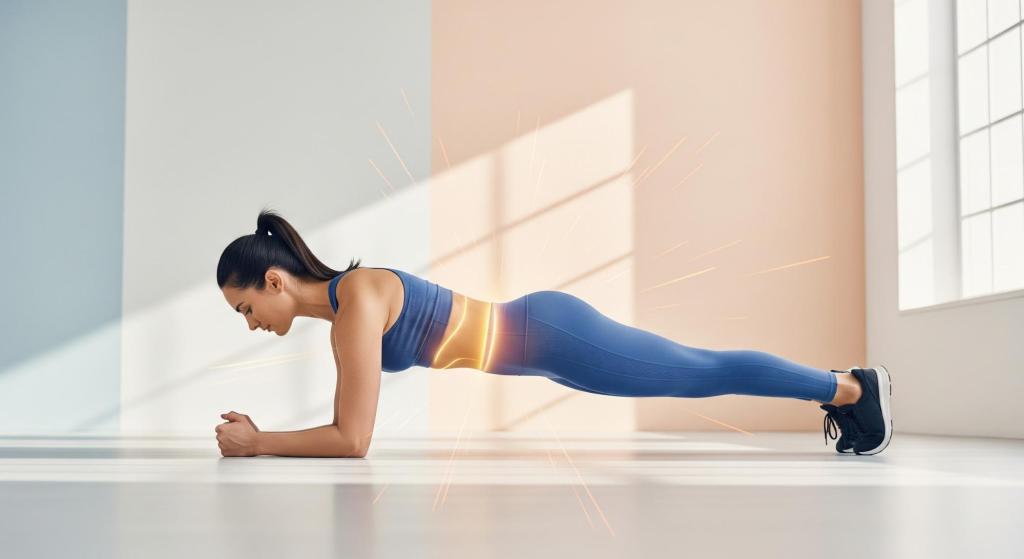
If you’ve ever typed “core workouts for women” into Google, you’ve probably been buried under hundreds of “flat belly in 14 days” routines. No wonder so many of us have a complicated relationship with the word core.
Let’s bust a few myths that quietly hold most women back from building true strength.
Myth 1: “Core = abs.”
When someone says “core workout,” most of us think of crunches, sit-ups, or planks. But your core isn’t one muscle, it’s an entire support system running from your shoulders to your hips. Think of it as a stabilising cylinder that includes the following and many more muscles beyond these.
- Obliques: twist, bend, and protect your spine
- Lower back: keeps posture upright and pain-free
- Pelvic floor: supports balance and bladder control
- Diaphragm: powers your breathing and pressure control
- Glutes and hip flexors: form the base of every movement. When one area is weak, the others overwork to compensate, which is why back pain, tight hips, or poor posture often trace back to a neglected core.
Do this instead: Focus on moves that challenge your whole core. Think planks, carries, squats, and anti-rotation drills, not just crunch variations.
Myth 2: “Crunches burn belly fat.”
We’ve all fallen for it. More crunches are equal to fewer inches, right?
Wrong. Fat loss doesn’t happen locally. You can’t pick a body part and command it to slim down. Crunches help strengthen the abs, but to actually see results, you need the right combination of:
- Full-body strength training: builds lean muscle that boosts metabolism
- Balanced nutrition: keeps hormones steady and recovery on track
- Consistency: sustainable habits trump random intensity.
Crunches are fine, but they’re like seasoning, not the whole meal.
Do this instead: Combine total-body workouts with mindful eating. Build strength from the inside out, and your waistline will follow naturally.
Myth 3: “Heavy lifting makes you bulky.”
Let’s retire this one for good. Women don’t have the hormonal profile to “bulk up” easily. Lifting weights, especially compound movements like squats, deadlifts, and overhead presses, actually makes you leaner and more defined by improving posture, muscle tone, and bone density.
Every time you lift something heavy with proper form, your core fires up to stabilise your spine. That’s functional strength, the kind that helps you move through real life more easily.
Do this instead: Add strength training 2–3 times a week. It’ll sculpt your waistline, strengthen your back, and make daily tasks feel lighter.
Myth 4: “Core training is only for athletes.”
You don’t need to be training for a marathon to need a strong core. Every woman, whether she’s carrying a child, sitting at a desk, or doing household chores, relies on her core for nearly everything.
A strong core improves balance, breathing, energy, and confidence. It reduces injuries, supports your spine, and helps you move with more ease as you age.
Do this instead: Treat your core like a daily essential, not an add-on. Ten minutes a day of intentional movement can make a noticeable difference.
Most women spend years training around their core, focusing on calories, cardio, or visible abs without ever addressing the muscles that hold everything together. Once you start training through your core, you realise it’s not about looking strong. It’s about living strong.
What Happens When Your Core Is Weak
Core weakness doesn’t hit overnight, it builds quietly.
It shows up in the little things: the way your shoulders round forward at your desk, how your back starts aching during long drives, or that tired heaviness you feel even after eight hours of sleep.
You don’t have to be “unfit” to have a weak core, just modern. Long sitting hours, minimal walking, and constant stress slowly teach your body to forget how to stabilise itself.
1. Poor Posture and Back Pain
Your core is your spine’s natural support belt. When those deep muscles stop doing their job, your back muscles overwork and protest. That’s why you might feel stiffness at the end of your workday or a dull ache after sitting too long. Over time, this imbalance becomes chronic pain.
Try this: Every hour, stand up and gently tighten your stomach, like you’re preparing for a small poke or tap. Hold it for ten seconds, then relax. It instantly helps you stand straighter and feel more alert.
2. Low Energy and Sluggish Movement
When your core doesn’t stabilise you, every movement becomes harder. Your body wastes energy trying to stay balanced, leaving you fatigued by the afternoon.
A weak core also affects breathing; shallow chest breathing limits oxygen flow, making you feel tired even if you haven’t done much.
Try this: Practice deep belly breathing. Inhale slowly so your ribs expand sideways. This activates your diaphragm, your core’s hidden powerhouse.
3. Pelvic Floor and Hormonal Strain
For women, the core and pelvic floor work together. Pregnancy, childbirth, and hormonal changes can weaken them, leading to poor balance, back pain, or even slight leakage; problems many women don’t discuss openly.
Ignoring the pelvic floor doesn’t just affect movement; it affects digestion, confidence, and body awareness.
Try this: During workouts or yoga, gently engage your pelvic floor like lifting upwards while exhaling. It reconnects deep stability without strain.
4. Balance and Coordination Troubles
Ever tripped and felt your whole body jerk to stay upright? That’s your core struggling to keep balance. A strong core helps your body react smoothly when you twist, stretch, or move suddenly.
When it’s weak, your balance and coordination drop, something you notice more as you get older or restart exercise after a break.
Try this: Add balance drills to your routine like standing marches, single-leg glute bridges, or carrying weights on one side. Small daily challenges sharpen coordination.
5. Confidence and Mind–Body Disconnect
Core weakness isn’t only physical, it changes how you carry yourself.
When your body feels unstable, your posture shrinks, your breathing tightens, and your confidence quietly dips.
Strengthening your core often leads to better self-image, not because your waist changes, but because your body finally feels supported again.
6. Pregnancy and Third Trimester Challenges
During pregnancy, especially in the third trimester, the growing belly shifts a woman’s centre of gravity and stretches the abdominal wall. When the deep core (transverse abdominis and pelvic floor) is weak, it can’t properly support the spine or manage intra-abdominal pressure. This often leads to:
- Lower back and pelvic pain due to excess strain on the lumbar region.
- Diastasis recti (abdominal separation), where the connective tissue between the abs overstretches.
- Pelvic floor dysfunction, like leakage, pressure, or instability from inadequate deep-core engagement.
- Reduced balance and posture control, making walking or standing for long periods harder.
Strengthening the core before and during early pregnancy with safe, guided movements helps maintain stability, supports the baby’s weight, and improves recovery postpartum.
The Science of Core Strength: What Actually Works

Core strength builds from the inside out, and it starts in your brain before your muscles.
1. Your Brain Trains First
In the first two weeks, your brain learns to switch on the right muscles in the right order.
That’s why you often feel stronger before you look stronger. Better posture, balance, and control are early signs that your core is waking up.
2. Compound Beats Crunches
Real strength comes from full-body moves like squats, lunges, and presses.
These recruit your core automatically to stabilise your spine and improve balance.
Try this: In a half-kneeling press (one knee down, one foot forward), press a light weight overhead, and you’ll feel your abs, glutes, and back working together.
3. Breathe Like It Matters
Your diaphragm is part of your core. When you breathe deeply, belly expanding as you inhale, ribs tightening as you exhale, you activate your stabilisers and protect your back.
Tip: Exhale slowly as you lift or twist. It keeps your spine supported.
4. Mobility Before Muscle
Tight hips or a stiff back limit your core’s strength. A few minutes of mobility like cat-cow, hip openers, or gentle twists helps muscles move freely and prevents pain.
In short, coordination, controlled movement, and mobility build results faster than endless crunches.
That’s why structured programs built around 20-minute, full-body sessions like a focused 24-day plan match how your body naturally adapts.
Why 24 Days Are Enough to Feel the Difference
Your body starts adapting much faster than you think, especially when you train consistently and correctly. Here’s why 24 days is the perfect starting window for visible, lasting change.
1. The Brain–Body Connection Kicks In Early
In the first 10–14 days, your nervous system learns how to fire muscles efficiently.
That’s why you suddenly feel more balanced or stand taller even before you “see” results. Your brain and core start working together again.
2. Strength Follows Next
Once those signals are strong, your muscles begin building endurance and control.
Simple actions like bending, sitting, and twisting feel smoother because your stabilisers are finally doing their job.
These are the small, daily wins that appear around the three-week mark.
3. Habits Form, Consistency Builds
It takes about three weeks for your brain to lock in a new habit.
By Day 24, consistency turns into momentum and workouts feel less like a chore and more like a routine.
4. The Results You’ll Notice
By the end of 24 days, women commonly report:
- Better posture and less back pain
- Improved energy and movement control
- A stronger mind–body connection
- Subtle toning around the waistline
These aren’t cosmetic changes, they’re signs your body’s foundation is rebuilding.
5. Why Structure Matters
Random workouts can’t produce this kind of progress. You need the right mix of activation, strength, mobility, and rest, in the right order, to trigger consistent adaptation.
Programs like the Alpha Coach 24-Day Women’s Core Kickstart are designed to align with how the body actually learns and strengthens — without overtraining or burnout.
Nutrition, Hormones & Recovery

A strong core isn’t built by workouts alone. What you eat, how you rest, and what your hormones are doing behind the scenes all play a major role.
1. Nutrition Fuels Strength
Your muscles can’t get stronger if they don’t have fuel. Protein helps repair and rebuild muscle fibres, while balanced carbs and fats keep your energy steady.
Skipping meals or eating too little slows progress and often leads to fatigue.
Simple fix: Aim for protein in every meal; eggs, lentils, paneer, fish and plenty of water through the day.
2. Hormones Affect Recovery
Women’s hormones fluctuate across the month, influencing energy, strength, and even water retention.
You might notice workouts feel easier in some weeks and harder in others, that’s normal.
Instead of forcing consistency, adjust intensity: lighter mobility work on low-energy days, heavier strength on high-energy ones.
Tip: Track your menstrual cycle. Understanding your body makes training feel easier, not harder.
3. Rest Is Where Progress Happens
Muscles grow when you rest, not when you train.
Quality sleep helps with recovery, hormonal balance, and mood, all of which impact performance. Even one rest day a week prevents burnout and keeps your workouts effective.
Try: A short walk, stretch, or breathing session instead of another workout. Active recovery counts.
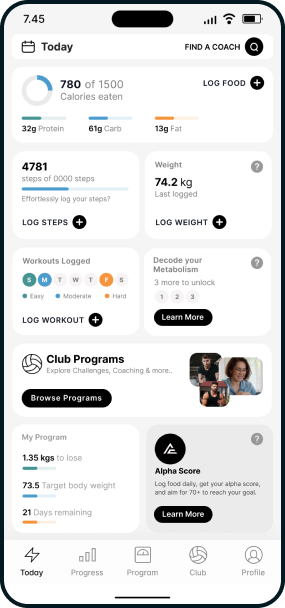
If you want to track all three easily, tools like the Alpha Coach App and Food Calorie Calculator can help you log meals, monitor progress, and understand how your body responds day to day.
8. Building a Lifelong Core Habit
A strong core isn’t built in a month, it’s maintained for life.
The secret isn’t doing harder workouts; it’s doing the basics consistently.
Start small: 15–20 minutes a day of mindful movement is enough to keep your core active and engaged.
As you get stronger, add challenge – longer holds, new variations, or slightly heavier weights. This gradual progression helps your muscles adapt without burnout.
9. Conclusion
Core strength is about feeling steady, confident, and capable in your own body.
It’s the difference between surviving your day and moving through it with ease.
Over the past sections, you’ve learned how the core truly works, why quick fixes fail, and how just 24 days of smart, consistent movement can jumpstart lasting change.
The first signs won’t come from the mirror, they’ll come from your posture, your energy, and how effortlessly you move.
So start where you are. Train your core not for appearance, but for freedom – the freedom to move, breathe, and live with confidence.
If you’re ready for a simple, structured path, the Alpha Coach 24-Day Women’s Core Kickstart is a great way to begin.
It’s not a quick fix, it’s your first step toward a stronger foundation for life.
FAQs
 0
0











Leave a Reply