
 634 views
Milk is one of the most commonly consumed foods in Indian diets. From childhood routines to post-workout habits, milk is often seen as a default “healthy” choice. Because it’s affordable, familiar, and widely available, many people assume milk automatically takes care of protein needs.
But that assumption is only partly true.
People regularly search:
• How much protein is in milk
• Is milk a good source of protein
• Protein in milk per glass
• Which milk has the highest protein
To answer these properly, we need to look at actual protein numbers, understand what kind of protein milk contains, and see how milk fits into daily protein needs, not just one serving.
This article breaks down protein in milk, types of milk protein, differences across milk varieties, and how milk can (and cannot) support muscle, weight management, and overall health.
Why Protein in Milk Still Matters
Milk has retained its nutritional reputation for decades because it delivers protein in a form that is:
• Easy to consume
• Easy to digest for most people
• Complete in amino acid profile
Unlike many plant foods that require careful combinations, milk naturally contains all essential amino acids. That’s why it’s recommended for children, adults, athletes, and vegetarians alike.
At the same time, many people ask whether milk is actually a good protein source in practical terms. Milk is useful, but it’s often overestimated, especially by those trying to increase protein intake without tracking how much protein it really provides.
To understand where milk fits, it’s important to look at the actual protein numbers per serving.
How Much Protein Is in Milk?
Protein in Milk per 100 ml
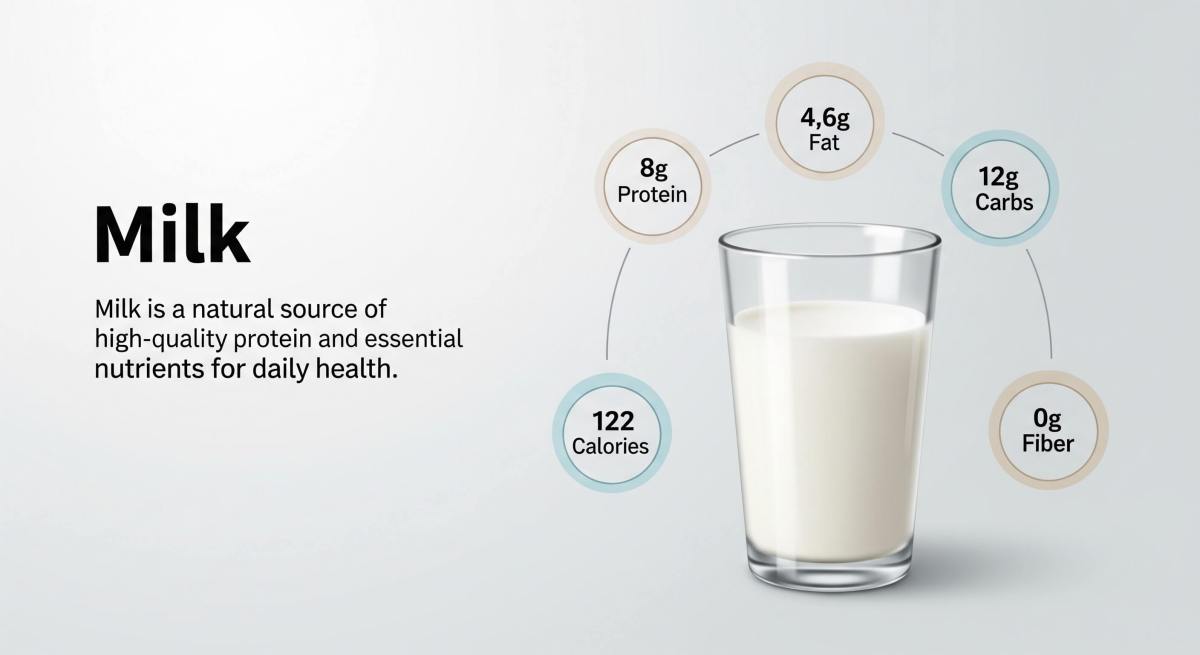
On average, cow’s milk contains about 3–3.5 grams of protein per 100 ml.
This number remains relatively stable across most milk varieties. Whether the milk is full-fat, toned, or skimmed, protein content does not change significantly. What does change is the fat and calorie content.
Protein in Milk per Glass (200–250 ml)
A more practical question people ask is how much protein is in one glass of milk.
- 200 ml milk → ~6–7 g protein
- 250 ml milk → ~8–9 g protein
This makes milk a moderate protein source, not a high-protein one. One glass contributes meaningfully to daily intake, but it cannot meet total protein needs on its own.
Why Milk Protein Looks “Low” but Adds Up
Milk is rarely consumed just once. It’s often:
• Drunk daily
• Used in tea, coffee, smoothies, or curd
• Consumed alongside meals
Because of this consistency, milk can quietly contribute 15–20 grams of protein per day across multiple servings. Its real value lies in reliability and not density.
Types of Protein in Milk
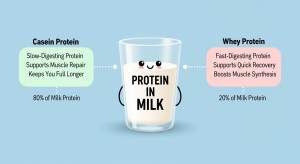
Milk is unique because it naturally contains two different types of protein, each serving a distinct role in digestion, recovery, and satiety.
Casein Protein (Slow-Digesting)
About 80% of the protein in milk is casein.
Casein digests slowly, releasing amino acids steadily over several hours. This makes it useful for:
• Muscle repair
• Overnight recovery
• Prolonged satiety
Because of this slow digestion, milk often keeps people feeling full longer compared to many other liquids.
Whey Protein (Fast-Digesting)
The remaining 20% of milk protein is whey.
Whey digests quickly and stimulates muscle protein synthesis more rapidly. This is why whey protein supplements are commonly used post-workout. Milk naturally provides whey in smaller quantities compared to supplements.
Why the Combination Matters
Milk’s strength is not high protein quantity, but protein quality. The combination of fast-digesting whey and slow-digesting casein supports both immediate recovery and sustained muscle repair, something few single-source protein foods provide.
Protein Content in Different Types of Milk
The type of protein in milk remains the same (casein and whey); the amount of protein and overall calorie content can vary slightly depending on the milk source and how it is processed.
Cow Milk
- Approximately 3–3.5 g protein per 100 ml
- Most consistent and widely studied option
Cow milk is the standard reference used in most nutrition databases and research. For most people, it offers a predictable balance of protein, calories, and digestibility.
Buffalo Milk vs Cow Milk
Buffalo milk contains slightly more protein per 100 ml than cow milk. However, it also contains significantly more fat and calories.
Because of this higher fat content, buffalo milk is more energy-dense and may not be ideal for calorie-controlled diets, despite the small difference in protein content.
Full-Fat, Toned, and Skimmed Milk
Protein content stays almost the same across full-fat, toned, and skimmed milk. The main difference lies in fat and calorie content:
• Full-fat milk: higher calories
• Toned milk: moderate calories
• Skimmed milk: lowest calories
Protein choice should not be based on fat percentage alone. Fat level affects calories, not how much protein you get.
A1 vs A2 Milk
From a protein quantity standpoint:
• A1 and A2 milk contain similar protein amounts
Any perceived difference between A1 and A2 milk is related to digestion comfort in some individuals, not differences in protein content.
Milk Protein vs Other Protein Sources
Milk often gets compared with other common protein sources. Each option serves a different purpose, and understanding these differences helps set realistic expectations.
Milk vs Eggs
Eggs provide more protein per serving than milk, making them more protein-dense. However, milk is often easier to consume in larger volumes and fits naturally into daily routines.
Eggs work better when protein targets are high. Milk works better for consistent, repeatable intake across the day.
Read More: How Much Protein in Egg White vs Whole Egg? Nutrition Breakdown
Milk vs Plant-Based Protein Sources
Many plant-based foods require larger portions to match the protein provided by milk and may lack one or more essential amino acids.
Milk provides complete protein in a small, consistent serving, without needing careful food combinations.
Milk vs Whey Protein Supplements
Whey protein supplements are highly concentrated protein sources designed for convenience when protein needs are elevated.
Milk, on the other hand, is a whole food that provides protein along with fluids, minerals, and calories. Supplements are useful when targets are high, while milk works best as a daily foundation and not a replacement.
Benefits of Protein in Milk
Protein from milk supports several aspects of daily health and nutrition:

- Muscle repair and recovery
The combination of fast-digesting whey and slow-digesting casein helps support both immediate muscle repair and sustained recovery. - Bone health
Milk provides protein alongside calcium and vitamin D, which work together to support bone strength across age groups. - Satiety and appetite control
Milk protein digests gradually, helping you feel fuller for longer and reducing unnecessary snacking. - Easy protein intake for vegetarians
Milk offers complete protein in a simple, familiar form, making it easier for vegetarians to meet daily protein needs without complex meal planning.
Milk protein is especially valuable when consistency matters more than precision, such as in everyday diets rather than performance-focused plans.
Who Should Include Milk for Protein?
Milk can play a useful role across different age groups and lifestyles, but its role looks slightly different depending on needs and goals.
Fitness Enthusiasts & Athletes
Milk supports muscle recovery by providing both whey and casein protein, which together help with immediate repair and sustained recovery. It can be especially useful post-workout or between meals.
However, milk alone cannot replace total protein intake for active individuals. Athletes and regular exercisers usually require significantly higher protein amounts, which means milk should be combined with other protein-rich foods rather than relied on as the primary source.
Children & Adolescents
For children and adolescents, milk contributes to daily protein intake alongside calcium and other nutrients that support growth and bone development.
Its biggest advantage at this stage is consistency. Regular milk consumption helps ensure a steady intake of protein and micronutrients without complex meal planning, which is important during growth years.
Adults & Seniors
As adults age, maintaining muscle mass becomes increasingly important. Milk provides an easy, familiar way to include protein without requiring large portions or elaborate meals.
For seniors in particular, milk can help support muscle preservation and overall nutrient intake, especially when appetite or meal volume is lower. That said, it still works best as part of a broader protein-rich diet.
Vegetarians
For vegetarians, milk is one of the simplest and most accessible sources of complete protein. Unlike many plant-based foods, such as rajma, sprouts, or chickpeas, it provides all essential amino acids without needing food combinations.
This makes milk especially useful in vegetarian diets where meeting protein needs consistently can otherwise require careful planning.
How to Maximise Protein Absorption from Milk
Milk protein is generally well absorbed, but a few practical habits can improve comfort and effectiveness:
- Drink milk with meals if your digestion is sensitive
- Consume milk post-workout to support muscle recovery
- Drinking milk before bedtime can support overnight protein availability due to casein
- Avoid combining milk with heavy, oily meals if it causes discomfort
These adjustments help milk fit more smoothly into daily routines rather than feeling heavy or disruptive. Milk works best when paired with other protein-rich foods rather than consumed in isolation. Simple combinations, such as high-protein milk-based meals, can make milk far more effective in calorie-controlled diets.
Is Milk Protein Enough for Daily Needs?
For most adults, milk alone is not enough to meet daily protein requirements.
A single glass of milk provides roughly 8 grams of protein, while daily needs commonly range from 50–80 grams or more, depending on body weight, age, and activity level.
Milk works best as a base protein source, contributing throughout the day. To meet total protein targets, it should be supported by other foods such as dal, paneer, eggs, soy products, or meat, depending on dietary preference. Understanding this prevents one of the most common mistakes: assuming regular milk consumption automatically covers protein needs.
Understanding milk protein is most useful when viewed alongside the calorie and protein contributions of other everyday foods. Tracking the calorie and protein content of common Indian foods helps put milk into proper perspective.
Making Milk Work for Your Protein Goals
Milk is not a miracle protein food, and it’s not ineffective either. When you understand how much protein milk actually provides, what type of protein it contains, and how it fits into a full day of eating, milk becomes a reliable and useful part of a balanced diet.
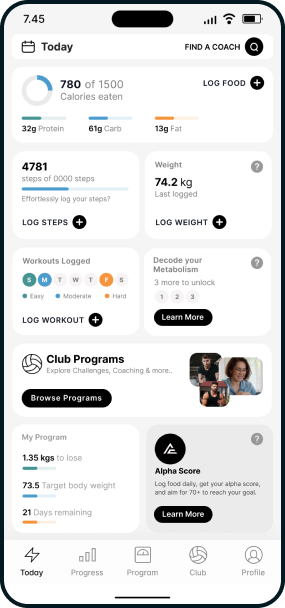
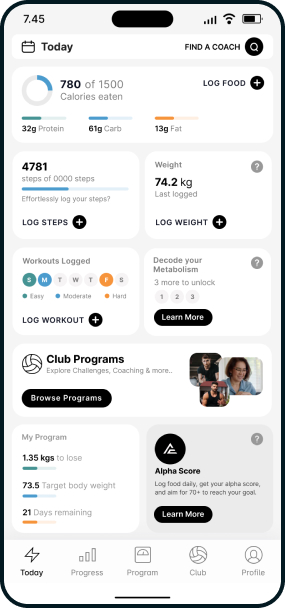
If you want clarity on protein intake across Indian foods, use the Alpha Coach Food Calorie & Protein Calculator to track real servings and build meals that actually support your goals.
Frequently Asked Questions
 0
0












Leave a Reply