
 259 views
Quick Answer for Pre-Workout Meal in India
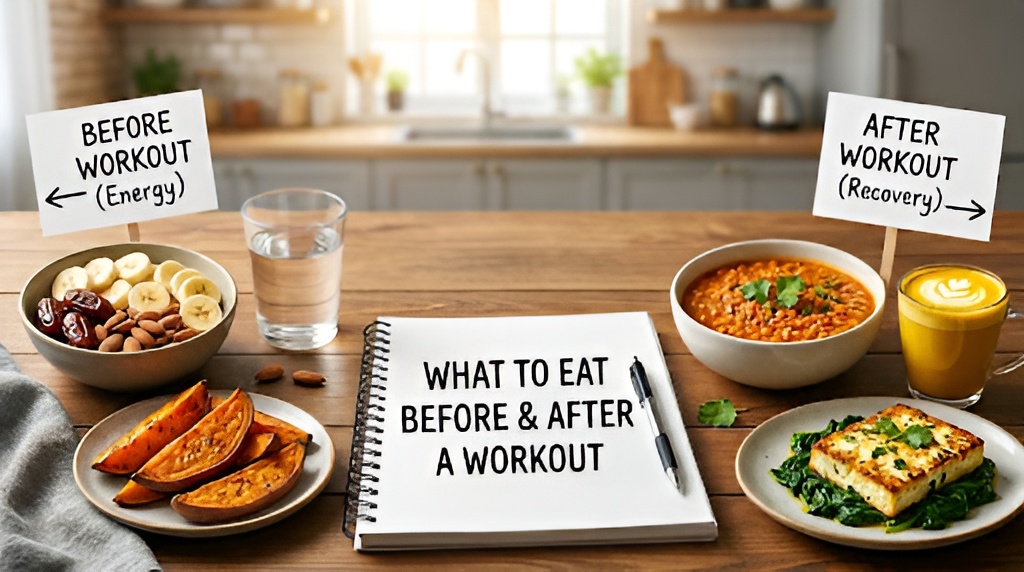
The best pre-workout meal in India is one that provides easily digestible carbohydrates, a moderate amount of protein, and enough time for digestion before training. Foods such as bananas, poha, oats, idlis with sambar, rice and dal, or paneer with chapati can all work well depending on how long you have before your workout.
After exercise, focus on protein and carbohydrates to support recovery. Meals like paneer bhurji with roti, moong dal chilla with curd, eggs with toast, chicken and rice, or Greek yogurt with fruit can help replenish energy stores and support muscle repair.
The exact meal matters less than most people think. Consistently hitting your daily protein, calorie, and hydration goals will have a far greater impact on your results than finding a “perfect” pre- or post-workout food.
Why Workout Nutrition Matters More Than Most People Realize
Two people can follow the exact same workout program and get very different results. One finishes feeling strong, energized, and ready for the next session.
The other struggles through every workout, feels exhausted afterward, and constantly wonders why progress feels slow.
Often, the difference isn’t the workout itself. It’s what happened before and after it.
Most people view nutrition as something that’s only important for weight loss or muscle gain. In reality, the food you eat around your workouts can influence how much energy you have, how well you perform, how effectively you recover, and even how consistently you stick to your training routine.
Think about the last time you exercised after skipping meals for most of the day.
Maybe the workout felt unusually difficult. Maybe you got tired faster than expected. Maybe you found yourself cutting sets short or reducing intensity.
Your body relies heavily on stored carbohydrates, known as glycogen, to support moderate and high-intensity exercise. When those stores are running low, training can feel significantly harder even if your fitness level hasn’t changed.
Recovery works the same way.
Every workout creates stress. Whether you’re lifting weights, running, playing football, attending a dance class, or following a home workout, exercise creates a signal that encourages the body to adapt.
But adaptation requires resources.
Muscles need protein to repair and rebuild. Energy stores need carbohydrates to be replenished. Fluids and electrolytes need to be replaced.
Without those building blocks, recovery becomes less efficient.
The good news is that you don’t need expensive supplements, imported superfoods, or complicated meal plans to support performance.
Many traditional Indian foods already provide everything most active people need.
What Makes a Good Pre-Workout Meal?
A good pre-workout meal has one primary job: help you perform at your best.
Unfortunately, many people accidentally make that job harder.
Some train after going hours without eating. Others eat a massive meal 20 minutes before exercise and spend half the workout feeling uncomfortable. Some rely entirely on caffeinated drinks, forgetting to eat actual food.
The best pre-workout meals are usually surprisingly simple. They provide energy without causing digestive discomfort.
Carbohydrates: Your Workout’s Primary Fuel Source
Carbohydrates have developed an unfair reputation in many fitness circles.
Yet when it comes to exercise performance, they remain your body’s preferred fuel source. Some excellent Indian carbohydrate sources include:
- Bananas
- Poha
- Oats
- Dalia
- Idli
- Rice
- Dates
- Fruit
For most people, consuming roughly 20–60 grams of carbohydrates before training is more than enough to support performance.
Why Protein Deserves a Place Before Training
Protein is usually associated with post-workout nutrition, but including some protein before exercise can also be beneficial.
A moderate amount of protein before training provides amino acids that remain available during and after exercise, helping support muscle recovery and maintenance.
The key word is moderate. You don’t need six egg whites, a protein shake, and a chicken breast before stepping into the gym.
Simple options work well:
- Milk
- Curd
- Paneer
- Eggs
- Greek yogurt
Pairing protein with carbohydrates often creates a more balanced and satisfying pre-workout meal.
Why Fat and Fiber Need a Little More Attention
Fat and fiber are healthy nutrients. The problem isn’t that they’re bad, the problem is timing.
Both slow digestion, which can be useful in many situations but less helpful immediately before exercise.
For example, a heavily buttered paratha, a large restaurant meal, or a deep-fried snack may leave you feeling sluggish, bloated, or uncomfortable during training.
This doesn’t mean you should avoid these foods entirely. It simply means they may not be the smartest choice right before a workout.
How Long Before a Workout Should You Eat?
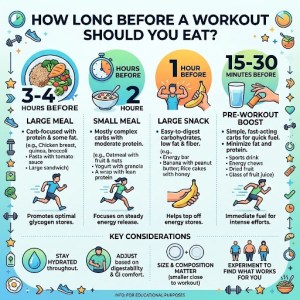
The answer depends on meal size. A larger meal needs more time to digest. A smaller snack can be eaten closer to training.
| Time Before Workout | Best Options |
| 30–60 Minutes | Banana, dates, fruit smoothie, coconut water |
| 1–2 Hours | Poha, upma, oats with milk, idli with sambar |
| 2–3 Hours | Rice and dal, paneer with chapati, rajma chawal, chicken and rice |
A simple rule of thumb: The closer you are to your workout, the lighter your meal should be.
Best Indian Pre-Workout Foods
One of the biggest myths in fitness is that performance nutrition requires expensive supplements.
In reality, many Indian households already contain foods that work exceptionally well before exercise.
If You’re Training Within 30–60 Minutes
Good options include:
Banana
A classic pre-workout snack for good reason. Bananas provide easily digestible carbohydrates, require no preparation, and work particularly well before morning workouts.
Dates
Dates are compact, convenient, and rich in carbohydrates. They’re useful before both gym sessions and endurance training.
Fruit Smoothie with Milk
Combines carbohydrates, fluids, and a small amount of protein in an easy-to-consume format.
Coconut Water and Banana
Provides carbohydrates along with fluids and naturally occurring electrolytes.
If You’re Training Within 1–2 Hours
This window allows for slightly more substantial meals.
Good choices include:
- Oats with milk and fruit
- Vegetable upma
- Idli with sambar
- Dalia with nuts
- Whole wheat toast with paneer
These meals provide a balance of carbohydrates and protein while remaining relatively easy to digest.
If You’re Training Within 2–3 Hours
At this point, your pre-workout meal can look very similar to a normal balanced meal.
Examples include:
- Rice and dal
- Paneer bhurji with chapati
- Rajma chawal
- Chicken curry with roti
- Moong dal khichdi
These meals provide sustained energy and are particularly useful before longer training sessions, demanding gym workouts, or sports practice.
Most importantly, they are realistic.
You don’t need a supplement stack, a pre-workout powder, or a complicated nutrition protocol to fuel a workout effectively.
What Makes a Good Post-Workout Meal?
If pre-workout nutrition is about performance, post-workout nutrition is about preparation.
Many people think recovery only matters if you’re a professional athlete or bodybuilder. In reality, recovery affects everyone. Whether your goal is losing weight, building muscle, improving fitness, or simply staying active, your body still has to recover from the stress of training.
That recovery process depends largely on three things:
- Protein
- Carbohydrates
- Hydration
The exact amounts vary from person to person, but the principles remain remarkably consistent.
Protein: The Building Blocks of Recovery
Protein provides the amino acids required to repair and rebuild muscle tissue after exercise. Without adequate protein intake, recovery becomes less efficient and progress can become harder to achieve.
This matters whether your goal is muscle gain or fat loss.
One of the biggest misconceptions in fitness is that protein only matters if you’re trying to get bigger.
In reality, maintaining muscle is just as important during weight loss as it is during muscle-building phases.
For most active individuals, a post-workout meal containing approximately 20–40 grams of protein is usually sufficient to support recovery.
Carbohydrates: The Forgotten Recovery Nutrient
During exercise, your body uses stored glycogen for energy. Post-workout carbohydrates help replenish those stores, especially after intense training sessions, sports, running, or longer workouts.
This doesn’t mean you need sugary recovery drinks.
Simple foods work perfectly well:
- Rice
- Roti
- Fruit
- Oats
- Poha
- Dalia
- Potatoes
For many people, combining protein and carbohydrates in the same meal creates an effective recovery strategy without needing to think much further.
Hydration Still Matters After the Workout Ends
Even mild dehydration can negatively impact recovery, performance, and overall well-being. Drinking water regularly throughout the day is very important.
After particularly sweaty sessions, coconut water, buttermilk, lemon water with a pinch of salt, or electrolyte beverages can help replace lost fluids and minerals.
Do You Need to Eat Immediately After a Workout?
The internet has spent years debating the so-called anabolic window.
The idea is simple: miss a narrow post-workout feeding window and your gains disappear.
Fortunately, reality is much less dramatic.
For most people, eating within roughly one to two hours after training is perfectly adequate.
If you eat a balanced meal before your workout, the urgency becomes even lower.
The quality of your overall diet matters far more than whether you eat exactly 17 minutes after your final set.
Best Indian Post-Workout Foods
One reason workout nutrition feels confusing is that many recommendations are built around Western eating patterns.
Indian diets offer plenty of recovery-friendly foods when you know what to look for.
The best post-workout meals typically combine protein, carbohydrates, and practical convenience.
Vegetarian Post-Workout Meals
Vegetarians often worry about getting enough protein. Fortunately, Indian cuisine provides more options than many people realize.
| Food | Why It Works |
| Paneer Bhurji + Roti | High-quality protein plus carbohydrates |
| Moong Dal Chilla + Curd | Protein-rich and easy to prepare |
| Khichdi + Curd | Comforting, digestible, balanced recovery meal |
| Greek Yogurt + Fruit | Quick option for busy schedules |
| Sprouts and Paneer Salad | Protein, fiber, and micronutrients |
The best option isn’t necessarily the one with the most protein but the one you’ll actually eat consistently.
Non-Vegetarian Post-Workout Meals
Animal-based protein sources are naturally rich in essential amino acids and can support recovery effectively.
Some excellent options include:
| Food | Why It Works |
| Eggs and Toast | Quick, affordable, effective |
| Chicken Sandwich | Convenient balance of protein and carbs |
| Chicken and Rice | Classic recovery meal |
| Egg Bhurji and Chapati | Easy Indian option |
| Fish and Rice | Protein-rich with healthy fats |
Again, simplicity wins. A basic meal eaten consistently will outperform the perfect meal eaten occasionally.
Quick Recovery Snacks for Busy Days
Not every workout ends with a full meal waiting at home.
Sometimes you’re commuting, working late, or heading straight into meetings.
On those days, simple recovery options can bridge the gap:
- Banana shake with milk
- Greek yogurt and fruit
- Peanut butter sandwich
- Lassi with nuts
- Protein smoothie with oats
These aren’t necessarily replacements for meals, but they can be useful when convenience matters.
Pre-Workout vs Post-Workout Nutrition: Which Matters More?
This question appears constantly in fitness discussions.
And the answer usually surprises people.
Neither.
At least not in the way most people think.
If your daily nutrition is poor, perfect workout timing won’t save it.
Imagine someone who:
- Consumes very little protein
- Rarely eats fruits or vegetables
- Constantly skips meals
- Struggles to stay hydrated
Whether they eat a banana before training or a protein shake afterward is unlikely to be the biggest factor affecting results.
The foundation always comes first. Daily calorie intake, daily protein intake, food quality, consistency; they all matter.
Once those fundamentals are in place, pre- and post-workout nutrition become useful tools that can improve performance and recovery.
Do You Really Need Protein Powder?
Few topics in fitness create more confusion than protein supplements.
Many beginners assume muscle growth requires protein powder.
It doesn’t. Protein powder is exactly what the name suggests:
A convenient source of protein.
If you can consistently meet your protein requirements through food, there is no physiological requirement to consume whey protein.
Many Indian foods provide substantial protein:
- Paneer
- Milk
- Curd
- Greek yogurt
- Eggs
- Chicken
- Fish
- Soy products
- Lentils and dals
Protein powder becomes useful when convenience becomes a challenge.
For example:
- Busy professionals
- Students with limited meal access
- People struggling to hit protein targets
In those situations, a scoop of whey can be practical.
But it should complement a good diet, not replace one.
A useful rule of thumb:
Prioritize food first. Use supplements when they solve a genuine problem.
That mindset tends to produce better long-term habits and fewer unnecessary expenses.
How to Adjust Your Meals for Different Goals
One reason workout nutrition advice often feels confusing is that people assume there’s a single “best” pre- and post-workout meal.
There isn’t.
The ideal meal depends on what you’re trying to achieve.
For Weight Loss
When the goal is fat loss, many people make the mistake of eating as little as possible around workouts.
Under-fueling can reduce workout performance, increase hunger later in the day, and make it harder to maintain consistency.
Instead, focus on:
- Prioritizing protein at every meal
- Choosing filling carbohydrate sources
- Managing overall calorie intake across the day
- Staying hydrated
A weight-loss-focused approach might look like:
Pre-workout
- Banana and black coffee
Post-workout
- Moong dal chilla with curd
The objective isn’t to eliminate carbohydrates. It’s to create a sustainable calorie deficit while supporting recovery and preserving muscle mass.
For Muscle Gain
Building muscle requires a different approach.
Your body needs sufficient protein to support growth and enough overall calories to create an environment where muscle gain can occur.
This doesn’t mean eating everything in sight.
It means consistently consuming slightly more energy than your body uses while keeping protein intake high.
A muscle-gain-focused approach might look like:
Pre-workout
- Oats with milk and banana
Post-workout
- Paneer bhurji with chapati
Compared to a fat-loss approach, portion sizes are often larger and carbohydrate intake tends to be higher.
For Endurance Training
Long-distance runners, cyclists, athletes, and individuals performing longer-duration training have different nutritional demands.
Carbohydrates become particularly important because endurance exercise relies heavily on glycogen stores.
Recovery nutrition also becomes more important as training volume increases.
A simple endurance-focused approach could include:
Pre-workout
- Poha with banana
Post-workout
- Rice, dal, and curd
The longer the training session, the greater the importance of carbohydrate replenishment.
Goal-Based Nutrition Summary
| Goal | Pre-Workout Focus | Post-Workout Focus |
| Weight Loss | Moderate carbs, high satiety | High protein, calorie awareness |
| Muscle Gain | Carbs + protein | Protein + sufficient calories |
| Endurance | Carbohydrate availability | Glycogen replenishment + recovery |
Notice something important: the foods aren’t drastically different.
The fundamentals remain remarkably similar, what changes is the emphasis.
Common Workout Nutrition Mistakes
Most people don’t struggle because they’re eating the wrong superfood.
They struggle because they’re repeatedly making small mistakes that add up over time.
- Waiting for the “perfect” meal
- Treating Supplements as More Important Than Foo
- Ignoring Total Daily Protein Intake
- Underestimating Hydration
- Copying Influencer Diets
Conclusion
A good pre-workout meal provides energy without causing discomfort.
A good post-workout meal supports recovery through protein, carbohydrates, and hydration. And for most people, everyday Indian foods can do both exceptionally well.
Bananas, poha, oats, rice, dal, paneer, curd, eggs, chicken, and other familiar staples can support everything from fat loss and muscle gain to endurance performance when used consistently.
The biggest mistake isn’t choosing the wrong food.
It’s becoming so focused on finding the “perfect” meal that you lose sight of the bigger picture.
Your results will be influenced far more by:
- Consistent training
- Adequate protein intake
- Appropriate calorie intake
- Good sleep
- Long-term adherence
than by any single pre- or post-workout snack.
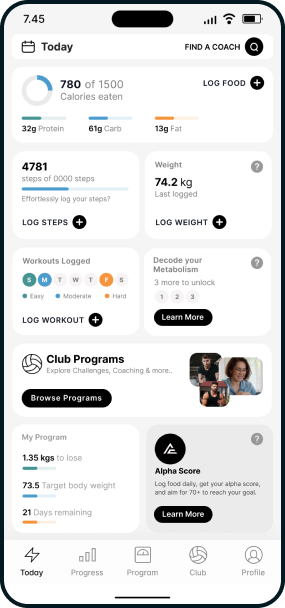
If you’re looking for a more structured way to track your nutrition, protein intake, calorie intake, and overall progress, the Alpha Coach app can help simplify the process with Indian food tracking, personalized insights, and tools designed to make consistency easier.
Because in fitness, structure usually beats guesswork.
Frequently Asked Questions
What is the best pre-workout meal in India for energy?
The best pre-workout meal depends on timing. Within an hour of exercise, options like bananas, dates, or fruit smoothies work well. Two to three hours before training, meals such as rice and dal, idli with sambar, or paneer with chapati can provide sustained energy.
Can I eat a banana before a workout?
Yes. Bananas are one of the most practical pre-workout foods because they provide easily digestible carbohydrates, require no preparation, and are convenient to consume before exercise.
Is poha a good pre-workout meal?
Yes. Poha is rich in carbohydrates, relatively easy to digest, and works particularly well when eaten one to two hours before a workout.
What should vegetarians eat after a workout?
Good vegetarian post-workout options include paneer bhurji with roti, moong dal chilla with curd, Greek yogurt with fruit, khichdi with curd, and sprouts with paneer.
Can I workout on an empty stomach?
Some people tolerate fasted workouts well, particularly low-intensity activities. However, many individuals experience reduced performance, lower energy levels, and increased fatigue when training without eating beforehand.
How long before a workout should I eat?
A light snack can usually be consumed 30–60 minutes before exercise, while larger meals are generally better eaten 2–3 hours before training.
Do I need protein powder after exercise?
No. Protein powder is a convenient option but not a requirement. Many people can meet their protein needs through foods such as paneer, milk, curd, eggs, chicken, fish, soy products, and dals.
Is rice good after a workout?
Yes. Rice provides carbohydrates that help replenish glycogen stores after exercise and can be an effective part of a balanced recovery meal when paired with a protein source.
 0
0





Leave a Reply