
 114 views
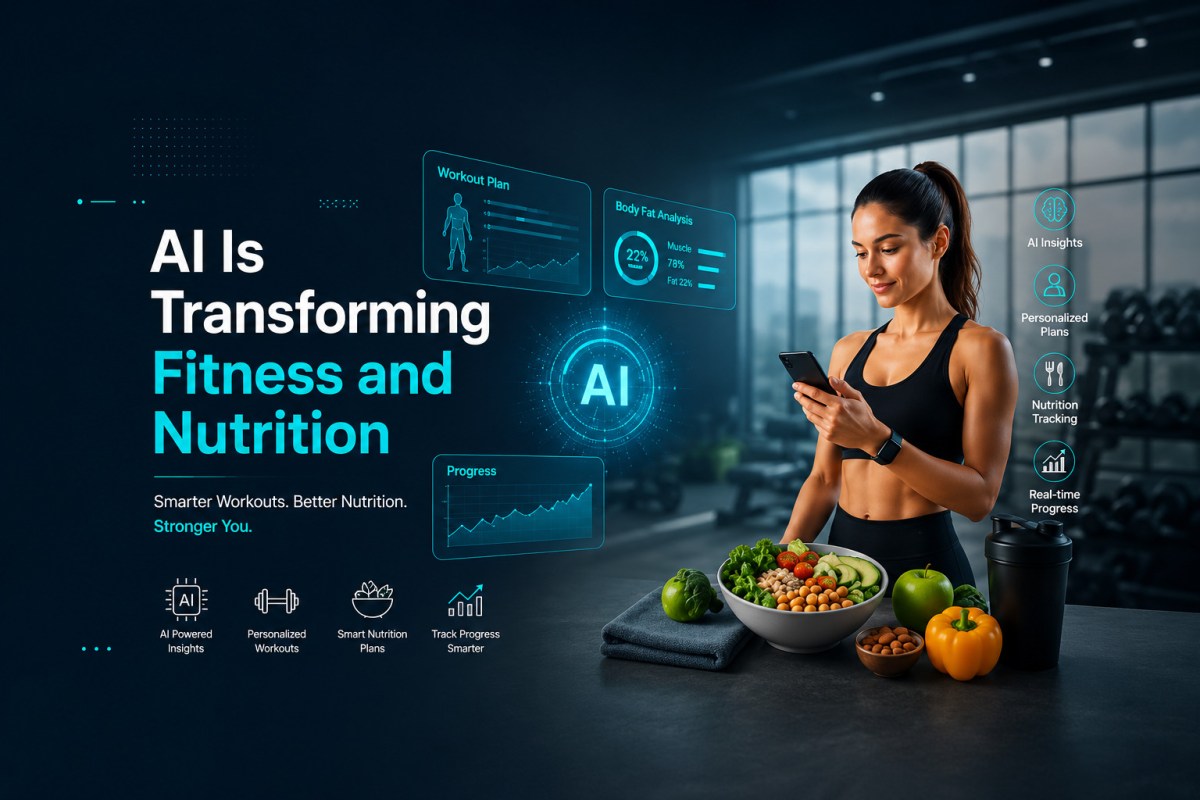
Artificial intelligence (AI) has gone from being a futuristic concept to something many of us use every day, often without even realizing it.
If you’ve ever received a sleep score from your smartwatch, logged a meal by scanning a barcode, followed a workout suggested by an app, or asked an AI assistant a nutrition question, you’ve already experienced AI in action.
Fitness and nutrition are no longer just about counting calories or following a generic workout plan. Today’s technology can analyse your habits, recognise patterns in your behaviour, and recommend small changes that are tailored to your goals. Whether you’re trying to lose weight, build muscle, improve your diet, or simply become more active, AI is beginning to make those decisions more personalised and data-driven.
At the same time, the growing popularity of AI has created plenty of questions. Can AI really replace a personal trainer? Is it capable of creating an effective nutrition plan? Can you trust the advice generated by an app? And where should human expertise still take the lead?
In this guide, we’ll explore how AI is transforming fitness and nutrition in 2026 and how to choose AI-powered fitness tools that genuinely support your health rather than simply adding to the noise.
What Does AI Actually Mean in Fitness and Nutrition?
The term artificial intelligence is often used to describe almost every new feature in a fitness app, but AI isn’t magic, and it isn’t a replacement for human thinking.
In simple terms, AI refers to computer systems that learn from data to identify patterns, make predictions, and improve recommendations over time. Instead of following the same rules for every user, AI can adapt its suggestions based on the information it receives.
Imagine two people opening the same fitness app. One is training for their first marathon, while the other wants to lose 10 kilograms and has never exercised before. A traditional app might offer both users the same workout plan. An AI-powered platform, however, can take factors such as activity levels, goals, progress, food habits, and recovery into account before recommending the next step.
The same principle applies to nutrition. Rather than simply counting calories, AI can help identify eating patterns, estimate nutrient intake, suggest healthier alternatives, and personalise recommendations based on an individual’s lifestyle.
It’s important to remember, however, that AI is only as good as the data it receives. Accurate inputs and evidence-based algorithms lead to better recommendations, while incomplete or poor-quality information can reduce the usefulness of the advice.
At its best, AI doesn’t make decisions for you; it helps you make better-informed ones.
7 Ways AI Is Already Transforming Fitness and Nutrition
Artificial intelligence isn’t just a technology that’s expected to shape the future of health and fitness, it is already changing how millions of people exercise, eat, and monitor their wellbeing. From personalised meal recommendations to smarter workout planning, AI is helping people make more informed decisions with less guesswork.
Here are seven practical ways AI is making a difference today.
1. Personalised Nutrition Instead of Generic Diet Plans
Traditional diet plans often follow a one-size-fits-all approach. AI allows nutrition guidance to become far more personalized by taking into account factors such as age, activity level, dietary preferences, weight goals, and eating habits.
Instead of handing every user the same calorie target or meal plan, AI can recommend changes that are more relevant to the individual, making healthy eating easier to sustain over the long term.
2. Smarter Food Logging
Recording meals used to mean manually searching for every ingredient and estimating portion sizes.
Modern AI-powered nutrition apps are making this process much simpler through features such as barcode scanning, food image recognition, voice-based meal logging, and intelligent search. As these systems improve, tracking nutrition becomes faster, more accurate, and far less time-consuming, reducing one of the biggest barriers to consistency.
3. Adaptive Workout Planning
Following the exact same workout every week isn’t always the most effective approach.
AI can analyse your progress, training frequency, recovery, and workout history to adjust exercise selection, training volume, or progression over time. This creates a more flexible training experience that evolves as your fitness improves instead of remaining static.
4. AI Can Help You Build Better Habits
Ask almost any fitness coach why people struggle to reach their goals, and you’ll rarely hear, “They don’t know what to do.” More often, the problem is consistency.
Most people already know they should exercise regularly, eat more vegetables, get enough protein, and sleep well. The challenge is turning those intentions into daily habits.
This is where AI can make a meaningful difference.
Modern fitness apps can recognise behavioural patterns and provide timely nudges based on your habits rather than generic reminders. Instead of sending the same notification to every user at 8 a.m., AI can learn when you’re most likely to work out, when you usually log meals, or when you’re likely to miss a session.
Over time, these small, personalised interventions can help reinforce healthy routines. Rather than relying solely on motivation (which naturally fluctuates) AI supports consistency by making healthy choices easier to remember and easier to repeat.
The goal isn’t to pressure people into perfect behaviour. It’s to reduce the friction that often prevents good intentions from becoming lasting habits.
5. Wearables Are Becoming Smarter
Fitness trackers have evolved far beyond counting steps.
Today’s smartwatches and wearable devices continuously collect data such as heart rate, sleep duration, activity levels, recovery metrics, and in some cases even stress indicators. AI helps interpret this information, turning thousands of data points into insights that are easier to understand and act upon.
For example, your wearable might recognise that you’ve had several nights of poor sleep combined with unusually high training loads. Instead of encouraging another intense workout, it may recommend a lighter recovery session or additional rest.
Similarly, changes in resting heart rate, activity levels, or sleep quality can help identify patterns long before you notice them yourself.
The technology isn’t perfect, but it allows people to move beyond simply collecting health data to actually using that information to make better day-to-day decisions.
6. AI Delivers Faster Feedback
Traditionally, improving your fitness required weeks (or even months) before you could confidently assess whether your routine was working.
AI shortens that feedback loop.
By analysing your workouts, nutrition logs, sleep patterns, and activity levels, AI can detect trends much earlier than manual tracking alone. It may highlight declining workout consistency, identify missed nutrition targets, or recognise that your progress has plateaued before you notice it yourself.
Receiving earlier feedback doesn’t guarantee better results, but it does create opportunities to make smaller, more timely adjustments instead of waiting until progress stalls completely.
This ability to spot patterns quickly is one of AI’s greatest strengths. It helps users move from reacting to problems after they’ve occurred to identifying potential issues before they become significant setbacks.
7. AI Encourages Long-Term Consistency
The most successful fitness plan isn’t necessarily the most advanced one.
It’s the one you can stick to.
Many people begin a new exercise programme with enthusiasm, only to gradually lose momentum over the following weeks. AI can’t create motivation on demand, but it can support the behaviours that make consistency more achievable.
By tracking progress, celebrating milestones, identifying missed habits, and adapting recommendations as circumstances change, AI helps maintain a sense of momentum. Small adjustments often feel more manageable than completely restarting after falling off track.
Importantly, AI doesn’t judge setbacks. If you miss a workout, take a holiday, or have an inconsistent week, it can simply help you resume from where you left off rather than treating the interruption as failure.
In the long run, this focus on sustainable habits may be one of AI’s biggest contributions to health and fitness. Lasting results are rarely driven by perfect weeks, they’re built through consistent, repeatable behaviours over months and years.
Can AI Really Personalise Your Fitness Journey?
Personalisation is one of the biggest promises of AI, but what does it actually look like in practice?
Imagine five people downloading the same fitness app:
- A 25-year-old preparing for their first half marathon.
- A busy office worker trying to lose 8 kilograms.
- A vegetarian looking to increase protein intake.
- A new parent trying to fit workouts into a hectic schedule.
- A 60-year-old aiming to stay active and maintain muscle strength.
Giving all five people the same workout plan or meal recommendations wouldn’t make much sense.
AI can use information such as goals, age, activity levels, dietary preferences, training history, and progress to provide more relevant recommendations for each individual. As users log workouts, meals, and other health data, those recommendations can continue to evolve.
That doesn’t mean AI understands every aspect of a person’s life. Stress, injuries, motivation, medical conditions, and personal preferences still require human judgement. However, for many day-to-day fitness decisions, personalized recommendations can make healthy habits feel more achievable than generic advice designed for everyone.
AI vs Personal Trainers: Can AI Replace a Coach?
As AI becomes more capable, one question comes up repeatedly:
Will AI eventually replace personal trainers and nutritionists?
The short answer is no, but it will change how they work.
AI is exceptionally good at analysing large amounts of data quickly. It can estimate calorie needs, recommend workouts based on your progress, identify trends in your activity levels, and remind you to stay consistent. It never gets tired, is available 24/7, and can process information far faster than a human.
However, fitness is about far more than data.
An experienced coach understands motivation, confidence, injuries, movement quality, and the emotional side of behaviour change. They know when to push harder, when to back off, and how to adapt recommendations based on conversations that no algorithm can fully interpret.
The comparison is best viewed as complementary rather than competitive.
| AI Does Best | Human Coaches Do Best |
| Analysing data quickly | Building trust and accountability |
| Tracking nutrition and workouts | Correcting exercise technique |
| Identifying patterns | Understanding injuries and limitations |
| Providing instant recommendations | Adapting to emotions and lifestyle changes |
| Monitoring long-term trends | Motivating people through setbacks |
| Available 24/7 | Applying professional judgement |
The future of fitness is unlikely to be AI instead of coaches. It’s far more likely to be AI working alongside coaches, handling routine analysis while allowing professionals to focus on guidance, accountability, and personalised care.
Where AI Still Falls Short
AI has advanced rapidly, but it still has important limitations.
First, AI depends on the quality of the information it receives. If meals aren’t logged accurately or wearable devices collect incomplete data, the recommendations generated may also be inaccurate.
Second, AI lacks clinical judgement. It cannot diagnose injuries, identify underlying medical conditions, or replace qualified healthcare professionals when symptoms require medical attention.
It also struggles with context.
A missed workout might be caused by illness, family responsibilities, travel, or simply a stressful week. While AI can recognise the pattern, it often cannot understand the full story behind it without additional human input.
Privacy is another consideration. AI-powered health apps often process large amounts of personal information, making it important to choose platforms that are transparent about how user data is stored and used.
Recognising these limitations doesn’t reduce AI’s value, it simply helps users understand where technology ends and professional expertise begins.
How to Choose an AI Fitness App
Not every app that claims to use AI offers meaningful personalisation.
When comparing platforms, it’s worth looking beyond marketing claims and asking a few practical questions:
- Does the app personalise recommendations based on your goals, activity level, and progress?
- Can it track nutrition accurately, including foods you actually eat?
- Does it adjust workout recommendations over time rather than following a fixed programme?
- Are the recommendations based on established nutrition and exercise science?
- Does the app encourage long-term habit building instead of focusing only on short-term results?
- Is there transparency around data privacy and how your information is used?
- Can you easily understand why the app is making a particular recommendation?
A good AI fitness app shouldn’t just generate more data. It should help you make better decisions with less effort.
The Future of AI in Fitness
The AI features available today are only the beginning.
In the coming years, fitness technology is likely to become even more personalized as AI combines information from wearables, nutrition tracking, recovery metrics, and health records to provide more tailored recommendations.
We’re already seeing progress in areas such as computer vision for exercise analysis, voice-based coaching, real-time food recognition, and wearable devices that provide deeper insights into recovery and training readiness.
As these technologies mature, AI may become better at predicting plateaus, identifying overtraining risks, suggesting recovery strategies, and adapting plans before progress begins to slow.
At the same time, one principle is unlikely to change: the quality of recommendations will always depend on the quality of the data and the scientific evidence behind them.
The future isn’t about replacing healthy habits with technology, it’s about using technology to make those habits easier to build and maintain.
Should You Trust AI With Your Health?
AI can be an excellent tool for supporting healthier decisions, but it shouldn’t be viewed as an unquestionable authority.
For everyday tasks such as tracking meals, planning workouts, monitoring progress, and identifying behavioural patterns, AI can save time and reduce guesswork. These are areas where it already adds meaningful value for many users.
However, medical diagnoses, injury management, prescription advice, and complex health conditions still require qualified healthcare professionals. AI should support those conversations and not replace them.
The most effective approach is to think of AI as a knowledgeable assistant: one that helps you stay organised, informed, and consistent while recognising when expert human guidance is needed.
Conclusion
Artificial intelligence is changing fitness and nutrition in ways that were difficult to imagine just a few years ago. From personalized meal recommendations and adaptive workout plans to smarter food logging and habit coaching, AI is making healthy living more accessible and more individualised than ever before.
But technology alone isn’t enough.
Long-term health still depends on the fundamentals: eating well, exercising consistently, recovering properly, and making choices you can sustain over time. AI can simplify those decisions, but it can’t make them for you.
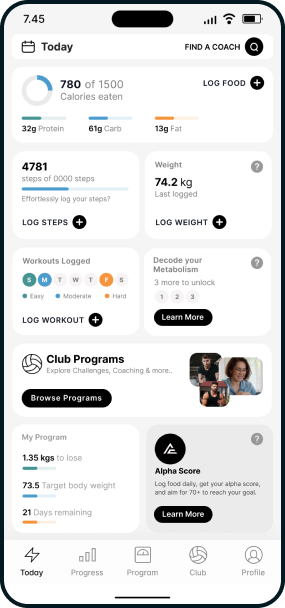
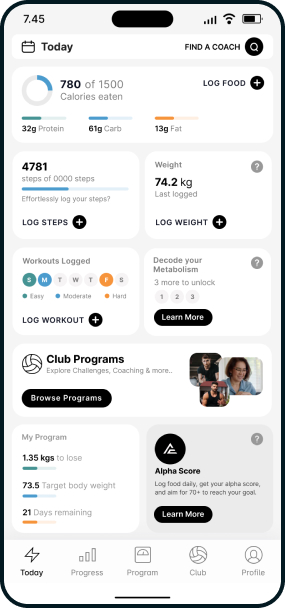
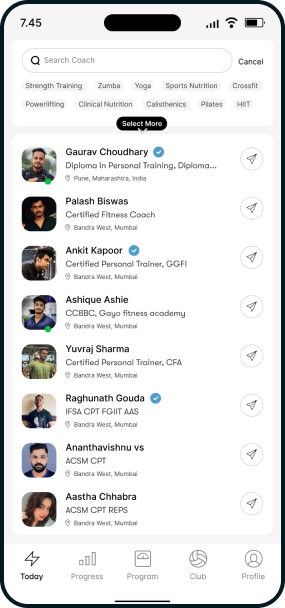
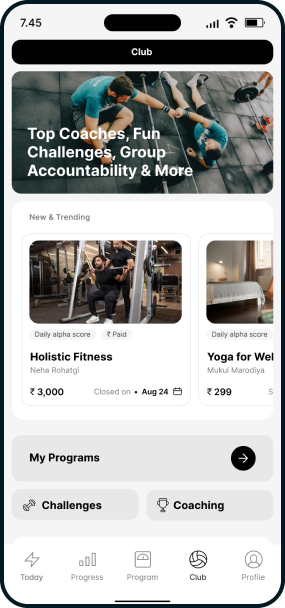
The strongest fitness journey combines technology with evidence-based guidance and consistent habits. Platforms like Alpha Coach are moving in that direction by bringing together adaptive intelligence powered nutrition tracking, Indian food logging, adaptive workout guidance, and habit-building insights to help users make better decisions every day.
The future of fitness isn’t human or AI.
It’s human and adaptive intelligence working together to make healthier living simpler, smarter, and more sustainable.
Frequently Asked Questions
1. What is AI in fitness?
AI in fitness refers to the use of artificial intelligence to analyse health and activity data, personalise workout and nutrition recommendations, track progress, and help users make more informed decisions about their fitness.
2. How does AI help with nutrition?
AI can estimate calorie and nutrient intake, recommend meals based on your goals, recognise eating patterns, and provide personalised nutrition guidance using the information you log over time.
3. Can AI replace a personal trainer?
Not completely. AI is excellent at analysing data and providing personalised recommendations, but human coaches remain essential for accountability, movement assessment, motivation, and adapting advice to complex personal situations.
4. Are AI workout plans effective?
They can be, particularly when they adapt based on your progress, goals, and recovery. However, the quality of the recommendations depends on the data provided and the evidence behind the algorithm.
5. Can AI count calories accurately?
AI can make calorie tracking faster through barcode scanning, image recognition, and food databases, but accuracy still depends on correct portion sizes and meal logging.
6. Is AI safe for health advice?
AI is useful for general fitness and nutrition guidance, but it should not replace medical advice. Health concerns, injuries, and medical conditions should always be discussed with qualified professionals.
7. How do AI fitness apps personalise recommendations?
They analyse factors such as age, goals, activity levels, workout history, nutrition habits, and progress to adjust recommendations over time rather than offering the same plan to every user.
8. Can AI analyse workout performance?
Yes. Many AI-powered platforms use workout data, wearable devices, and training history to identify trends, suggest adjustments, and monitor progress.
9. What should I look for in an AI fitness app?
Choose an app that provides evidence-based recommendations, adapts to your progress, supports nutrition and workout tracking, protects your data, and clearly explains how it personalises its advice.
10. What is the future of AI in fitness?
Future developments are expected to include more advanced wearable integration, real-time exercise analysis, improved recovery recommendations, computer vision, and increasingly personalized health guidance supported by AI.
 0
0








Leave a Reply