
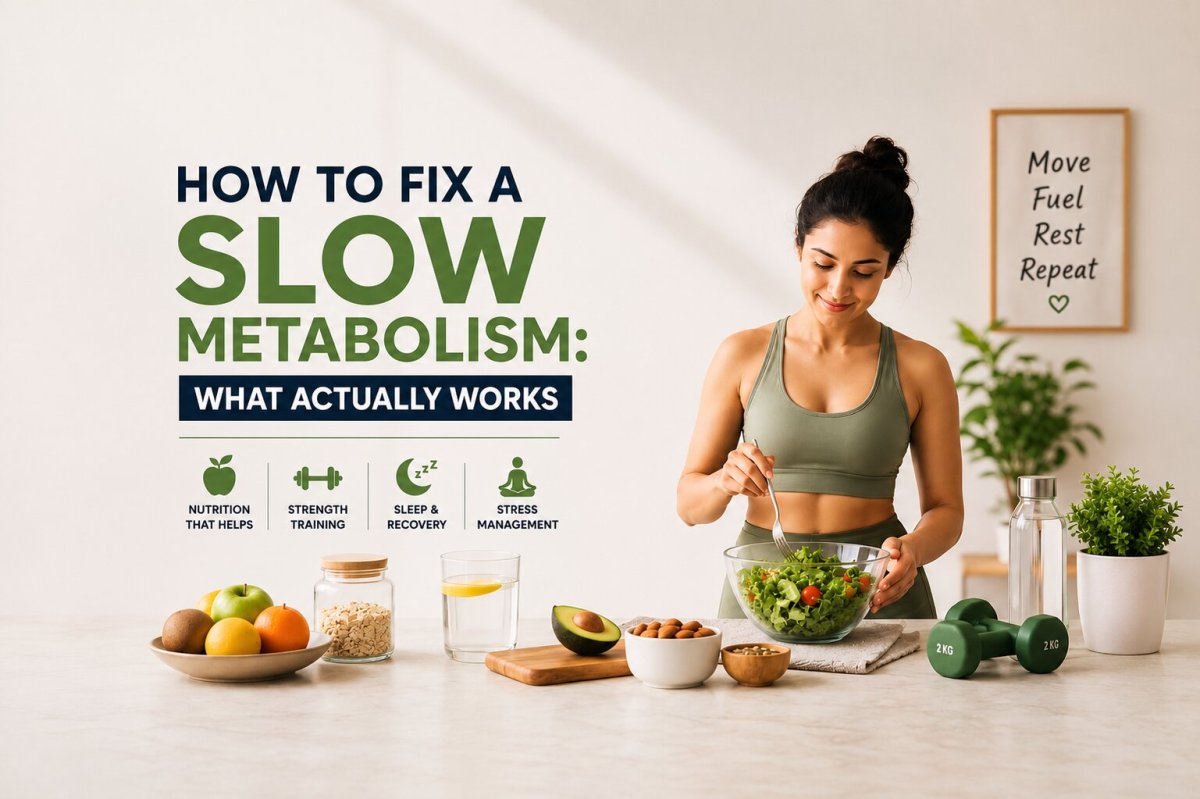
 154 views
Most people have blamed their metabolism at some point.
You’ve been eating better, exercising more consistently, and trying to make healthier choices. Yet the scale refuses to move, or your progress slows down after a few weeks. It’s frustrating, and the explanation often seems obvious: Maybe I just have a slow metabolism.
It’s an idea that’s reinforced everywhere. Social media promises foods that supposedly “boost metabolism,” supplements claim to turn your body into a calorie-burning machine, and countless articles suggest that one small trick can completely change how your body burns energy.
The reality is less dramatic, but far more encouraging.
Your metabolism isn’t broken because you hit a weight-loss plateau, and it isn’t controlled by a single food or supplement. While there are genuine factors that influence how much energy your body uses each day, most people have far more control over their metabolism than they realize. The key is understanding what actually affects it and separating evidence-based advice from popular myths.
In this guide, we’ll explain how to increase metabolism naturally, whether you can realistically boost metabolism, what it really means to fix slow metabolism, and the habits that make a measurable difference over time.
Do You Really Have Slow Metabolism?
When weight loss stalls, metabolism is often the first thing people blame.
It’s easy to understand why. You may know someone who seems to eat whatever they want without gaining weight, while you feel like every extra meal shows up on the scale. But in most cases, metabolism isn’t the real problem.
Weight-loss plateaus are incredibly common, even when you’re doing many things right. As you lose weight, your body naturally requires fewer calories than it did before. Daily activity can also change without you noticing; you may move a little less, take fewer steps, or become more efficient during workouts. Small changes like these can gradually reduce the calorie deficit that was helping you lose weight.
There’s also something psychologists call the “healthy eater effect.” Once people start making better food choices, they often become less aware of portion sizes or small extras like cooking oil, snacks, drinks, or weekend meals. Those calories can quietly add up, making it seem as though metabolism has suddenly slowed down.
That’s why it’s worth asking a different question before assuming your metabolism is broken:
Is it really my metabolism, or have my habits changed in ways I haven’t noticed?
For most people, the answer is the second one.
What Is Slow Metabolism, Really?
Simply put, metabolism is the collection of processes your body uses to convert food into energy. That energy keeps you alive long before you think about exercise. Every heartbeat, every breath, every thought, and every cell repair depends on it.
A “slow metabolism” doesn’t mean your body has stopped burning calories or that weight loss has become impossible. It simply means your body uses energy at a lower rate than someone else’s.
That rate is influenced by several factors, including your body size, muscle mass, age, genetics, and daily activity. For example, a taller person with more muscle will generally burn more calories at rest than someone who is smaller, even if both spend the day doing similar activities.
This is why comparing your metabolism with someone else’s rarely tells you anything useful. Two people can follow the same diet and exercise routine yet have different calorie requirements because their bodies are different.
Metabolism Myths
Before looking at what genuinely influences metabolism, it’s worth clearing up a few of the biggest misconceptions. Much of the advice shared online sounds convincing but doesn’t hold up well when you look at the evidence.
| Myth | Reality |
| Eating every two hours boosts your metabolism. | Meal frequency has very little effect on the total calories your body burns in a day. |
| Fat burners dramatically increase metabolism. | Most supplements have only a small, temporary effect, if any, and they’re far less important than your daily habits. |
| Muscle burns huge numbers of calories at rest. | Muscle does increase calorie expenditure, but the effect is gradual rather than dramatic. |
| Your metabolism crashes after you turn 30. | Metabolism changes slowly over time, largely because people tend to lose muscle and become less active, not because the body suddenly slows down overnight. |
The common theme is that metabolism is often portrayed as something that can be hacked with one food, one supplement, or one habit.
In reality, it responds to the choices you make consistently over weeks, months, and years; not overnight.
What Your Metabolism Actually Does
When people say your metabolism “burns calories,” they’re only partly right. Your metabolism is the total amount of energy your body uses each day to keep you alive and functioning.
Even when you’re asleep or resting, your body is constantly burning calories to keep your heart beating, your lungs breathing, your brain working, and your cells repairing themselves. In fact, this accounts for the largest share of the calories you burn every day.
Your body also uses energy to digest food; a process called the Thermic Effect of Food (TEF) and to power all physical activity, from workouts to everyday movements like walking, climbing stairs, or doing household chores.
The key takeaway is simple: your metabolism isn’t one process you can suddenly “speed up.” It’s the combined result of many processes that use energy throughout the day, which is why consistent lifestyle habits matter far more than quick metabolism hacks.
Where Your Daily Calories Actually Go

One of the biggest surprises for many people is discovering that the gym isn’t where most of their daily calories are burned.
Your daily energy expenditure is generally made up of four components.
1. Basal Metabolic Rate (BMR)
This is the energy your body needs simply to stay alive. It supports essential functions like breathing, circulation, hormone production, and maintaining body temperature. For most people, BMR accounts for roughly 60–70% of the calories they burn each day.
In other words, your body burns far more calories keeping you alive than it does during your workout.
2. Non-Exercise Activity Thermogenesis (NEAT)
NEAT includes all the movements that aren’t planned exercises.
Walking around the office. Taking the stairs. Doing household chores. Standing while working. Playing with your children.
These small movements often burn more calories over the course of a day than people expect, which is why increasing daily activity can have a surprisingly large impact on long-term energy expenditure.
3. Exercise
This is the part most people think of first. Strength training, running, cycling, swimming, sports, and gym sessions all contribute to your daily calorie burn. While exercise is incredibly valuable for health, fitness, and preserving muscle, it usually represents a smaller share of your total daily energy expenditure than people assume.
4. The Thermic Effect of Food (TEF)
Every meal requires energy to digest.
Although TEF contributes the smallest portion of daily calorie expenditure, it still plays a role. Protein-rich meals generally require more energy to digest than meals that are primarily carbohydrates or fats.
The key takeaway isn’t that you need to maximise one of these areas.
It’s that your metabolism is influenced by several different processes working together. Understanding those processes makes it much easier to focus on habits that genuinely move the needle instead of chasing shortcuts.
What Really Affects Your Metabolism?
If you’ve ever wondered why two people of the same age can eat similar meals yet have different calorie needs, the answer lies in the many factors that influence metabolism. Some of these are outside your control, while others are shaped by your daily habits.
Body size plays a role because larger bodies naturally require more energy to maintain. This is also why calorie needs tend to decrease as you lose weight.
Muscle mass matters too. Muscle requires more energy to maintain than fat, so building and preserving lean muscle can gradually increase the number of calories your body burns. It’s also one of the best ways to minimise the natural drop in calorie needs during weight loss.
Your daily activity has a bigger impact than many people realise. Exercise is important, but so are all the small movements outside the gym. Walking more, taking the stairs, standing regularly, and staying active throughout the day can collectively burn a meaningful number of calories.
Age does influence metabolism, but not as dramatically as it’s often portrayed. Much of the gradual slowdown is linked to lower activity levels and age-related muscle loss rather than age itself.
Finally, sleep and eating habits matter. Poor sleep can affect appetite, recovery, and energy levels, while eating too little for long periods may cause your body to conserve energy, making dieting harder over time.
So, while you can’t completely change your genetics or age, you can influence many of the habits that support a healthy metabolism. Those everyday choices have a far greater impact than any quick-fix metabolism hack.
Can You Actually Increase Your Metabolism?
The short answer is yes, but probably not in the way you think.
You can’t dramatically speed up your metabolism with a tea, supplement, or one “superfood.” But you can influence how much energy your body uses over time through the habits you practise consistently.
So rather than asking “How can I get a faster metabolism?”, a better question is:
“How can I create habits that support a healthier metabolism?”
7 Evidence-Based Ways to Boost Metabolism Naturally
There isn’t a single habit that transforms your metabolism overnight. Instead, small, consistent behaviours work together to increase energy expenditure, preserve muscle, and support long-term metabolic health.
1. Strength Train Regularly
If there’s one habit worth prioritising, it’s strength training.
Building and maintaining muscle slightly increases the number of calories your body burns each day. More importantly, it helps preserve lean muscle during weight loss, making it easier to maintain your calorie needs instead of seeing them drop too quickly.
Aim for two to four resistance-training sessions each week and focus on progressing gradually over time.
2. Prioritise Protein
Protein does more than help build muscle.
It supports recovery, keeps you feeling fuller for longer, and requires slightly more energy to digest than carbohydrates or fats. While that extra calorie burn isn’t dramatic, it adds to the overall benefits of eating enough protein, especially if you’re trying to lose fat or maintain muscle.
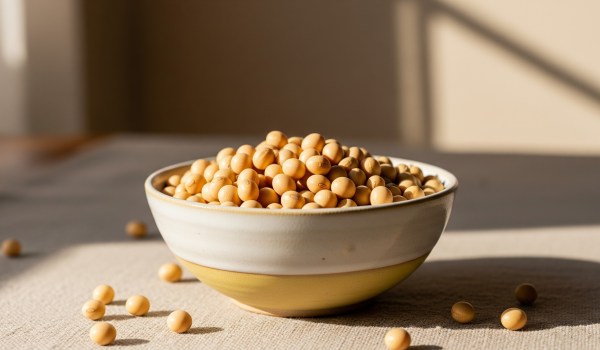
Good sources include eggs, dairy, paneer, tofu, soy, lentils, beans, fish, and lean meat.
3. Move More Outside the Gym
Your workout is only one part of the picture.
The calories you burn walking, climbing stairs, standing, doing household chores, or simply moving more throughout the day all contribute to your daily energy expenditure. These small movements, known as Non-Exercise Activity Thermogenesis (NEAT), can have a surprisingly large impact over time.
If you’re looking for a simple way to boost metabolism, increasing your daily movement is often more effective than adding another workout.
4. Avoid Extreme Dieting
Eating too little for long periods doesn’t “break” your metabolism, but it can encourage your body to conserve energy and make dieting feel progressively harder.
A moderate calorie deficit is far more sustainable. It allows you to lose fat while maintaining energy levels, supporting workouts, and preserving muscle.
5. Make Sleep a Priority
Sleep may not directly speed up your metabolism, but it affects many of the habits that influence body weight.
Poor sleep can increase hunger, reduce energy, slow recovery, and make it harder to stay active or make balanced food choices. Consistently getting seven to nine hours of quality sleep gives your body a much better foundation for long-term health.
6. Stay Hydrated
Water won’t suddenly increase the number of calories you burn, but staying hydrated supports normal metabolic function, exercise performance, and temperature regulation.
It can also help prevent thirst from being mistaken for hunger, making it easier to manage your food intake throughout the day.
7. Be Consistent
This is the habit that ties everything together. Many people jump from one trend to the next (detox teas, metabolism supplements, restrictive diets, or the latest viral hack) without giving any approach enough time to work.
Real progress usually comes from repeating the fundamentals.
Strength train regularly. Eat enough protein. Stay active. Sleep well. Maintain a sustainable calorie intake.
Foods That Can Support a Healthy Metabolism (Without the Hype)
If you’ve ever searched for foods that “boost metabolism,” you’ve probably come across long lists claiming everything from lemon water to apple cider vinegar can dramatically increase calorie burn.
The truth is much less dramatic.
No single food has the power to significantly speed up your metabolism on its own. However, some foods can support healthy metabolic function or have small effects that are worth understanding in context.
Protein-rich foods are probably the strongest example. Because protein has a higher thermic effect than carbohydrates and fats, your body uses slightly more energy digesting it. Protein also helps preserve muscle and improves satiety, making it easier to maintain healthy eating habits.
Coffee can temporarily increase alertness and slightly increase energy expenditure because of its caffeine content. For many people, it can also improve exercise performance, which may help them train harder.
Green tea contains caffeine and plant compounds called catechins, which have been studied for their potential effects on metabolism. While some studies suggest a small benefit, the overall effect is modest and shouldn’t be viewed as a weight-loss strategy on its own.
Spicy foods, particularly those containing capsaicin, may also produce a very small increase in calorie expenditure. Again, the effect exists, but it’s far too small to replace the importance of diet and physical activity.
Finally, drinking enough water supports the countless metabolic processes your body performs every day. While drinking water isn’t a metabolism hack, staying hydrated is essential for overall health and exercise performance.
The common thread is simple: no food dramatically boosts metabolism. Instead, these foods work best when they’re part of a balanced eating pattern built around adequate protein, whole foods, and sustainable habits.
The Biggest Metabolism Myths Worth Ignoring
Few areas of nutrition attract as many myths as metabolism.
The idea of “boosting” it is appealing, so it’s no surprise that countless products, diets, and hacks promise to speed it up. The problem is that many of these claims either exaggerate the science or ignore it altogether.
Here are some of the most common myths worth leaving behind.
Myth 1: Eating Every Two Hours Speeds Up Your Metabolism
This idea has been around for years, but research doesn’t support it.
Digesting food does burn calories, a process known as the Thermic Effect of Food (TEF) but the total energy used depends on how much you eat across the day, not how often you eat.
Whether you eat three meals or six smaller ones, the overall effect on metabolism is very similar.
Choose a meal pattern that fits your schedule and helps you stay consistent, rather than worrying about eating every couple of hours.
Myth 2: Fat Burners and Metabolism Supplements Are the Answer
Walk into any supplement store and you’ll find products promising to “ignite” your metabolism.
In reality, most metabolism supplements have only small, temporary effects, if any. Even when certain ingredients slightly increase calorie expenditure, the difference is usually too small to produce meaningful weight loss on its own.
No supplement can replace a balanced diet, regular movement, and strength training. If something sounds like a shortcut, it probably is.
Myth 3: Sweating Means You’re Burning More Fat
It’s easy to assume that a workout leaving you drenched in sweat must have burned more calories. But sweating is simply your body’s cooling system.
It tells you that your body temperature has increased, not that your metabolism suddenly shifted into a higher gear. Any weight lost through sweat is mostly water and will return once you rehydrate.
Myth 4: Eating Late at Night Slows Your Metabolism
Late-night eating has gained a bad reputation, but the timing itself isn’t usually the problem.
What matters far more is your overall calorie intake, food choices, and eating habits across the day. If eating late causes you to consume excess calories, it may affect your weight. But eating dinner at 9 p.m. instead of 7 p.m. doesn’t suddenly make your metabolism slow down.
Myth 5: One Food Can Dramatically Boost Your Metabolism
Coffee. Green tea. Apple cider vinegar. Chilli peppers. They’re often promoted as metabolism boosters.
While some of these foods may have small effects on energy expenditure, no single food will override poor eating habits or inactivity. Real metabolic health is built through consistent lifestyle habits, not individual ingredients.
Why Your Weight Loss May Have Slowed Down (Even If Your Metabolism Hasn’t)
One of the most frustrating moments during any weight-loss journey is when progress suddenly stalls. The scale stops moving. Your clothes fit the same.
And it feels like your metabolism has given up. In reality, several things could be happening.
As you lose weight, your body naturally requires fewer calories than it did when you were heavier. A calorie deficit that worked perfectly a few months ago may now simply be your new maintenance intake.
Your daily movement can also decrease without you noticing. You might take fewer steps. Sit a little more. Or simply move less because your body has become more efficient.
There’s also the possibility of calorie creep. Portions become slightly larger. Weekend meals become more relaxed.
A few extra bites while cooking don’t seem like much, but over weeks they can reduce the calorie deficit that was driving progress.
Weight-loss plateaus don’t automatically mean your metabolism is broken. More often, they’re a sign that your body has adapted to where it is today.
The solution usually isn’t another extreme diet. It’s reassessing your calorie intake, activity levels, and everyday habits before making small, sustainable adjustments.
How Long Does It Take to Improve Your Metabolism?
This is one of the most common questions people ask, and the honest answer is: It depends on what you’re trying to improve.
There isn’t a switch you can flip that suddenly gives you a “faster metabolism.” Instead, metabolism responds gradually to consistent habits.
Changes don’t happen overnight. But over weeks and months, they work together to create a body that functions more efficiently than it did before. That’s why chasing rapid metabolism boosts is usually disappointing.
Building habits that support your metabolism is slower, but it’s also far more likely to last.
When a Slow Metabolism Could Be a Medical Issue
Most people who struggle to lose weight don’t have a medically slow metabolism. However, certain health conditions and medications can make weight management more challenging.
For example, hypothyroidism can slow metabolic processes and may cause symptoms like persistent fatigue, feeling unusually cold, dry skin, constipation, or unexplained weight gain. Conditions such as PCOS and hormonal changes during menopause can also influence body weight, appetite, and calorie needs. Some medications, including certain antidepressants and corticosteroids, may have similar effects.
If you’re eating well, staying active, and still experiencing persistent symptoms or unexplained weight changes, it’s worth speaking to a healthcare professional. Sometimes the solution isn’t another diet, it’s identifying and treating an underlying medical condition.
How to Tell If You’re Moving in the Right Direction
The weighing scale is just one measure of progress.
A healthier metabolism often shows up in other ways first. You may notice better energy levels, improved workout performance, quicker recovery, or that your clothes fit differently even if your weight hasn’t changed much.
Progress is rarely perfectly linear, but when your eating habits, activity levels, sleep, and strength become more consistent, meaningful results usually follow.
The goal isn’t just to lose weight, it’s to build a body that’s healthier, stronger, and easier to maintain over the long term.
Stop Trying to “Hack” Your Metabolism. Build Habits That Support It.
Despite what the internet suggests, there isn’t a shortcut to a faster metabolism.
The biggest improvements come from the habits you repeat consistently: strength training, eating enough protein, staying active, sleeping well, and avoiding extreme dieting. Individually, none of these will transform your metabolism overnight. Together, they can improve your metabolic health and make long-term weight management much more sustainable.
It’s also worth remembering that your calorie needs change over time. As your weight, activity level, and body composition evolve, your nutrition should evolve with them. Regularly reviewing your calorie intake is far more effective than chasing metabolism “boosters.”
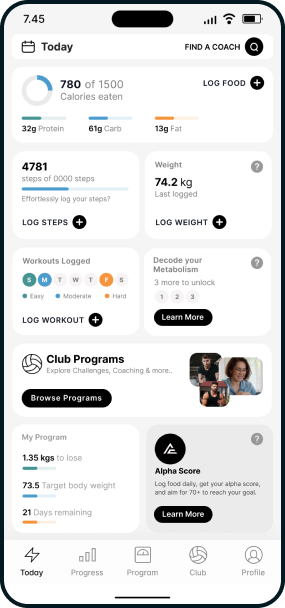
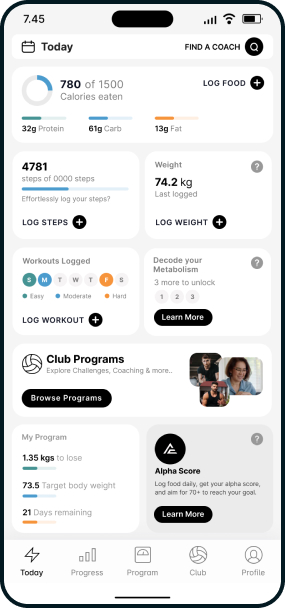
If you want to make that process easier, tools like Alpha Coach can help you estimate your calorie needs, track your nutrition, and adjust your plan as your progress changes.
The goal isn’t to have a “fast” metabolism; it’s to build habits that help your body perform at its best.
Frequently Asked Questions
Can we really boost your metabolism?
Yes, but not with a single food, supplement, or shortcut. The best way to support your metabolism is by building muscle, staying active, eating enough protein, sleeping well, and avoiding crash diets. It’s your daily habits that make the biggest difference.
What’s the fastest way to increase metabolism?
There isn’t a quick fix. If you want the biggest long-term impact, focus on strength training, eating enough protein, moving more throughout the day, and staying consistent. These habits work far better than any metabolism-boosting product.
Does drinking water increase metabolism?
Not in any significant way. Water is essential for good health and exercise performance, and staying hydrated can help you feel and perform better. But drinking more water alone won’t dramatically increase the number of calories you burn.
Does coffee boost metabolism?
Coffee can give your metabolism a small temporary lift because of its caffeine content, and it may help you feel more alert during workouts. But the effect is modest, so don’t rely on coffee alone for weight loss.
Does eating breakfast boost metabolism?
No. Eating breakfast doesn’t “switch on” your metabolism. What matters most is how much you eat and the quality of your diet over the entire day—not whether you eat your first meal at 7 a.m. or 10 a.m.
Does building muscle increase metabolism?
Yes, but not dramatically. Muscle burns more calories than fat, so having more muscle can gradually increase your daily calorie needs. One of its biggest benefits is helping you maintain a healthier metabolism while losing fat.
Can you fix a slow metabolism?
If your metabolism has slowed because you’ve been inactive, lost muscle, or followed very restrictive diets, improving those habits can help. But if an underlying medical condition is affecting your metabolism, it’s important to speak to a healthcare professional. The goal isn’t to “fix” your metabolism overnight, it’s to support it with better habits.
Is metabolism mostly genetic?
Genetics do play a role, but they aren’t the whole story. Your activity levels, muscle mass, sleep, and eating habits all influence how much energy your body uses. While you can’t change your genes, you can change many of the habits that support a healthy metabolism.
 0
0











Leave a Reply