
 230 views
High blood pressure, or hypertension, is one of the most common lifestyle-related health issues today. What makes it dangerous is not just how widespread it is, but how quietly it develops. Most people don’t feel anything unusual until a routine check-up reveals elevated numbers. By then, it may already be affecting the heart, kidneys, or blood vessels.
In India, rising stress levels, high-salt diets, irregular sleep, and low physical activity are driving cases even among younger adults. The good news is that high blood pressure is often manageable with the right daily habits.
This guide breaks down what high blood pressure really means, why it happens, and how to lower it naturally using simple, practical steps you can start today.
Quick Answer: What Actually Works for High Blood Pressure
If you’re trying to reduce high blood pressure, the approach does not need to be complicated. It needs to be consistent.
Most people see improvement when they focus on a few high-impact habits:
- Control salt intake (including hidden salt from packaged foods)
- Eat mostly home-cooked meals with vegetables, dal, and whole foods
- Move daily (walking is enough to start)
- Manage body weight through a small, steady calorie
You don’t need a perfect diet or intense workouts. A simple routine done daily works better than extreme plans followed for a few days.
Walking for 30 minutes and improving even one or two meals per day already creates a strong base.
What Should You Do Based on Your BP?
| BP Level | What This Means | What You Should Do |
| 120–129 | Slightly elevated | Start reducing salt and walk daily. This is the easiest stage to fix. |
| 130–139 | Early high BP | Improve diet, increase activity, and track weight weekly. |
| 140+ | High BP | Follow lifestyle changes strictly and consult a doctor alongside. |
What Matters Most
- Small changes done daily
- Tracking your habits
- Staying consistent for weeks, not days
Most people don’t struggle because they don’t know what to do. They struggle because they try to do everything at once and stop midway. Start simple and build from there.
What is High Blood Pressure?
Blood pressure is the force with which your blood flows through your arteries. Your heart pumps blood, and your arteries carry it. When this pressure stays high for long periods, it starts damaging the blood vessels and organs.
Blood pressure is recorded using two numbers:
- Systolic (top number): Pressure when the heart contracts and pumps blood
- Diastolic (bottom number): Pressure when the heart relaxes between beats
Blood Pressure Categories
| Category | Systolic (Top) | Diastolic (Bottom) |
| Normal | Less than 120 | Less than 80 |
| Elevated | 120–129 | Less than 80 |
| High (Stage 1) | 130–139 | 80–89 |
| High (Stage 2) | 140 and above | 90 and above |
Why It Matters
When blood pressure stays elevated:
- Arteries become stiff and less flexible
- The heart has to work harder to pump blood
- Risk of heart disease, stroke, and kidney issues increases over time
This is why high blood pressure is often called a silent problem. You may feel normal, but changes are happening internally.
The goal is not just to lower a number. It is to reduce long-term strain on your body through habits that you can sustain.
Symptoms of High Blood Pressure
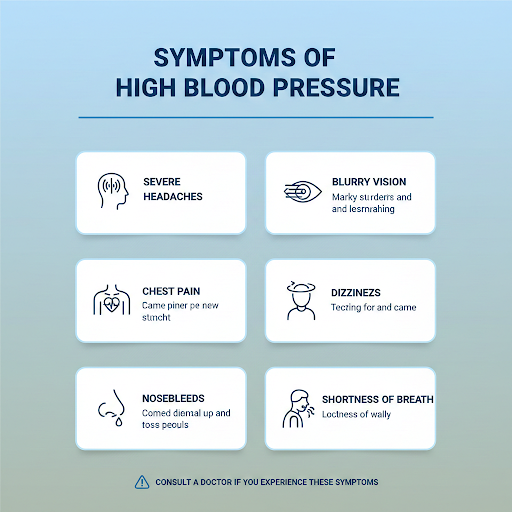
High blood pressure is often called a silent condition because most people do not feel anything unusual in the early stages. You may look fine, feel fine, and still have elevated blood pressure.
That is why waiting for symptoms is not a safe strategy.
Some people may experience:
- Headaches
- Dizziness
- Unusual fatigue
- Shortness of breath
- Blurred vision
- Chest discomfort in more serious cases
But these signs are not reliable. They can happen due to stress, poor sleep, dehydration, anxiety, or other health issues too.
The only accurate way to know your blood pressure is to measure it regularly. If you have a family history of hypertension, are overweight, eat a high-salt diet, or have a stressful lifestyle, regular monitoring becomes even more important.
A simple reading at home, at a clinic, or even at a pharmacy can help you catch high blood pressure early, before it starts affecting your heart, kidneys, or blood vessels.
Causes of High Blood Pressure
High blood pressure usually does not happen because of one single mistake. It builds over time through a mix of diet, lifestyle, stress, sleep, body weight, and genetics.
For many people in India, the issue is not just “too much salt” in home food. It is the total load coming from packaged snacks, restaurant meals, pickles, papads, sauces, bakery foods, and frequent eating out.
Lifestyle Causes
| Cause | How It Affects Blood Pressure |
| High salt intake | Increases fluid retention and raises pressure in blood vessels |
| Low physical activity | Reduces heart and blood vessel efficiency |
| Weight gain | Makes the heart work harder to pump blood |
| Poor sleep | Disrupts recovery and stress hormones |
| Chronic stress | Keeps the body in a high-alert state |
Real-Life Indian Patterns That Raise BP
These are common patterns that quietly push blood pressure up:
- Daily namkeen, farsaan, chips, or biscuits with chai
- Pickles, papad, chutneys, and sauces with most meals
- Frequent restaurant food, where salt and oil are usually much higher
- Long sitting hours with very little walking
- Late dinners followed by poor sleep
- Weekend alcohol plus heavy meals
- Weight gain around the stomach
- “Healthy” home food that still uses too much salt or oil
Other Risk Factors
Some causes are not fully in your control, but they still matter:
- Family history of high blood pressure
- Age
- Diabetes
- Kidney conditions
- Smoking
- High alcohol intake
- Long-term stress
Most people have more than one trigger. That is why the best approach is not to chase one magic fix. It is to improve the main daily habits that affect blood pressure: food, movement, weight, sleep, and stress.
Reality Check: Myths vs Truth
Most confusion around high blood pressure comes from assumptions that feel logical but are not accurate. Clearing these early helps you take the right actions.
| Myth | Truth |
| I feel fine, so my BP is normal | High blood pressure often has no symptoms. You need to measure it. |
| Only older people get BP | Increasingly common in people in their 20s and 30s due to lifestyle factors |
| I should stop salt completely | You don’t need zero salt. You need controlled intake, especially from hidden sources |
| Medicines solve everything | Medication helps, but lifestyle changes are still essential for long-term control |
Many people delay action because they rely on how they feel. High blood pressure does not work that way. It builds quietly, and by the time symptoms appear, it is usually already affecting your health.
The goal is not to panic. It is to be aware and act early.
Natural Ways to Lower Blood Pressure: What Actually Works
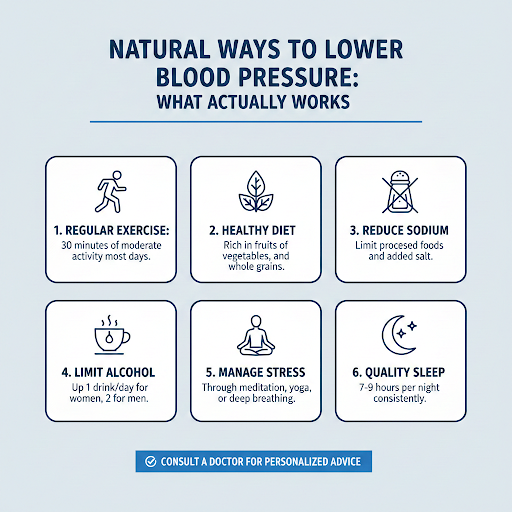
High blood pressure improves when you reduce the daily strain on your body. This does not come from one change. It comes from a combination of simple habits working together.
- Lower sodium intake reduces fluid retention and pressure in blood vessels
- Weight loss reduces the load on your heart and arteries
- Daily movement improves blood circulation and vessel flexibility
- Balanced diet supports heart health and metabolic function
One of the most effective drivers is body weight management. Creating a small, consistent deficit helps reduce excess body fat over time. You do not need extreme dieting. A slight reduction in calories, maintained consistently, is enough.
Even a 5–10% reduction in body weight can lead to noticeable improvements in blood pressure.
It is important to keep expectations realistic. Healthy fat loss is gradual. A steady range of 0.5 to 1 kg per week is both sustainable and effective. Faster methods often lead to short-term results but are hard to maintain.
This is why structured, repeatable habits work better than aggressive plans.
Step-by-Step Ways to Lower Blood Pressure Naturally
The most effective approach is simple and repeatable. Focus on building a few core habits and maintaining them daily.
Step 1: Control Salt Intake
Limit total salt intake to around 1 teaspoon (5g) per day, including hidden sources. This means paying attention not just to what you add while cooking, but also to packaged foods, snacks, and restaurant meals.
Step 2: Move Daily
Start with 30 minutes of brisk walking. This is the simplest and most effective activity for reducing high blood pressure. If needed, break it into shorter sessions across the day.
Step 3: Improve Food Quality
Shift towards home-cooked meals built around vegetables, dal, whole grains, and simple ingredients. You don’t need complicated diets. You need consistency in what you eat daily.
Step 4: Manage Body Weight
If you are overweight, even a small weight loss can reduce high blood pressure. Focus on steady progress instead of aggressive targets.
Step 5: Improve Sleep and Stress
Fix your sleep timing and aim for consistent rest. Add simple practices like deep breathing or short breaks during the day to manage stress.
Weekly Execution Checklist
This is where most people succeed or fail. Keep it simple and measurable.
Daily
- Walk for at least 30 minutes
- Eat mostly home-cooked meals
- Limit packaged and high-salt foods
Weekly
- Check your body weight
- Monitor your blood pressure 2–3 times
- Review how consistent you were with your habits
You don’t need perfect days. You need consistent weeks.
Start Today
If you want to begin today:
- Skip packaged snacks and avoid adding extra salt
- Walk for 30 minutes (or 2 × 15 minutes)
- Fix one meal (simple roti, sabzi, dal)
- Aim for 7,000+ steps
- Sleep on time tonight
- Check your BP within 2–3 days
Start small. Repeat daily.
Best Diet for High Blood Pressure
What to Eat More Often
- Fruits like banana, orange, papaya
- Vegetables like spinach, lauki, beetroot
- Whole grains like roti, oats, brown rice
- Dal, chana, legumes
Protein Sources
| Food | Portion | Benefit |
| Dal | 1 bowl | Fibre + protein |
| Eggs | 2 | High-quality protein |
| Paneer | 100g | Satiety |
| Curd | 1 bowl | Gut health |
Protein helps control hunger and supports better calorie balance.
What to Limit Your High Blood Pressure Naturally
Lowering blood pressure is less about adding “special foods” and more about reducing what quietly pushes it up every day. In most Indian diets, the biggest issue is hidden salt and excess processed food, not just what you add while cooking.
Focus on limiting these:
- Packaged snacks like chips, namkeen, biscuits
- Pickles and papads, which are extremely high in salt
- Sauces and processed foods (ketchup, instant noodles, ready meals)
- Sugary drinks (packaged juices, soft drinks)
These foods are easy to overconsume because they are convenient and taste-driven. But they significantly increase sodium intake and calorie load without adding real nutrition.
You don’t need to eliminate them completely. The goal is to reduce frequency and portion, not create strict restrictions that are hard to follow.
High Blood Pressure Diet Smart Food Swaps
Most people struggle because they try to “cut everything.” A better approach is to replace, not remove.
| Instead of | Choose This |
| Chips / namkeen | Roasted chana or peanuts |
| White bread | Whole wheat roti |
| Daily pickles | Fresh salad with lemon |
| Packaged juice | Whole fruit |
These swaps work because they are practical and easy to repeat. You are not changing your entire diet. You are improving what you already eat.
Hidden Salt Sources
Many people reduce visible salt but still struggle with high blood pressure because of hidden sodium in everyday foods.
| Food | Salt Level |
| Biscuits | Moderate |
| Bread | Moderae |
| Sauces (ketchup, soy sauce) | High |
| Pickles | Very high |
This is where most people miss out. A few biscuits with chai, a sandwich, and some ketchup can easily push your daily salt intake beyond limits.
Awareness here can make a bigger difference than cutting salt from home-cooked meals.
Best Indian Diet for High Blood Pressure
A good diet for blood pressure does not need to be complex. It should feel like something you can follow daily.
- Breakfast: Vegetable poha with peanuts and one fruit
- Lunch: Roti, dal, sabzi, and curd
- Snack: Fruit or roasted chana
- Dinner: Light sabzi with roti or simple khichdi
This structure works because it is balanced, familiar, and easy to maintain. It also naturally supports better calorie control and nutrient intake.
Best Exercises for Naturally High Blood Pressure Control
Exercise improves blood pressure by helping your heart pump more efficiently, and your blood vessels stay flexible. You don’t need a complex workout routine to get started.
Minimum Effective Plan
- 30 minutes of brisk walking daily
This alone can lead to noticeable improvements when done consistently.
Simple Weekly Structure
| Day | Activity |
| Monday–Friday | Walking (30 minutes) |
| 2–3 days/week | Light strength training (15–20 minutes) |
| Weekend | Stretching or yoga |
Strength training can include basic movements like squats, push-ups, or resistance band exercises. It supports muscle health and improves long-term metabolism.
Exercise vs No Exercise
| Factor | Active Lifestyle | Sedentary Lifestyle |
| Blood pressure trend | Gradually improves | Gradually worsens |
| Energy levels | More stable | Often low or fluctuating |
| Weight management | Easier | More difficult |
The difference is not immediate, but it builds over time. Small daily movement creates long-term results.
Special Scenarios
Not everyone has the same routine. The goal is to adjust, not abandon the plan.
No Gym Access
Walking combined with simple bodyweight exercises at home is enough to get started.
Busy Schedule
Break activity into 10–15-minute sessions across the day. It still adds up.
Desk Job
Stand or walk every 60–90 minutes. Even short movement breaks help.
Frequent Eating Out
Choose grilled or simple dishes, avoid heavy gravies, and limit sauces.
Age 40+
Combine walking with light strength training to maintain muscle and joint health.
The best plan is the one that fits your routine, not the one that looks perfect on paper.
Common Mistakes to Avoid
Most people don’t fail because the plan doesn’t work. They fail because of small, repeated mistakes.
- Cutting visible salt but continuing packaged foods
- Following extreme diets that don’t last
- Ignoring sleep and stress
- Stopping once the initial results show
- Relying only on medication without lifestyle changes
- Assuming all home food is healthy, even if oil and salt are high
The goal is not intensity. It is consistency over time.
When to See a Doctor
Lifestyle changes are powerful, but there are situations where medical guidance is essential.
Seek Medical Advice If:
- Your blood pressure is consistently above 140/90 mmHg
- You have diabetes, kidney disease, or heart conditions
- You experience symptoms like chest pain, severe headaches, or vision issues
Red Flags
- Blood pressure above 160/100 mmHg
- Sudden dizziness or blurred vision
- Chest discomfort or tightness
In these cases, do not delay medical consultation.
Lifestyle changes support long-term management, but they should work alongside medical care when required.
Frequently Asked Questions
Can high blood pressure be reversed naturally?
In many cases, high blood pressure can be significantly reduced through consistent lifestyle changes. For some people, especially in early stages, levels may return to a normal range with the right habits.
This usually depends on:
- Body weight
- Diet quality (especially salt intake)
- Daily activity levels
- Sleep and stress
The key point is consistency. Short-term efforts don’t create lasting change, but steady habits often do.
How long does it take to improve blood pressure?
You can start seeing improvements within 2–4 weeks, especially if you make clear changes to salt intake, activity, and diet. Long-term improvement depends on how consistent you are over time.
Timeline of Improvement
| Change | Expected Timeline |
| Reduce salt intake | 1–2 weeks |
| Start daily walking | 2–4 weeks |
| Lose 3–5% body weight | 4–8 weeks |
These timelines are averages. Some people respond faster, but sustainable progress is what matters.
Is walking enough to control blood pressure?
Yes, walking is one of the most effective starting points. A 30-minute brisk walk daily can improve blood circulation and help reduce blood pressure over time.
For better results, combine walking with:
- Improved diet
- Weight management
- Basic strength training (optional but helpful)
Should I stop using salt completely?
No. Your body needs some sodium to function properly. The goal is to control total intake, not eliminate it.
What matters more is:
- Reducing packaged and processed foods
- Avoiding excess added salt
- Being aware of hidden sources
Is pink salt or rock salt better for blood pressure?
No significant difference. Whether it is table salt, pink salt, or rock salt, the sodium content is similar.Blood pressure is affected by the total amount of sodium consumed, not the type of salt.
Conclusion
High blood pressure does not come from one habit, and it does not improve with one quick fix. It reflects your daily routine: how you eat, how much you move, how well you sleep, and how consistently you follow these patterns.
When you control salt intake, stay active, eat balanced meals, and maintain a healthy weight, blood pressure becomes more stable and manageable over time.
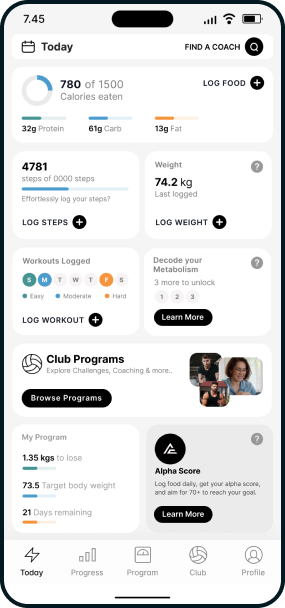
Most people already know what needs to be done. The real challenge is doing it consistently without overthinking each decision. When your meals, activity, and progress are tracked in one place, it becomes easier to stay on course and adjust when needed. A structured system like Alpha Coach gym fits into this quietly, helping you turn daily actions into long-term, sustainable results.
References
- Appel, L.J. et al. (1997). A Clinical Trial of Dietary Patterns on Blood Pressure. NEJM.
- Sacks, F.M. et al. (2001). Effects of Sodium Reduction and DASH Diet. NEJM.
- Neter, J.E. et al. (2003). Weight Reduction and Blood Pressure. Hypertension.
Whelton, S.P. et al. (2002). Exercise and Blood Pressure. Annals of Internal Medicine.
 0
0








Leave a Reply