
 27 views
I bought two packs of tofu for this comparison, and the first thing I checked wasn’t the front of the pack it was the nutrition panel at the back.
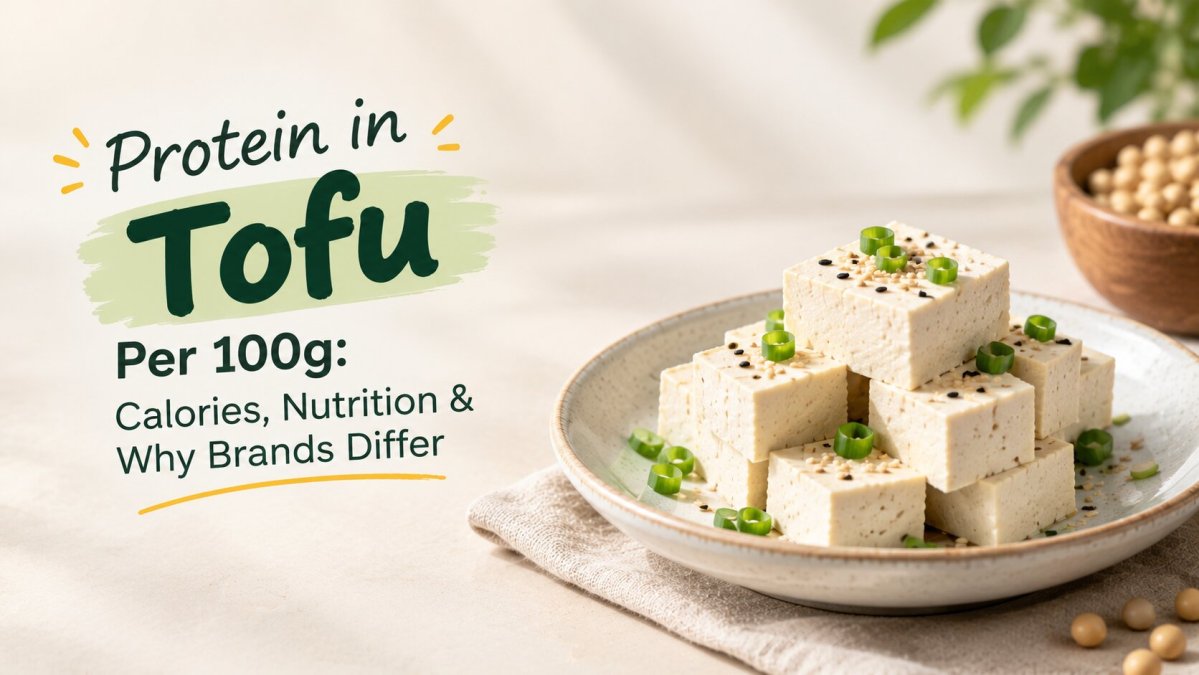
Tofu protein per 100g can vary a lot. Some firm tofu products sit around 15-18g protein. Others are closer to 9-10g, and softer or silken tofu can be lower still. Water content makes a big difference.
So if you eat tofu regularly, the number on your own packet is far more useful than memorizing one universal tofu figure, and understanding real tofu nutrition means reading labels, not headlines.
What Is Tofu Made Of?
Before getting into the numbers, it helps to know what tofu is made of. Tofu is produced by curdling soy milk, pressing the curds into blocks, and setting them, often with calcium or magnesium salts, similar in principle to how paneer is made from milk. The firmness of the final block (silken, soft, firm, extra-firm) depends on how much water is pressed out during that process. Less water pressed out means a softer tofu with more moisture per 100g; more water pressed out means a denser block with more soy solids, which is exactly why protein content swings so widely between products.
Is Tofu Soy? Where Does Tofu Come From?
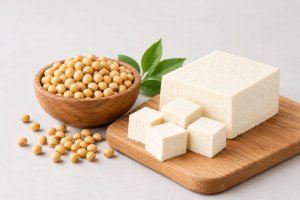
Yes is tofu soy is an easy yes. Tofu is made entirely from soybeans: soaked, ground, boiled, and separated into soy milk, which is then curdled to form tofu. There’s no ambiguity here the way there sometimes is with processed foods tofu is, at its core, just soy in a different form, which is also why it carries soy’s amino acid profile.
100 gm Tofu Protein: How Much Is It, Really?
There’s no single number that works for every tofu. A denser block packs more soy solids into the same 100g; a wetter tofu carries more water. That difference alone can move 100 gm tofu protein figures substantially.
USDA records show the spread clearly. One firm calcium-set tofu comes in at about 17.3g protein per 100g, while other firm and silken products are materially lower.
This isn’t a contradiction “tofu” covers products with different firmness, preparation, and moisture levels. For accurate tracking, read the label on the block in front of you.
Tofu Nutrition Facts 100g
Beyond protein, here’s a realistic range for tofu nutrition facts 100g, based on firm tofu (values vary by brand and firmness, so treat this as a working range, not a fixed number):
| Nutrient (per 100g firm tofu) | Approx. Value |
| Calories | 140-150 kcal |
| Protein | 9-17 g |
| Fat | 8-9 g |
| Carbohydrate | 2-3 g |
| Calcium | Varies (higher in calcium-set tofu) |
Softer or silken tofu will run lower across protein, fat, and calories simply because it carries more water per 100g.
Related Post: How Much Protein is in 100g Paneer?
What Does 150g Tofu Give You?
Here’s where the packet starts to matter. If your tofu has 17g protein per 100g, a 150g serving gives roughly 25–26g protein.
If the label says 10g per 100g, that same 150g gives about 15g. Same serving size, quite a different protein result a gap large enough to matter if you’re working toward a daily protein target.
Is Tofu a Good Protein Source? Tofu Benefits
Yes, particularly for vegetarians and vegans. Soy provides all nine essential amino acids, and a decent portion of firm tofu can make a meaningful contribution to a meal.
Beyond protein, the broader tofu benefits include being naturally low in saturated fat, cholesterol-free, and a source of calcium in calcium-set varieties, plus it’s genuinely versatile in Indian cooking. Tofu bhurji is the obvious entry point, but it also works in palak-style gravy, wraps, stir-fries, or a dry sabzi. Season it properly, and tofu stops feeling like something you’re eating only because it’s supposed to be healthy.
For someone who doesn’t eat dairy, this versatility is genuinely useful. For someone who does, tofu simply becomes another protein option rather than a compulsory replacement for paneer.
Tofu vs Paneer: Which Has More Protein?

This comparison gets messy with generic numbers, because both foods vary by product.
Paneer is dairy; tofu is soy. Paneer can run higher in calories due to its fat content, while some firm tofu offers a very good protein-to-calorie ratio but another tofu brand may contain much less protein than expected.
In the tofu vs paneer debate, the honest answer is: compare the labels of the specific products you actually buy. If you’re vegan, the choice is already simple. If you’re not, both can fit comfortably into a high-protein diet see our protein in paneer per 100g guide for the full paneer-side breakdown.
Is Tofu Good for Weight Loss?
It can be. Firm tofu with good protein and moderate calories is easy to build into a filling meal.
The recipe still gets a vote. Tofu tossed with vegetables and a sensible amount of oil is very different from deep-fried tofu sitting in a rich sauce. “Tofu” on a restaurant menu is not a calorie exemption.
One Thing to Do Before Buying Tofu
Turn the packet around.
Look at protein per 100g and calories per 100g. Then look at the serving you’re likely to eat. With tofu, that small check tells you more than any generic nutrition table online because tofu nutrition facts genuinely differ that much by brand.
Tofu Nutrition FAQs
How much protein is in tofu per 100g?
It ranges widely, roughly 9-18g depending on firmness and brand, so checking your own packet matters more than memorizing one number.
What is tofu made of?
Curdled soy milk, pressed into blocks similar in principle to how paneer is made from milk, but using soybeans instead of dairy.
Is tofu soy?
Yes, tofu is made entirely from soybeans with no dairy or other base ingredient involved.
What are the main tofu benefits?
Complete plant protein, low saturated fat, no cholesterol, and versatility across everyday Indian cooking.
Is tofu or paneer better for protein?
It depends on the specific products some firm tofu beats some paneer on protein-per-calorie, but paneer can also be high-protein depending on the brand. Compare labels rather than assuming either wins by default.
How much is 100 gm tofu protein exactly?
Anywhere from roughly 9g to 18g, which is why reading your specific packet’s label matters more than for most other foods.
What to Remember
Tofu protein per 100g can range widely firm products may sit around 9-17g or more, while softer tofu runs lower.
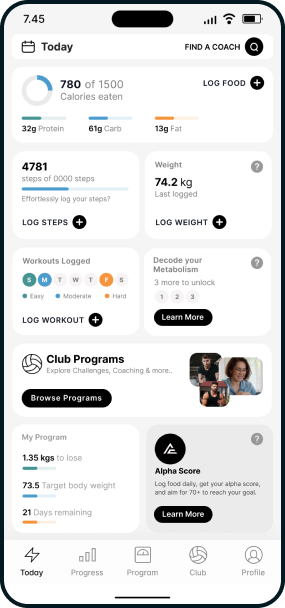
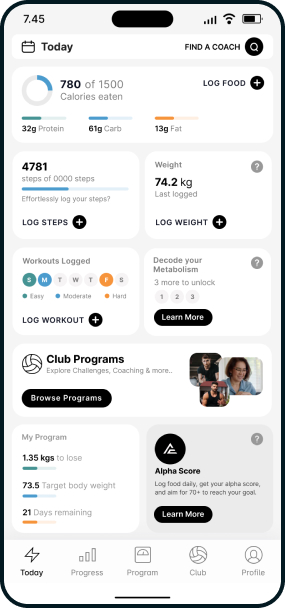
Don’t let that range put you off. Tofu can be an excellent protein food. Just use the number from your own packet when calculating your meal, log it with Alpha Coach Pro, and check out our other protein per 100g guides for how tofu stacks up against besan, paneer, and eggs.
 0
0










Leave a Reply