
 355 views
Roti is one of the most commonly eaten foods in Indian households. It appears in almost every meal plan, whether the goal is weight loss, diabetes management, or simply eating “healthy.” Because it’s homemade, whole wheat, and familiar, many people assume roti calories are either negligible or fixed.
That assumption is where confusion begins.
People regularly search:
• How many calories are in one roti
• Calories in 2 rotis
• Is roti good for weight loss
• Can roti be eaten at night
The reality is simple: one roti does not have one fixed calorie value. Calories depend on size, thickness, the flour used, and whether oil or ghee is added. Understanding these variables makes roti far easier to manage without unnecessary restriction.
This guide breaks down calories in one roti, portion sizes, nutrition, and how roti fits into weight loss in real Indian meals.
What Is a Roti?
A roti, also called chapati or phulka in many homes, is typically made using whole wheat atta and water. Some households add oil or ghee to the dough, while others cook it dry on a tawa.
Common variations include:
• Plain roti or chapati
• Phulka (puffed roti finished without fat)
• Tandoori roti (restaurant-style, usually larger)
• Stuffed rotis (aloo, paneer, mixed vegetables)
Because preparation varies so widely, calorie content varies too. Two rotis that look similar can differ significantly in calories.
How Many Calories Are in One Roti?
Quick answer
A medium-sized homemade whole wheat roti contains approximately 90–110 calories.
This range exists because rotis differ in:
• Diameter
• Thickness
• Dough weight
• Added fat (if any)
Calories in One Roti by Size
- Small, thin roti: ~70–80 calories
- Medium roti: ~90–110 calories
- Large or thick roti: ~120–140 calories
Most calorie estimates online assume a medium roti without ghee. If ghee or oil is added, calories increase quickly.
Homemade Roti vs Restaurant Roti
Home rotis are usually smaller and cooked with minimal fat. Restaurant rotis, especially tandoori rotis, are:
• Larger
• Thicker
• Often brushed with butter or ghee
A single restaurant roti can easily cross 150–180 calories, sometimes more.
Calories in 2 Rotis and Common Meal Setups
People rarely stop at one roti. A common question is the calories in 2 rotis.
Two medium rotis provide roughly 180–220 calories, assuming no added fat.
But rotis are rarely eaten alone. Calories add up based on what’s on the plate:
• 2 rotis + dry sabzi → moderate meal
• 2 rotis + dal → balanced
• 2 rotis + paneer or chicken → higher calorie but protein-rich
Often, the rotis are blamed for weight gain, while the real calorie load comes from oil-heavy sabzi or gravies.
If you’re comparing rotis with other staples, this breakdown may help: Rice vs Roti: Which Is Better for Weight Loss?
Calories by Type of Roti
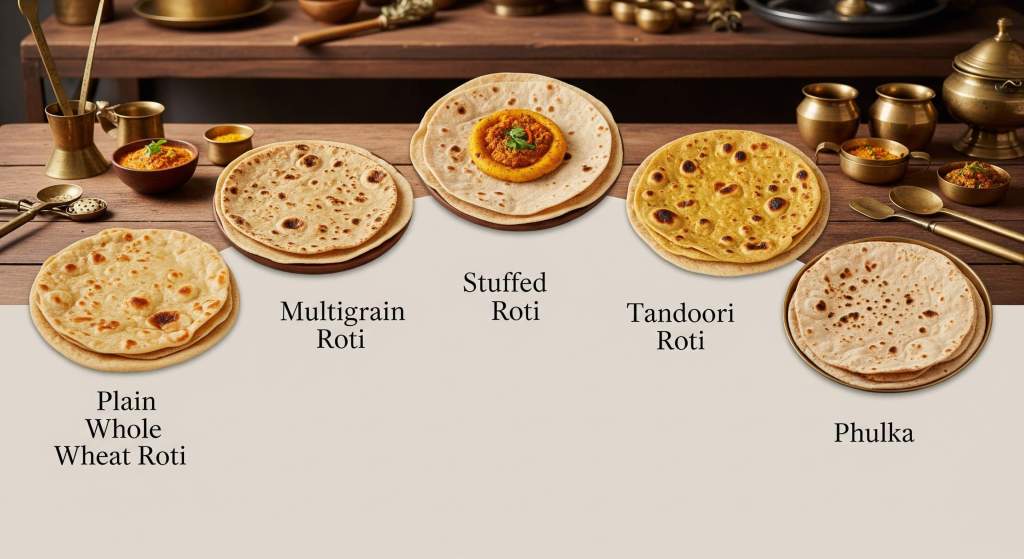
Plain Whole Wheat Roti
Lowest calorie option when cooked without oil or ghee.
Multigrain Roti
Similar calories to whole wheat roti. Often more filling due to fibre, but not dramatically lower in calories.
Stuffed Roti
Calories rise sharply due to the filling and oil. Aloo or paneer rotis can be calorie-dense.
Tandoori Roti
Larger size and restaurant preparation increase calories.
Phulka
Often slightly lower in calories because it’s cooked dry and puffed without fat.
Macronutrients in One Roti
A medium whole wheat roti typically provides:
• Carbohydrates are the primary source of energy
• A small amount of protein
• Very little fat unless oil or ghee is added
• Fibre that contributes to fullness and digestion
Roti is carb-dominant, not a protein food. Whole wheat is primarily carbohydrate-based with moderate protein and fibre, which is why roti provides energy and fullness but cannot meet protein targets on its own.
Factors That Affect Roti Calories
Flour Used
Whole wheat atta, multigrain flour, or millet blends all vary slightly in calories and fibre.
Oil or Ghee
Adding even one teaspoon of ghee can add 40–45 calories per roti. This matters because added fats significantly increase calorie density even in small amounts, even when the rest of the meal remains unchanged.
Thickness and Dough Size
Heavier dough balls and thicker rolling increase calories without being obvious visually.
Cooking Method
Dry roasting keeps calories lower. Frying or finishing with fat raises them quickly.
Roti and Weight Loss
A very common concern is whether roti can be eaten during weight loss. The answer is yes, but with portion control.
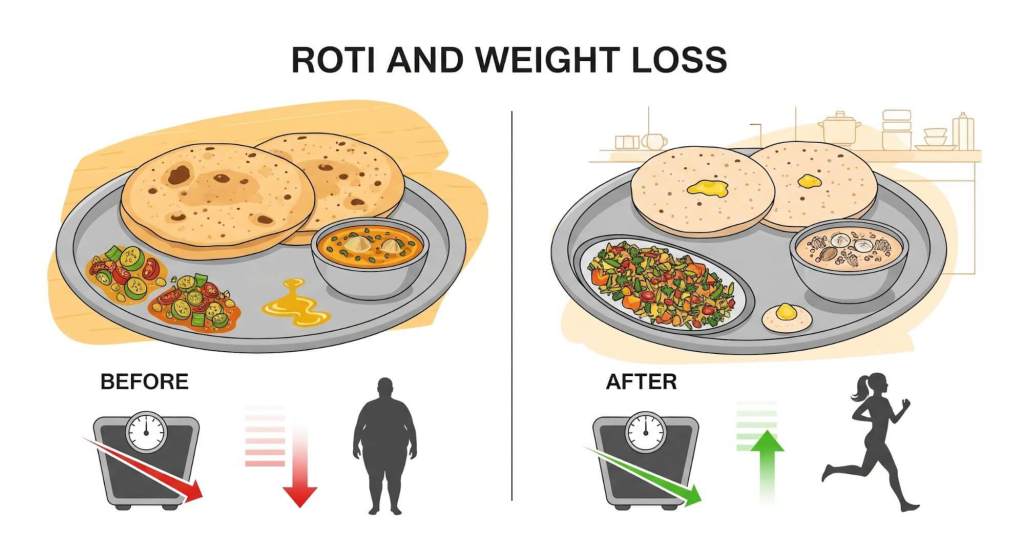
Roti works well for weight loss when:
• Portions are managed
• Oil and ghee are limited
• It’s paired with protein and vegetables
Weight gain is rarely caused by roti alone. Weight gain depends on total calorie balance, not individual foods. It’s usually driven by:
- Excess portions
- High-fat gravies
- Lack of protein balance
For a broader view of calories across Indian foods (not just rotis), you may also find this useful: Indian Food Calories Chart (Roti, Rice, Idli, Dosa, Snacks & Exercise Calorie Burn)
Can Roti Be Eaten at Night?
Timing matters less than total intake.
Eating roti at night does not automatically cause weight gain. Overeating at dinner, low activity levels, and calorie-dense add-ons matter more than the roti itself.
A lighter dinner with controlled portions works better than eliminating roti.
Roti vs Other Indian Breads
- Roti vs paratha: Parathas contain added fat and layers
• Roti vs naan: Naan is higher calorie due to refined flour and butter
• Roti vs poori: Poori is deep-fried and calorie-dense
Roti remains one of the most balanced everyday options.
Practical Roti Calorie Checklist
Before counting roti calories, ask:
• How big is the roti?
• Was oil or ghee added?
• Is it stuffed?
• What is it paired with?
Answering these questions is often more useful than searching for a single number.
Protein per Roti vs Real Daily Intake
A roti contributes energy and some protein, but it won’t meet protein needs alone. Most Indian plates look balanced but are carb-heavy when broken down.
Understanding how rotis fit into the entire day’s intake is key to avoiding plateaus.
Making Roti Work for Your Goals
Roti is not the enemy. It’s also not “free calories.” When you understand how roti calories change with size, fat, and preparation, it becomes easier to eat it confidently without guesswork.
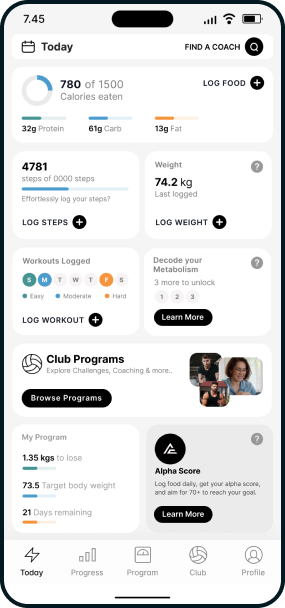
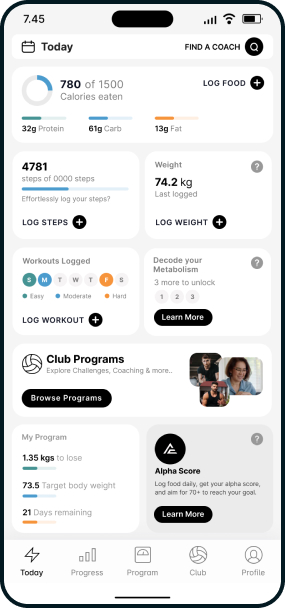
If you want clarity across Indian meals, tracking portions matters more than eliminating foods. Use the Alpha Coach Food Calorie Calculator to log rotis, toppings, and full meals accurately and make decisions that actually support your goals.
FAQs
Read More:
 0
0











Leave a Reply