

 34 views
In my early days of running, one thing frustrated me more than speed. I simply couldn’t run for long enough.
That changed gradually. A few minutes became ten, ten became twenty, and at some point running continuously stopped feeling like a major event.
That is essentially what it means to build running stamina.
Quick answer: To build running stamina, run at an easy, conversational pace about three days a week, add time gradually, include one slightly longer run, do two short strength sessions, and recover properly. Most beginners can run 20-30 minutes continuously within four to eight weeks.
If you are completely new and haven’t started jogging yet, first read my guide on Jogging for Beginners in India.
This article starts one step later. It is for running stamina for beginners who can run a little, but now want to run longer and more comfortably, without stopping every few minutes.
What Is Running Stamina?
Running stamina is your ability to run sustainably without getting tired quickly.
Once you start running regularly, your body adapts. Your aerobic system improves, which means your body gets better at using oxygen and converting it into fuel. Your muscles also become more accustomed to running.
The result is easy to recognise. The same pace that previously exhausted you starts feeling manageable.
People often use stamina and running endurance interchangeably. Technically there are differences, but for a beginner trying to run 30 minutes continuously, I wouldn’t lose sleep over the terminology.
Why Do You Get Tired So Quickly While Running?
Sometimes the answer is simply lack of fitness. That is expected when you start. But beginners also make their runs unnecessarily difficult.
You are running too fast. This is probably number one. If every run feels like a race, you will tire quickly. Most stamina-building runs should feel controlled rather than heroic.
Your legs tire before your lungs. Running stamina isn’t only cardiovascular. Calves, quads, glutes and other muscles must repeatedly absorb and produce force.
Your training is inconsistent. Running twice, disappearing for ten days and then restarting is not progressive training.
You are not recovering. Training provides the stimulus. Recovery allows your body to adapt to it. Sleep, rest and nutrition are part of your running plan, even though none of them appears on Strava.
How to Build Running Stamina Effectively
 Three principles matter most.
Run slower to eventually run longer
This sounds almost too obvious, but many beginners do the opposite. Easy running lets you accumulate more time on your feet without creating excessive fatigue.
A useful guide is conversational effort: if you can still speak in sentences, the pace is probably right for most of your easy training.
If you have a smartwatch, this may broadly correspond with lower aerobic heart-rate zones. But heart-rate zones are a tool, not a requirement.
Increase training gradually
This is the core of how to increase running stamina safely: raise either running time or distance a little at a time.
You may have heard the famous 10% rule, which says never increase weekly running distance by more than 10%. Treat it as a rough reminder, not a scientific law. Research in novice runners suggests that sudden large increases in running distance can contribute to injury risk, but there is nothing magical about exactly 10%.
The better principle is to avoid sudden jumps in workload.
Build consistency before speed
Three sensible running days every week can build more stamina than one brutal workout followed by several days of recovery.
Your first objective is not to become fast. It is to make running feel normal.
How to Gain Running Endurance: Use Different Runs for Different Jobs
Once you can run for several minutes comfortably, your training need not be the same run repeated. Here is how to gain running endurance with a little variety.
Easy runs. These should make up most beginner training. Comfortable pace, manageable effort.
Long slow run. Once a week, make one session slightly longer than the others. It does not need to be dramatically longer. The purpose is simply to spend more time running.
Interval training. After building a base, you can add short harder efforts followed by easy recovery. For example: 1 minute faster, 2 minutes easy, repeat 5 times. Intervals can help improve fitness, but not every run needs to be treated as HIIT.
Hills. Short hill running increases effort while also challenging leg strength. Start conservatively. Hills have a way of revealing how optimistic you were about your fitness.
6-Week Plan to Build Running Stamina for Beginners
This plan is for someone who can already jog for short periods. It is illustrative, not a prescription.
| Week | What to do |
| Week 1 | Run 1 minute, walk 2 minutes. Repeat 6-8 times. |
| Week 2 | Run 2 minutes, walk 2 minutes, for around 20-25 minutes. |
| Week 3 | Run 5 minutes, walk 2 minutes. Repeat 3-4 times. |
| Week 4 | Aim for around 10-15 minutes of easy continuous running. Walk to catch your breath and repeat if required. |
| Week 5 | Aim for around 20-25 minutes of easy continuous running. |
| Week 6 | Aim for around 30 minutes of easy continuous running. If that feels comfortable, gradually move towards 35-40 minutes. |
This is not a six-week examination. Someone already active may progress faster. Someone carrying extra weight or returning after years away from exercise may need longer. Repeat a week whenever required.
If you have chest pain, dizziness, a heart or joint condition, or you are returning after a long break due to illness, check with a doctor before starting.
If you want the progression customised around your fitness, injuries or target distance, you can find running and endurance coaches on Alpha Coach.
What Should a Running Week Look Like?
For a beginner, I prefer keeping it simple.
| Day | Training |
| Monday | Easy run |
| Tuesday | Strength training |
| Wednesday | Rest / walking |
| Thursday | Easy run (add intervals only once you can run 10+ minutes continuously) |
| Friday | Rest |
| Saturday | Longer easy run |
| Sunday | Recovery / mobility |
That gives you three runs without making running your full-time occupation. As fitness improves, add sessions gradually.
Strength Training and Running Stamina Exercises
Running more is the obvious way to build running stamina. But some strength work helps as well. Useful running stamina exercises include:
- squats
- lunges
- step-ups
- calf raises
- glute bridges
- planks and other basic core work
You don’t need all of them in every session. Two strength sessions per week are enough for most beginners. Research has also found that strength training can improve running economy, which essentially means using less energy at a given pace.
You can browse strength and conditioning programs suitable for runners in Alpha Coach workout programs created by experts.
Does Breathing Technique Improve Running Stamina?
Breathing matters, but I think it gets overcomplicated.
Myth: “Good runners should breathe only through the nose.” At very easy effort, nose breathing may be comfortable. As intensity rises, breathing through your mouth is perfectly normal. Your body is simply trying to get in and process more air.
Some runners like rhythmic patterns, such as three steps breathing in and two breathing out. You can try this if it helps.
But if you are breathless after three minutes, reduce your pace before changing your breathing technique. Often the breathing problem is actually a speed problem.
Food and Hydration for Running Endurance
Carbohydrates are an important fuel for exercise, particularly once training gets longer or harder. Protein supports muscle recovery.
This does not mean you need specialist running food. Bananas, oats, dates or toast can work before training. Afterwards, regular foods such as eggs, paneer, curd, dal-rice, chicken or fish can provide the protein and carbohydrates you need.
Myth: “You must avoid carbs while running to lose weight.” You can lose weight while eating carbohydrates. Calorie balance still matters, but cutting carbohydrates too aggressively can make longer runs feel unnecessarily difficult.
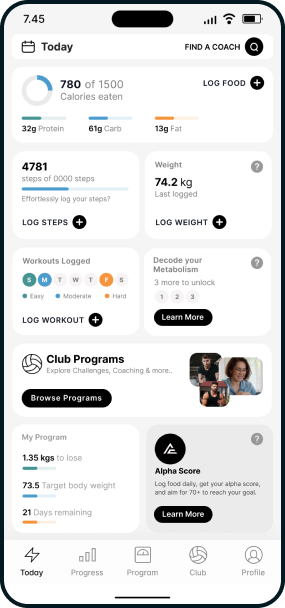
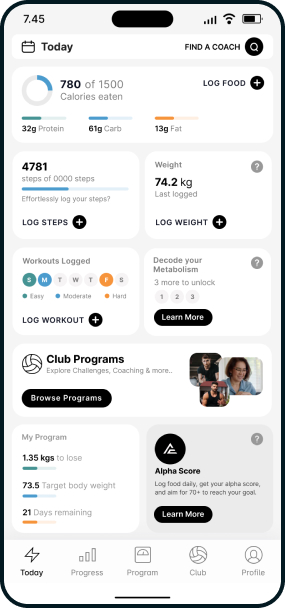
Tracking calories, protein, carbohydrates and overall nutrition is much easier today than it was 15 years ago, with apps like Alpha Coach Pro.
Running in Indian Conditions
Heat and humidity deserve respect.
I have run in Mumbai as well as in other places while travelling. Your normal pace can suddenly look very unimpressive in high humidity or on a hill. Don’t interpret every slower run as falling stamina.
In hot weather, run earlier or later where possible, slow your pace and pay more attention to hydration. For longer runs with heavy sweating, electrolytes may also become useful.
How to Know If Your Running Stamina Is Improving
Progress shouldn’t be judged only by speed. Better signs include:
- running longer before needing a break
- the same route feeling easier
- breathing becoming more controlled
- recovering faster after a run
- lower heart rate at a familiar pace
- finishing with some energy left
One of the clearest signs of improvement is when your old “hard run” starts feeling like an ordinary session.
Common Mistakes That Stop Stamina from Improving
- Running hard every time: Easy runs are training too.
- Increasing mileage suddenly: Give your body time to catch up with your enthusiasm.
- Skipping recovery: More training is useful only if you can recover from it.
- Ignoring strength: Your cardiovascular system isn’t the only thing doing the running.
- Poor sleep or under-eating: Sometimes “low stamina” is simply poor recovery.
- Comparing yourself with experienced runners: Compare your current running with your own running six weeks ago. That is far more useful.
Frequently Asked Questions
How to build running stamina from zero?
Start with run-walk intervals, keep the pace easy, run about three days a week, and add time gradually. The 6-week plan above shows one way to do this.
How to increase running stamina fast?
There is no shortcut, but the process is similar for most people: easy running, gradual progression, one longer session, some strength work and consistency, all working together.
How to gain running endurance?
Spend more time running at an easy effort. Add one longer run each week, then gradually include intervals or hills once you have a base.
How long does it take to improve running stamina?
Many beginners notice improvement within a few weeks. Running continuously for 20-30 minutes may take around four to eight weeks, but your starting fitness makes a big difference.
How can I run longer without stopping?
Slow down first. Most beginners stop because their pace is too fast, not because they lack stamina.
Should beginners run every day?
Usually not. Three running days a week are enough for many beginners.
Is walking useful for building running stamina?
Yes. Strategic walking breaks let you extend a session without becoming exhausted.
The Bottom Line
Running stamina is built rather quietly. One week you run five minutes. A few weeks later it becomes fifteen. Eventually, 30 minutes becomes business as usual.
If you want to know how to build running stamina, don’t chase all the advanced methods at once. Run easy. Add time gradually. Include some strength work. Recover properly. Then repeat.
Running longer is mostly the result of doing fairly ordinary things consistently. Which, unfortunately, is less exciting than discovering a secret hack, but it works.
 0
0












Leave a Reply