
 226 views
Winter in India has a very particular feel.
The air gets sharper, mornings become slower, and the body quietly starts asking for warmth, comfort, heavier meals and extra sleep. And almost every year, right on cue, the familiar cycle kicks in: colds, sore throats, coughs, a lingering sense of low immunity, and the occasional fever that refuses to leave.
Most people treat winter as something to “get through,” but truthfully, winter is a season that rewards preparation.
The right foods don’t just help you avoid seasonal illness, and help you feel steadier, stronger, and more energetic at a time when your body naturally slows down.
This guide brings together the science of immunity, the logic of seasonal Indian produce, traditional wisdom, and practical food habits that actually work in cold months. Think of it as the winter version of listening to your body. This guide is designed for anyone looking to understand winter food in India, how it affects immunity, and which simple choices can keep you healthier during December and January.
Why Winter Nutrition Matters More Than You Think
Every winter, the same pattern plays out across Indian homes; someone starts coughing, someone else complains of a sore throat, and before you know it, half the house is running on steam inhalation and hot water. It’s easy to think winter illnesses are random, but the truth is simpler: winter changes how your body functions.
Cold air dries out the lining of your nose and throat, which is the body’s natural “air filter.” When this layer becomes dry and irritated, viruses slip in more easily. Mornings get colder, so people step out less and windows stay shut, which means we end up breathing the same indoor air for hours. Sunlight reduces too, and with it, your Vitamin D levels drop, quietly weakening the immune response without you noticing.
In the summer, you can’t go ten minutes without wanting water. In winter, you often realise at night that you barely drank anything all day. Your body still needs water, but the cues aren’t as loud.
Put all of this together, and winter becomes a season where your immune system is doing double duty. The comforting part is this: you don’t need complicated routines or supplements to support it. Sometimes the simplest changes in your food choices make the biggest difference.
Why Winter Illnesses Rise
If you’ve ever wondered why almost everybody falls sick at least once between December and February, you’re not imagining a trend; there’s real science behind it.
Viruses also survive longer in low temperatures, which means the same air carries more infectious particles than at any other time of the year. Add shorter days, less sunlight, and a natural dip in Vitamin D with overall reduced hydration, and your immune system has even less support.
And then there’s behaviour. Winter encourages comfort eating. You naturally crave heavier, richer, sweeter foods. There’s nothing wrong with this, but when that extra hunger gets satisfied with deep-fried snacks, sugary mithai, cold dairy, or reheated leftovers, your digestion slows down and immunity takes another hit.
Winter doesn’t weaken you overnight; it chips away at your natural defences piece by piece. Understanding this makes it easier to protect yourself through simple, intentional choices.
Winter Immunity Basics: What Your Body Actually Needs More Of
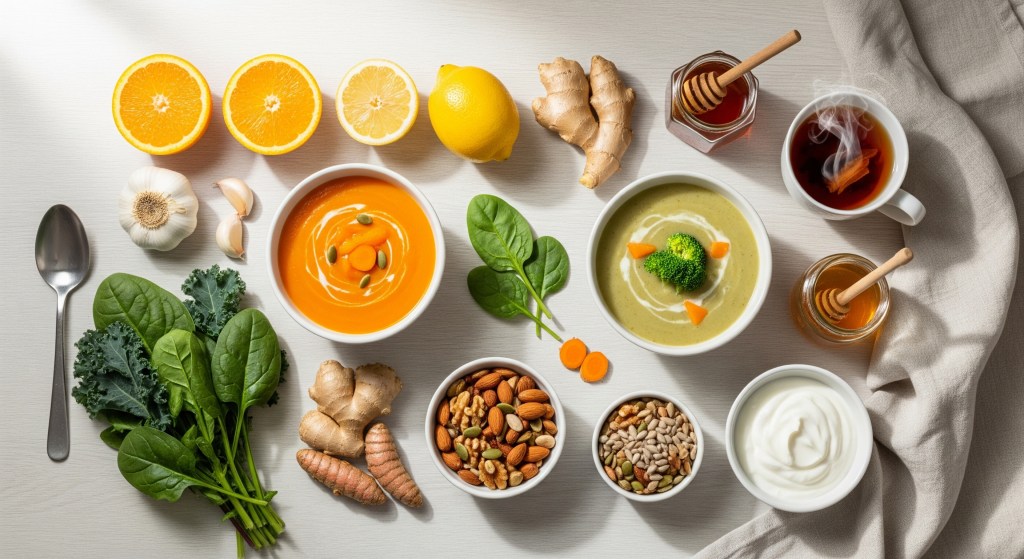
Winter puts extra demand on your system: you’re fighting more germs, burning more energy to stay warm, and dealing with drier air.
So the foods that support immunity, warmth, and steady energy become your winter essentials.
Here’s what your body actually needs more of in winter:
- Vitamin C: oranges, mosambi, amla, guava
Supports immune cells and shortens cold duration. - Vitamin D: eggs, mushrooms, fortified milk, fish
Helps immunity, bone health, and mood as sunlight drops in winter - Zinc: nuts, seeds, dals, whole grains
Crucial for immune response and recovery. - Antioxidants: all colourful winter vegetables
Reduce inflammation and support overall immunity. - Omega-3 fats: walnuts, flaxseeds, fish
Help reduce winter dryness and support brain health. - Warmth-giving foods: ghee, jaggery, bajra, sesame
Stabilise energy and keep your body warm. - Protein: eggs, paneer, dal, chole, rajma, chicken
Essential for immunity, strength, and metabolism.
Winter is not the season to “eat casually.” It’s the season to feed your immunity with intention. Before we dive into specific foods, here’s a quick snapshot of what most nutritionists recommend in winter that support immunity, digestion, and warmth.
Seasonal Fruits to Eat in December–January
Seasonal fruits are naturally richer in antioxidants and micronutrients your immune system needs right now.
- Citrus fruits (oranges, mosambi, kinnow): excellent Vitamin C
- Pomegranate: anti-inflammatory, great for gut health
- Apple: improves digestion and makes you feel full
- Guava: one of the highest Vitamin C fruits
- Kiwi: shown to reduce cold severity
- Amla: a winter immunity powerhouse in Indian diets
Winter Vegetables That Strengthen Immunity
Indian winter markets are packed with nutrient-dense vegetables such as Carrot, Beetroot, Spinach, Bathua, Methi, Sarson, Sweet potato, Green peas, Broccoli, etc.
These vegetables support gut health, strengthen immunity, reduce inflammation, and improve digestion; all of which matter more in winter.
Foods That Keep the Body Warm & Support Energy Levels
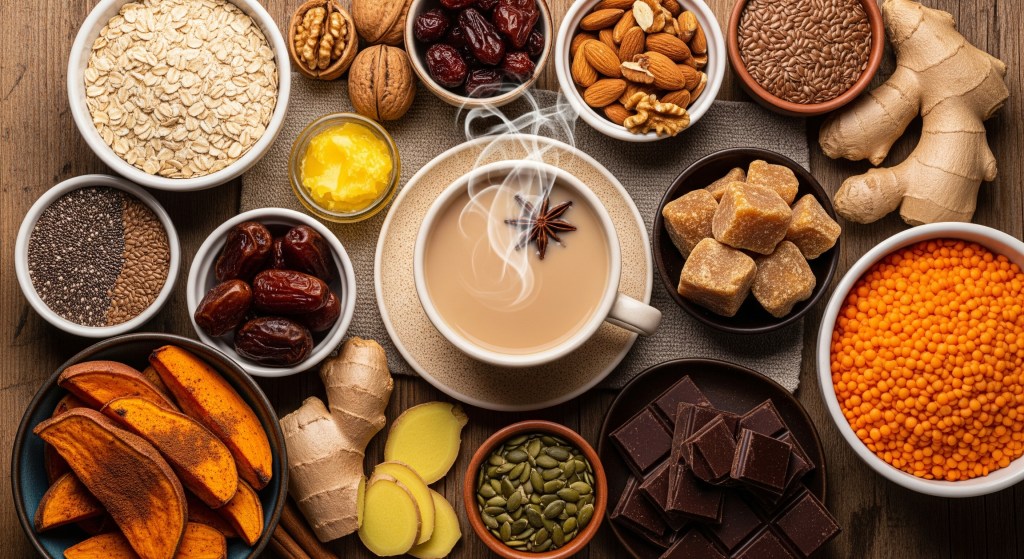
Across Indian households, traditional food we eat in the winter season includes a mix of warmth-giving grains, nuts, seeds, and slow-cooked meals that support digestion and keep energy steady through colder days. These warmth-giving foods help regulate appetite and support circulation:
Nuts and seeds (til, peanuts, flaxseeds, almonds, walnuts)
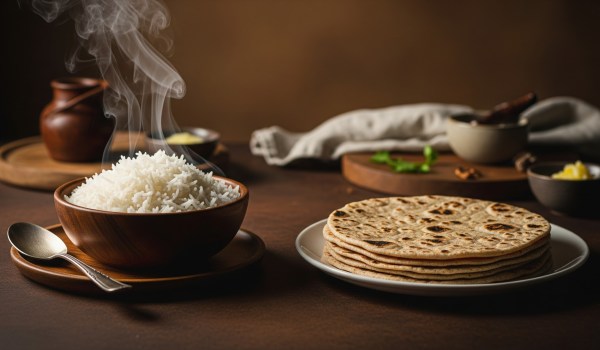
Millets (bajra, ragi, jowar), Ghee, Jaggery, Soups, Bajra roti, Ragi malt
Herbal & Traditional Immunity Boosters
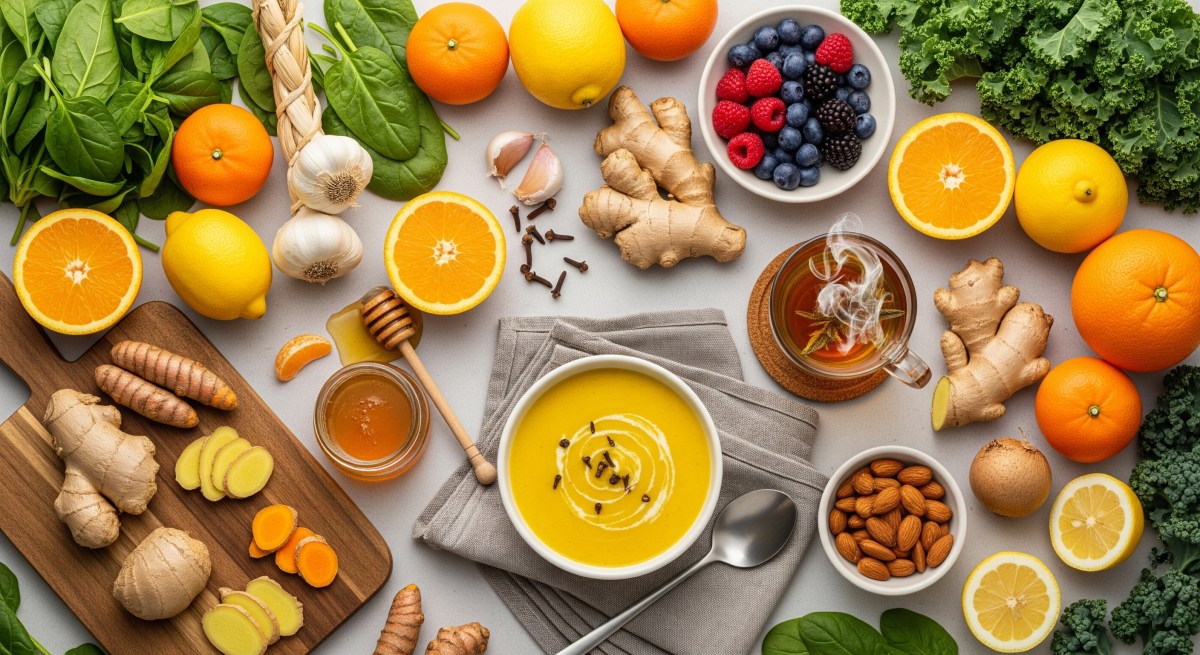
Ginger, turmeric, tulsi, cinnamon, cloves, pepper, garlic, and kadha help reduce inflammation and improve circulation. They’re classic winter protectors.
What to Drink in Winter for Better Immunity
Some of the best winter drinks include: Warm water with lemon, Ginger-tulsi tea, Cinnamon–clove water, Haldi doodh, Tomato or spinach soup, Ajwain tea, Kanji (fermented black carrot drink)
Warm drinks nourish the throat, improve digestion, and keep your immune system active.
Fermented Foods: The Most Underrated Winter Immunity Hack
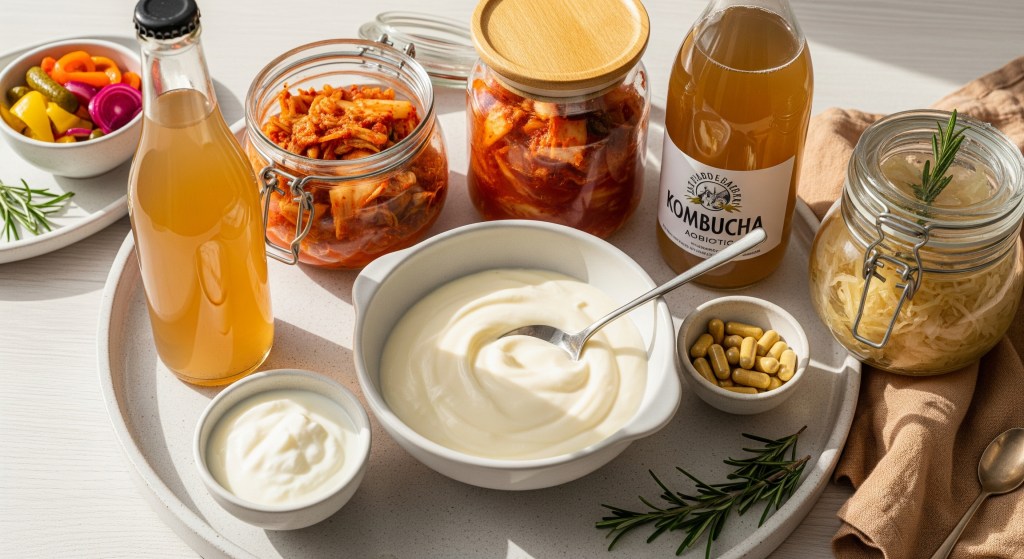
If there’s one winter habit most people overlook, it’s taking care of the gut. And that’s surprising, because nearly 70% of your immune system sits inside your digestive tract. When your gut is healthy, your immune response becomes sharper, calmer, and far more resilient during cold months.
Fermented foods are the simplest way to strengthen this system.
Curd (at room temperature), kanji made from red carrots, homemade fermented pickles, rice kanji, and even a glass of buttermilk during the day; all of these introduce good bacteria into your gut. These “good bacteria” help maintain balance, improve digestion, and reduce inflammation, which automatically reduces your chances of falling sick.
Foods to Avoid in Winter
Certain foods make the winter months unnecessarily harder on your body.
Cold water and ice cream shock the throat and make the mucus thicker. Deep-fried snacks and excessive sweets slow digestion and drain energy. Bakery items (puffs, biscuits, cakes) are heavy, dehydrating, and often high in sugar.
Refrigerated leftovers, especially non-veg reheated multiple times, don’t sit well in the stomach during cold months.
Very heavy meals late at night also create the same problem: sluggish digestion and increased phlegm the next morning.
You don’t need to avoid these foods forever, just be mindful in winter. If a small shift today helps you avoid three days of cough and congestion, it’s usually worth it.
Why Winter Appetite Increases (And How to Handle It)
If you feel hungrier during winter, you’re not imagining it. Your body uses extra energy just to stay warm, and that increases your appetite, especially in the evenings. Add slower mornings, heavier layers of clothing, and reduced sunlight, and your metabolism naturally shifts into a “warm me up” mode. But increased hunger doesn’t have to mean overeating. You just need to guide it.
- Add protein to every meal.
Protein keeps you full for longer and stabilises winter hunger better than carbs alone. - Drink warm water throughout the day.
Most people confuse thirst with hunger in winter because the brain sends weaker thirst signals. - Start meals with something warm and light.
A cup of soup, a handful of sautéed vegetables, or even warm lemon water prepares your stomach and reduces overeating. - Use winter favourites, but in measured amounts.
Ghee, jaggery, peanuts, and til are wonderful in winter, but they are calorie-dense. A spoon, a piece, or a small handful is enough. - Eat slowly.
Winter digestion is slower. When you eat calmly instead of rushing, you naturally eat the right amount.
One-Week Winter Nutrition Plan
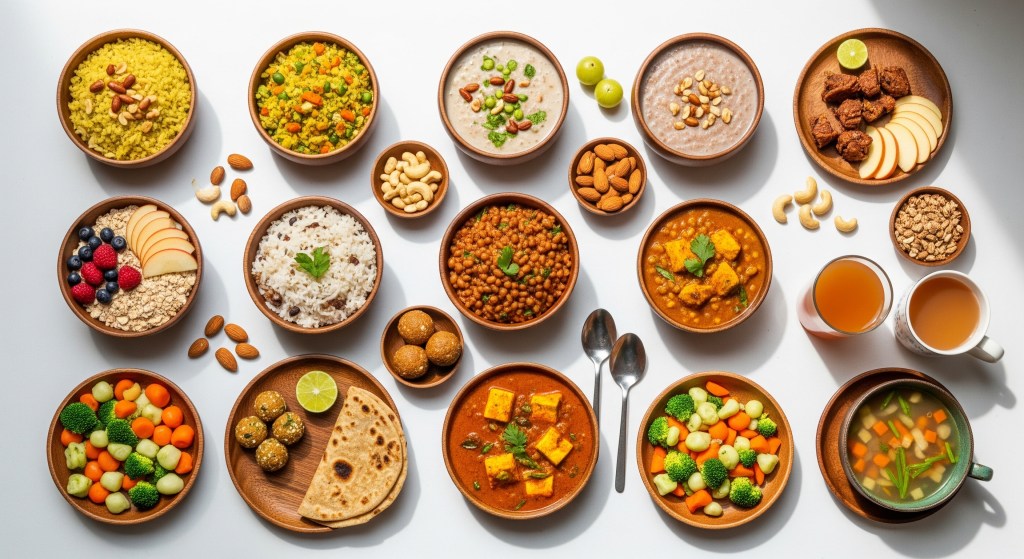
Here’s a beginner-friendly meal plan that respects winter cravings, supports immunity, and keeps digestion strong. It uses everyday Indian foods and requires no complicated cooking.
Days 1–2
- Breakfast: Poha with peanuts or upma with vegetables
- Lunch: Dal + roti + sabzi (carrot, spinach, peas)
- Snack: Fruit + handful of nuts
- Dinner: Paneer or chicken curry + rice + tomato soup
Days 3–4
- Breakfast: Ragi porridge or oats with fruit
- Lunch: Khichdi with ghee and pickle
- Snack: Sweet potato chaat or roasted chana
- Dinner: Spinach soup + sautéed vegetables + bajra roti
Days 5–7
- Breakfast: Amla juice + eggs/paneer
- Lunch: Rajma–rice or chole–paratha
- Snack: Jaggery + til ladoo (one small piece)
- Dinner: Light soup + steamed vegetables + small portion of rice
This template keeps you warm, nourished, and energised without feeling deprived.
Winter Wellness Checklist
A winter routine doesn’t have to be complicated. If you follow what’s written below, your immunity will be stronger and your energy more stable.
- Three servings of fruit: especially citrus, amla, guava, and pomegranate
- Two servings of vegetables: choose seasonal ones like carrots, beets, methi, peas
- Two protein servings: eggs, dal, paneer, chicken, curd, tofu
- Warm drinks: herbal teas, warm water, soup
- Hydration: aim for 2–2.5 litres even if you don’t feel thirsty
- Steps: 6,000+ to keep digestion and immunity active
- Sleep: 7–8 hours to keep cravings and illness in check
Simple habits make the biggest difference in winter.
Winter Myths vs Facts
Winter comes with a lot of food myths, most of them passed down without context. Here’s what’s actually true:
Myth: Curd causes a cold and cough.
Fact: Cold curd can irritate the throat, but room-temperature curd supports digestion and immunity.
Myth: Bananas worsen congestion.
Fact: Bananas are not harmful. Only cold foods can aggravate mucus, not the fruit itself.
Myth: Ghee makes you gain weight in winter.
Fact: A teaspoon or two actually helps digestion and provides warmth. The issue is overuse.
Myth: Honey works best with boiling water.
Fact: High heat destroys its beneficial enzymes. Warm water is ideal.
Special Winter Nutrition Guidelines
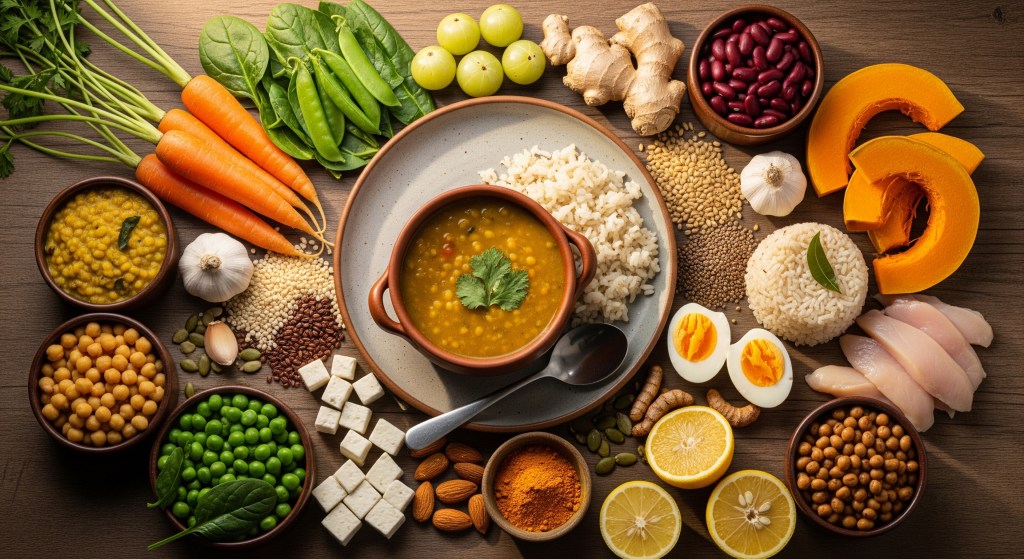
Winter affects everyone differently, and the foods that help a 6-year-old stay healthy may not be the same ones that help an older adult or someone with low immunity. Instead of following a one-size-fits-all rule, here’s how you can adjust winter nutrition for the people who need it most.
For Kids: Build Warmth, Growth & Strong Immunity
Children burn energy quickly, get dehydrated faster than adults, and often struggle with winter illnesses because their immunity is still developing. Winter nutrition can make a huge difference here.
Warm, familiar foods work best: dal–rice, khichdi with ghee, vegetable soups, ragi porridge, and eggs or paneer for protein.
Citrus fruits like oranges, guava, and amla support immunity and reduce the frequency of colds.
The only thing to be mindful of is cold foods straight from the fridge and packaged snacks that are heavy, sugary, and dehydrating. Warm, freshly prepared meals help kids stay energetic and illness-free.
For the Elderly: Support Digestion, Mobility & Immune Strength
Older adults often struggle with slow digestion, reduced appetite, and lower Vitamin D levels during winter. The goal is to provide nourishment without overloading the stomach.
Soft, warm foods like lightly spiced curries, dal, steamed vegetables, warm soups, and protein sources such as eggs or soft paneer are easier to digest and keep energy stable.
Ragi and vitamin D-rich foods become especially important because winter sunlight is low and bone health needs extra support.
Most elderly people unconsciously drink less water in winter. Gently remind them (or set small routines) to sip warm water throughout the day. Hydration impacts everything from digestion to immunity.
For People With Low Immunity: Build Defence Every Day
If you fall sick easily or take longer to recover, winter requires extra attention. Think of food as your daily defence system.
Start with citrus fruits, amla, and guava to strengthen your immune response. Add warm drinks like ginger–tulsi tea or cinnamon water to control inflammation.
Zinc-rich foods (seeds, legumes, chole, rajma) help your body fight infections better.
And don’t overlook probiotics like curd (room temperature), kanji, and fermented pickles. They support gut health, which is where most of your immunity resides.
Protein at every meal is essential. It helps your body build antibodies and recover faster.
Why These Guidelines Matter
Winter is not the time to “push through” with the same meals you eat throughout the year. Your body’s needs shift subtly: digestion slows, warmth matters more, immunity is tested, and activity levels drop. When you adjust your food to match the season (and the needs of age or immunity), you stay healthier with far less effort.
Conclusion
Winter doesn’t have to be the season where you’re constantly fighting off colds or dragging yourself through low-energy days. When you understand how the season affects your body, and you make small, intentional changes to your food, you create a layer of protection that stays with you through December, January, and beyond.
It’s never about doing everything perfectly. It’s about eating the foods your body naturally responds well to right now: warm meals, seasonal vegetables, winter fruits, nourishing soups, and the small rituals that keep digestion and immunity strong.
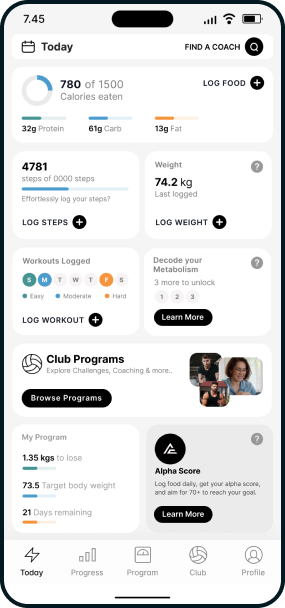
And if you want a little more structure during the colder months, the Alpha Coach app can help you track seasonal food and receive customised workout programs. It gives you the clarity and support you need to stay consistent even when the weather, cravings, and routine get unpredictable.
Your winter doesn’t need to be reactive. With a little planning and the right guidance, it can become your strongest, healthiest stretch of the year.
FAQs
- Pre-Launch Your New Year: What You Should Do in December
- Full Body Checkup vs Annual Health Checkup
- Digital Detox Guide: How to Break the Cycle
- India’s Growing Diabetes Challenge: How Lifestyle Changes Help
 2
2












Leave a Reply