

 5188 views
There’s a moment most people experience when they “decide to eat healthy.” You open the fridge, look for something light, low-calorie, and nutritious… and your hand goes straight to the sprouts bowl.
Sprouts have earned their place in Indian households as a symbol of health; high-fibre, light, crunchy, “good for weight loss”, and above all, a protein food. But how much protein is really in sprouts? Does sprouting increase protein? Is 1 bowl enough? Are they good for building muscle? And are raw sprouts actually safe?
This guide answers every major question people search online about sprouts, especially around protein content, nutrition, digestion, safety, and how to use sprouts effectively in your diet.
What Are Sprouts?
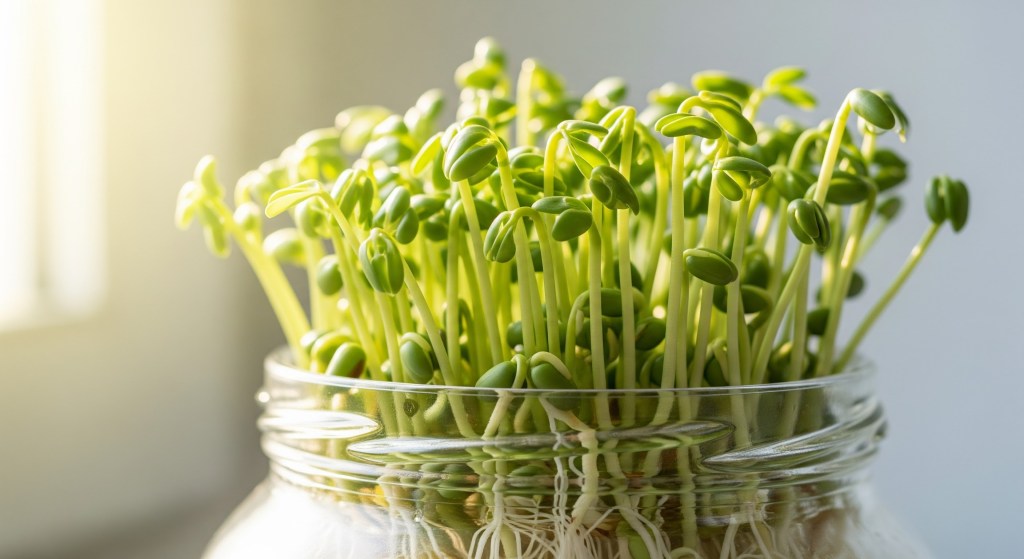
Sprouts are germinated legumes or seeds; most commonly, moong, chana, moth, alfalfa, or mixed seed blends. When soaked in water for several hours and left to rest, they absorb moisture, break open, and shoot out a small white sprout.
This simple process changes the seed significantly:
- It lowers antinutrients like phytates
- It enhances vitamin levels
- It improves protein digestibility
- It supports easier digestion
- It boosts antioxidant activity
This is why sprouts are considered one of the most nutrient-dense foods available at home: fresh, cheap, and easy to prepare.
Do Sprouts Actually Have Protein?
Sprouts do contain plant-based protein, but not as much as many people assume. Most varieties offer 3–6 grams of protein per 100 grams, which makes them a moderate protein source rather than a high-protein one. Their real advantage comes from being light, low-calorie, and rich in digestion-friendly nutrients.
Sprout protein is not a complete protein either; it lacks some essential amino acids. So, it’s best paired with complementary foods like curd, paneer, tofu, dal, or quinoa to create a balanced amino acid profile.
So while sprouts are incredibly nutrient-rich and digestively friendly, they should be seen as a supporting protein source, not a replacement for high-protein foods like paneer, tofu, eggs, or meat.
Does Sprouting Increase Protein Content?
The truth is, sprouting does NOT increase the total amount of protein. The seed contains the same protein before and after sprouting; the nutritional building blocks don’t multiply.
What creates confusion is that sprouting reduces carbohydrates and increases water content. Because of this, the percentage of protein per gram may appear slightly different, but the absolute protein in the seed remains the same.
Here’s what actually changes during sprouting:
- Carbohydrates are reduced as starches break down
- Water content increases, making sprouts lighter
- Antinutrients like phytates and tannins drop
- Trypsin inhibitors reduce, improving protein digestibility
- Vitamin C, folate, and antioxidants increase
As a result, sprouted legumes don’t contain more protein, but the protein becomes easier for your body to digest and absorb. The amino acid profile also doesn’t improve significantly; it’s the usability of the protein that gets better.
How Much Protein Is in 100g of Sprouts?
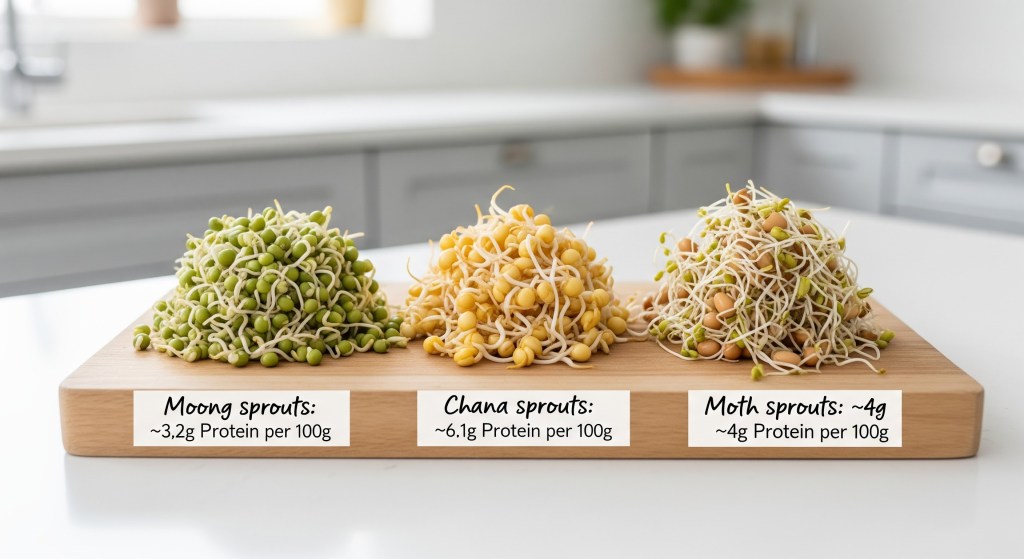
Here’s the accurate protein breakdown per 100 grams of raw sprouts:
- Moong sprouts: ~3.2g
- Chana sprouts: ~6.1g
- Moth sprouts: ~4g
- Alfalfa sprouts: ~4g
- Mixed sprouts: 4–6g depending on the ratio
These numbers show clearly that sprouts provide moderate protein, not the kind of high protein you’d get from paneer, tofu, dals, or eggs.
How Much Protein Is in 1 Bowl of Sprouts?
A typical Indian bowl = 80–100g sprouts
This means:
1 bowl of sprouts = 4–6g protein
Calories = 60–80 calories
Calorie changes depend on toppings:
- Lemon, onion, cucumber → low calorie
- Peanuts → more protein, but adds calories
- Oil, chutneys, sev → significantly increase calories
For maximum nutrition, keep toppings simple.
Is Sprout Protein a Complete Protein?
No. Sprouts are not a complete protein because they lack certain essential amino acids in sufficient amounts.
To “complete” the protein profile, pair sprouts with: Paneer, Curd, Tofu, Eggs, Quinoa, other legumes or dals. Sprouts are best viewed as a supporting protein source.
Nutrition Facts of Sprouts (per 100g)
Approximate values for mixed sprouts:
- Calories: 30–40
- Protein: 3–6g
- Carbohydrates: 4–6g
- Fibre: 2–3g
- Fat: <1g
- Vitamin C: High
- Folate: High
- Potassium: Moderate
- Iron: Moderate
- Antioxidants: Very High
This combination makes sprouts a powerful addition to weight loss, digestive health, and overall wellness.
Protein in Popular Sprout Recipes
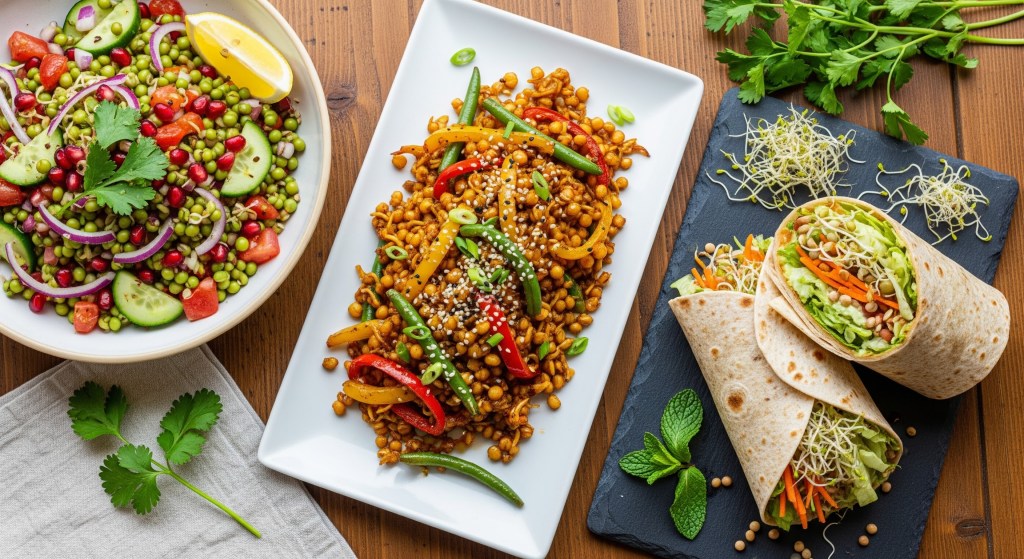
Depending on preparation, sprouts can offer different protein levels.
Approximate values for a 150g serving:
- Sprouts Salad with Beets
Protein: 5–7g
Calories: 80–120
Try our recipe for Beets and Sprouts Salad for Lunch and Dinner - Sprouts Chaat
Protein: 6–8g
Calories: 120–180 - Sprouts Upma
Protein: 5–6g
Calories: 150–200 - Sprouts Poha
Protein: 5–7g
Calories: 150–200
Try the full recipe for Healthy Sprouts Poha Recipe - Sprouts Stir Fry
Protein: 6–8g
Calories: 110–160 - Mixed Sprouts Curry
Protein: 8–10g
Calories: 140–200 - Sprouts Bhel
Protein: 5–7g
Calories: 150–250
These dishes offer a nutritious way to include sprouts in meals beyond salads.
Are Sprouts Good for Diabetes?
Sprouts are excellent for people with diabetes because they improve blood sugar control naturally. Sprouting reduces starch, increases fibre, and enhances enzyme activity, which leads to slower glucose absorption, a lower glycemic impact, and better insulin response. Their high nutrient density also helps support overall metabolic health.
For best results, eat ½–1 cup at a time and avoid consuming sprouts on an empty stomach. Lunch is the ideal time to include them.
Sprouts become even more diabetes-friendly when paired with protein or healthy fats, which help slow digestion and reduce post-meal glucose spikes. Good combinations include:
- Sprouts + curd
- Sprouts + paneer
- Sprouts + boiled eggs
- Sprouts + non-starchy vegetables
Avoid toppings that can raise blood sugar, such as sweet corn, potatoes, pomegranate, grapes, sev, sugary chutneys, or honey-based dressings. Lightly steaming sprouts may also improve digestion and create a more stable glucose response.
Are Sprouts Good for Weight Loss?
Sprouts are one of the most effective natural foods for weight loss because they offer high volume for very few calories. They are:
- Low calorie (30–40 calories per 100g)
- Very filling due to water + fibre
- High in fibre, which slows digestion
- High in water content, adding volume
- Low in fat
- A great replacement for fried or processed snacks
You can eat a satisfying portion without overeating calories. A bowl of sprouts also helps reduce cravings and late-night snacking by keeping you full for longer.
While raw sprouts are lowest in calories, lightly steamed sprouts may be easier to digest and more comfortable to eat consistently. For best weight-loss results, include sprouts:
- as a pre-lunch starter
- as a 4 pm snack
- or mixed into salads to increase volume without increasing calories.
Do Sprouts Build Muscle?
Not alone. While sprouts are nutritious, they are not a muscle-building protein source. Muscle growth requires roughly 70–120g of protein per day, depending on body weight, training level, and goals. A bowl of sprouts provides only 4–6g of protein, and the amino acid profile is incomplete with low leucine, the key amino acid for muscle repair.
Sprouts also have a lower protein digestibility score compared to foods like paneer, eggs, chicken, tofu, dals, or whey protein. To reach optimal muscle-building protein through sprouts alone, you would need an unrealistic amount (10–15 bowls per day).
That said, sprouts still play a useful supporting role. They are:
- a nutrient-dense, low-calorie snack
- rich in fibre and antioxidants
- easy on digestion when lightly steamed
- great for adding volume to meals
Raw vs Steamed vs Boiled Sprouts: Which Is Actually Better (and Safer)?
One of the biggest questions people have about sprouts is whether they should be eaten raw or cooked. On paper, raw sprouts sound like the healthiest option; they’re crisp, fresh, and packed with vitamin C. But sprouts also grow in warm, moist conditions, which are the same conditions where bacteria grow easily. Many people experience bloating or discomfort when they eat them uncooked, and individuals with weak digestion, acidity, IBS, pregnancy, or low immunity are better off avoiding raw sprouts entirely. If you choose to eat them raw, they must be extremely fresh, washed thoroughly, and stored properly; otherwise, contamination becomes a real concern.
A much better everyday option is lightly steamed sprouts. Steaming softens the outer skin just enough to make it easier on your stomach without stripping away its nutritional benefits. In fact, lightly steamed sprouts retain most of their vitamins and antioxidants while significantly reducing the risk of contamination. This is the preparation method most people (especially diabetics or anyone with sensitive digestion) find the most comfortable.
Boiled sprouts are the safest of all and the easiest to digest, though they do lose a small amount of heat-sensitive vitamins like vitamin C. They’re still a great choice for older adults, children, or anyone who prefers a softer texture.
How Much Sprouts Should You Eat Daily and When?
Sprouts are incredibly nutrient-dense, but like any high-fibre food, they work best when eaten in the right quantity and at the right time of day. Most people do well with about 1 to 1.5 cups of sprouts per day (roughly 80–120 grams). This is enough to give you the benefits of fibre, vitamins, and moderate protein without causing bloating or discomfort.
Sprouts are also digested differently depending on when you eat them. Morning or lunchtime is ideal, because your digestive system is naturally more active earlier in the day. If you prefer having sprouts later in the day, lightly steaming them can make a big difference in comfort.
For people with diabetes, lunchtime is the best time to include sprouts. Pairing them with a protein source like curd or paneer helps slow glucose absorption and reduces post-meal sugar spikes.
How Long Do Sprouts Last in the Fridge?
Sprouts stay fresh for 24–48 hours at most. After that, the moisture trapped between the sprouts creates the perfect environment for bacterial growth, which can make them unsafe to eat. For best storage, keep sprouts in a ventilated container and place them on a refrigerator shelf (not the door, which is warmer and less stable).
How Long Should Sprouts Be Soaked or Sprouted?
Different legumes need different soaking and sprouting times to develop properly. As a general guideline:
- Moong: Soak for 6–8 hours, then sprout for 12–24 hours
- Chana: Soak for 8–12 hours, then sprout for 24–36 hours
- Moth: Soak for 6–10 hours, then sprout for 12–24 hours
Avoid oversprouting. When the tails grow too long, sprouts can turn bitter, lose their crunch, and become harder to digest.
How to Increase the Protein Content of Your Sprout Bowl
Sprouts are nutritious on their own, but you can easily turn them into a complete, protein-rich meal by adding a few simple ingredients. Here’s how much protein each option adds:
- Paneer: +8–10g
- Tofu: +6–8g
- Boiled chana: +6g
- Curd: +3–4g
- Egg: +6g
- Seeds (pumpkin, chia, sunflower): +3–5g
Some great, balanced combinations include:
Sprouts + paneer, sprouts + curd, sprouts + tofu, or even a sprouts + dal bowl.
These pairings improve the amino acid profile, increase overall protein content, and make your bowl far more satisfying, especially if you’re trying to lose fat or build muscle.
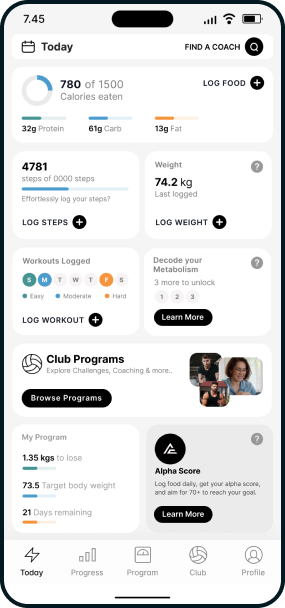
Track Sprouts, Protein & Calories Using the Alpha Coach App
If you want accurate numbers for moong sprouts, chana sprouts, mixed sprouts, and sprout-based recipes, the Alpha Coach app makes it easy to track everything in one place. You can instantly see calories per bowl, protein per serving, and complete macro breakdowns for any sprout preparation you eat.
The app also gives you:
- Accurate macros for thousands of Indian foods
- Daily protein and calorie targets based on your goals
- Smart adaptive nutrition that adjusts as your progress changes
- Simple meal logging so you always know where you stand
- Personalised recommendations to hit your weight loss or fitness goals faster
Conclusion
Sprouts are an easy, nutritious addition to your daily diet, being low in calories, high in fibre, rich in antioxidants, and offering a modest amount of plant-based protein. While they can’t replace high-protein foods, they work perfectly as part of a balanced, wholesome meal.
Enjoy them in salads, chaats, poha, stir-fries, or curries, and pair them with complementary proteins for better satiety and nutrition. You can also track your intake using the Alpha Coach app to understand your calories, macros, and daily progress.
To get started, try our Beets & Sprouts Salad or Sprouts Poha; simple, tasty recipes that show just how versatile sprouts can be.
FAQs
• Chana sprouts (~6.1g per 100g)
• Mixed sprouts (4–6g depending on ratio)
• Moth sprouts (~4g)
• Moong sprouts (~3.2g)
• Alfalfa sprouts (~4g but low density)
If you want maximum protein, choose chana or mixed sprouts.
- How Much Protein is in 100g Paneer?
- Zero Calorie Foods: Your Secret Weapon
- How to Get Enough Vegan Protein
- What is Quinoa: Health Benefits, Nutritional Values
 5
5










Leave a Reply