
 1022 views
Every few months, the internet finds a new “healthy” food and runs with it. Most disappear just as quickly. But now and then, some stick because they actually solve a real problem.
Watermelon seed paneer seems to be one of those.
At first glance, it sounds strange. Watermelon seeds are usually discarded without thought. Turning them into paneer feels like something invented for social media.
But nutritionally, it’s surprisingly solid. It’s dairy-free, protein-rich, easy to make, and for people who struggle with regular paneer or want more variety in their meals, it offers something useful. The bigger question, though, is whether it’s actually worth adding to your diet or whether it’s just another “healthy swap” that sounds better than it is.
That’s what matters.
What Is Watermelon Seed Paneer?
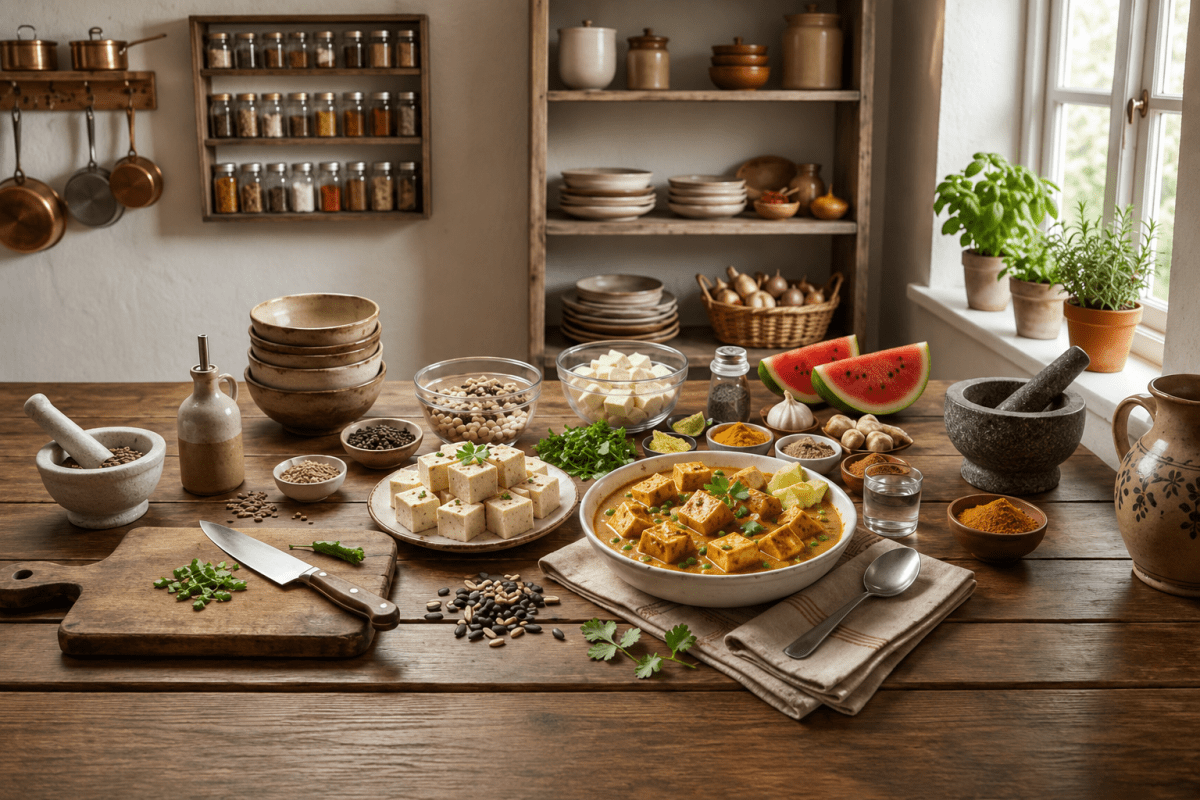
Watermelon seed paneer is exactly what it sounds like: a paneer-like block made by blending soaked watermelon seeds into a thick milk, then curdling it. The process is closer to making almond cheese or tofu than traditional paneer. Regular paneer is made by coagulating milk protein. Watermelon seed paneer is made from the protein, fat, and fiber naturally present in the seed itself. That changes both texture and digestion. It tends to be softer, slightly grainier, and has a mild nutty taste instead of the neutral creaminess regular paneer has.
What makes it interesting is not that it mimics paneer perfectly. It doesn’t. What makes it interesting is that it creates another high-protein building block for people who:
- want less dairy
- want more plant protein
- want more variety
And in nutrition, variety often improves consistency.
Why Is Watermelon Seed Paneer Suddenly Trending?
This trend didn’t come out of nowhere. It sits right at the intersection of three things happening right now.
- People care more about protein than ever before.
Protein has become the centre of most health conversations, whether the goal is fat loss, muscle gain, or simply staying fuller for longer.
- More people are realising dairy doesn’t sit well with them.
Not necessarily intolerance. Sometimes just bloating, heaviness, or poor digestion. Paneer is a staple protein in India, so naturally people look for alternatives.
- People are moving away from “superfoods” and toward practical foods.
Nobody wants miracle claims anymore; they want food that fits their routine. That’s why this works. It feels familiar, but functions differently.
Watermelon Seed Paneer Nutrition
This is where the hype either survives or collapses. In this case, it mostly survives.
A 100g serving of watermelon seed paneer typically gives:
| Nutrient | Approximate Amount |
| Calories | 180–220 kcal |
| Protein | 15–20g |
| Fat | 10–14g |
| Carbs | 5–8g |
| Fibre | 2–4g |
That protein number is strong.
Especially when you consider this isn’t a processed supplement. But the bigger point here is context. It’s not a low-calorie food. That’s where people often misunderstand “healthy.” Watermelon seed paneer is nutrient-dense, not calorie-light. That makes it useful, but only when portions make sense.
What Makes Watermelon Seeds Nutritionally Valuable?
Before the paneer itself, the seed matters.
And watermelon seeds are more impressive than most people think.
They contain a rare combination of:
Protein for repair and satiety.
Magnesium for muscle contractions and sleep quality.
Iron for energy and oxygen transport.
Zinc for recovery and immunity.
Healthy fats for hormonal function.
That combination makes them unusually balanced. Most protein-rich foods are either low-fat or highly processed. Seeds sit in a different category. They’re slower to digest.
That can work well in meals where you want energy stability instead of quick hunger. That’s one reason this can feel more filling than tofu.
Watermelon Seed Paneer vs Regular Paneer vs Tofu
This is the practical comparison. Because nobody is asking whether watermelon seed paneer is “good” in isolation.
They’re asking if it’s better than what they already eat.
Regular paneer still wins on simplicity and calcium. Tofu wins on calorie efficiency. Watermelon seed paneer sits somewhere in between.
It offers:
- more satiety than tofu
- less dairy load than paneer
- more texture than tofu
- better fat quality than paneer
But it’s not automatically superior.
For someone trying to maximise protein on lower calories, tofu might still be better. For someone bulking and digesting dairy well, regular paneer still works.
This is less about replacing and more about rotating.
How to Make Watermelon Seed Paneer
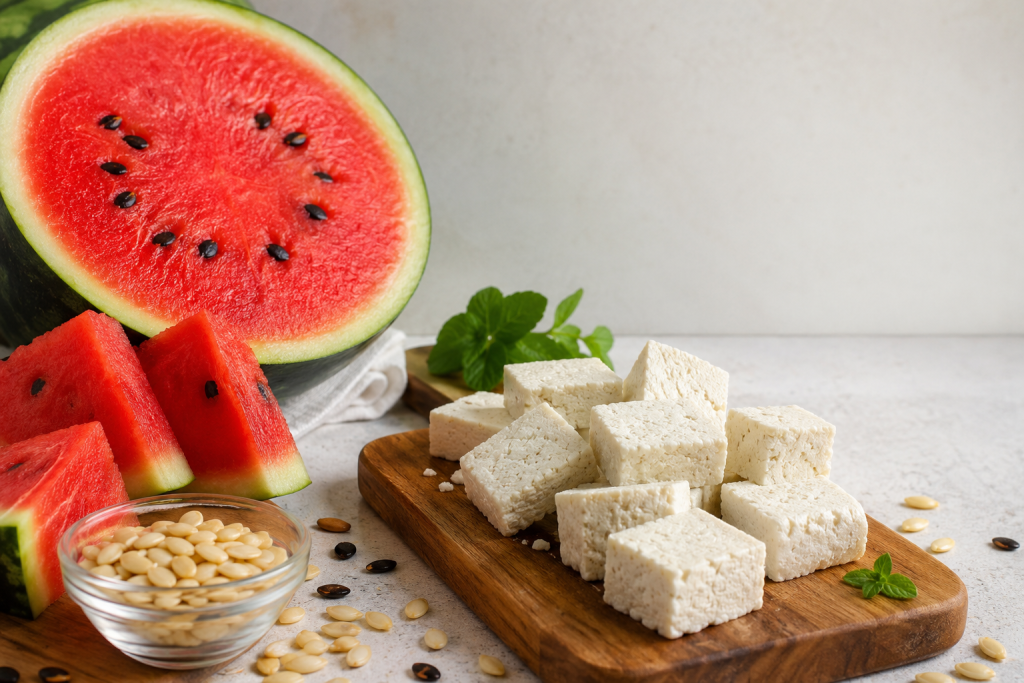
The process is simpler than people assume.
- Start by soaking one cup of watermelon seeds overnight. This softens them and improves texture.
- Blend them with 3–4 cups of water until smooth. At this stage, it should look like thick seed milk.
- Strain the liquid well. This step is important because leftover grit affects texture later.
- Heat the liquid slowly. Once warm, add lemon juice little by little.
- As the mixture separates, you’ll see the solids begin to form.
- Strain again, press it down, and let it set.
That’s it. The final texture won’t feel identical to dairy paneer. It’s softer, but that’s normal.
Can You Eat It Every Day?
You can. But that doesn’t automatically mean you should. A good diet isn’t built on one “best” protein. It’s built on enough total protein, spread across enough variety. If watermelon seed paneer becomes one of your protein sources, great. If it becomes your only protein source, not ideal. Daily use makes sense when it rotates with eggs, curd, tofu, dal, paneer, soy That’s how you improve nutrient coverage without depending too heavily on one food.
Are Watermelon Seeds Paneer Good for Weight Loss?
It can help. But only in the way protein foods usually help. It improves fullness. That means fewer mindless calories later. It helps with better appetite control. That said, because seeds are energy-dense, it’s easy to overestimate how “light” this food is.
That’s where people get caught.
Weight loss depends on:
- total calories
- consistency
- movement
- protein adequacy
Who Is It Actually Useful For?
This isn’t for everyone. But for some people, it makes a lot of sense. This can support that process but cannot replace it.
- People who avoid dairy. People who are bored of Tofu.
- Vegetarians trying to increase protein without relying only on whey.
- Gym-goers who need more meal options.
- People trying to make their meals more filling.
Are There Any Downsides?
Like most foods that suddenly become popular, watermelon seed paneer can easily get overhyped. That doesn’t mean it isn’t good. It just means it needs context. The first thing to understand is that it’s nutrient-dense, but also calorie-dense. Since watermelon seeds naturally contain healthy fats, the calories add up quickly. That isn’t a problem by itself but if your goal is fat loss, portion size matters.
It may also not work equally well for everyone.
Some people may find it harder to digest, especially if they’re not used to higher-fat meals or large amounts of seeds. And while uncommon, seed allergies are still something to be aware of.
But the bigger downside isn’t nutritional, it’s behavioural.
A lot of people discover one “healthy” food and start treating it like the answer to everything. That’s usually where things go wrong.
Watermelon seed paneer can be a smart addition to your diet. It shouldn’t become the entire foundation of it.
Good nutrition almost always works better when it stays varied, flexible, and sustainable.
Conclusion
Watermelon seed paneer is a good reminder that useful nutrition doesn’t always come from expensive products or complicated diets. Sometimes it’s just a smarter use of ingredients we already overlook.
Is it essential? No.
Is it useful? For many people, yes.
And that’s enough. Because the goal isn’t to chase every new food trend. The goal is to understand whether a food actually fits your calories, your protein needs, and your lifestyle. That’s where tools like Alpha Coach Calory tracker become useful; helping you see the bigger picture, instead of getting lost in individual foods.
Frequently Asked Questions
- Is watermelon seed paneer high in protein?
Yes, relatively speaking. Watermelon seed paneer can provide around 15–20 grams of protein per 100 grams, depending on how concentrated the final preparation is. That puts it in a strong position for a plant-based protein source. While it may not always match the protein density of regular paneer, it offers a useful dairy-free alternative for people trying to increase protein intake without relying only on tofu or supplements.
- Does watermelon seed paneer taste like regular paneer?
Not quite. The texture is usually softer and slightly grainier, and the flavour is more nutty than neutral. Regular paneer tends to absorb flavours without adding much of its own, whereas watermelon seed paneer has a more noticeable taste. That said, in dishes like bhurji, curries, or stir-fries, the difference becomes much less obvious.
- Is watermelon seed paneer healthier than regular paneer?
It depends on what “healthier” means for you. If you’re looking for a dairy-free option with unsaturated fats and easier digestion, watermelon seed paneer may be a better fit. But if your priority is calcium intake, simplicity, and a slightly higher protein density, regular paneer still has advantages. Neither is objectively better—it comes down to your goals, digestion, and dietary preferences.
- Can watermelon seed paneer replace tofu?
It can, but it doesn’t have to. Both are strong plant-based protein options with different strengths. Tofu is usually lower in calories and more neutral in taste, which makes it easier to fit into calorie-controlled diets. Watermelon seed paneer, on the other hand, may feel more filling because of its higher fat content and richer texture. Rotating between both is often a better strategy than choosing one permanently.
- Is watermelon seed paneer good for muscle building?
It can support muscle building, but only as part of the bigger picture. Muscle gain depends on total protein intake, training quality, recovery, and overall calorie intake. Watermelon seed paneer can definitely contribute toward your protein target, especially for vegetarians or people looking to add more variety to their meals.
- Can children eat watermelon seed paneer?
Yes, in most cases. It can be a good way to introduce protein, healthy fats, and minerals into a child’s diet. However, portion sizes should be appropriate for their age, and parents should be cautious if there’s any history of seed allergies. Like any food, it works best as part of a varied diet rather than a primary protein source.
- Can I eat watermelon seed paneer every day?
You can, but it’s better not to depend on it as your only protein source. While it’s nutrient-dense, a balanced diet benefits from variety. Rotating between different protein sources like paneer, tofu, eggs, dals, and curd helps improve nutrient diversity and makes your diet easier to sustain long term.
- Is watermelon seed paneer good for weight loss?
It can be useful for weight loss because it combines protein and healthy fats, which can improve satiety and help control hunger. But it’s important to remember that watermelon seeds are calorie-dense. So while it may help you feel fuller, portion size still matters. Like any food, it works best when it fits into your overall calorie intake.
 9
9












Anjali
Thankyou so much! This blog was really helpful. I didn’t even know we could make paneer from watermelon seeds 😅. And its so healthy too! I mean wowww, definitely going to try this
Amit Shukla
I am a vegetarian and a big fan of paneer. This is the first time I learned that watermelon seeds can be used to make paneer. One of my chef friends told me about vegan paneer, and during the discussion, he spoke about watermelon seed paneer. I Googled it and then found this blog post. I can even make this paneer at home by myself after reading the blog. Good job, Ketan!
Ashwani Kumar
Thank you so much for the blog, it was really insightful and something new in the industry of fitness.
Jay Sharma
Such a unique idea. It seems fun, let me try making this watermelon seed paneer at home.
Gargi Sharma
Didn’t expect watermelon seeds could be this useful! I ussually toss them out.
It’s a great idea will definitely try this.
Archi
Great blog
I got to know a lot about watermelon seeds their benefits
Also like it’s recipe with panner
Will definately try!
Vibhor
I was in the market looking for a dairy free vegetarian protien options that is not Tofu or Daal, this seems intriguing, will definitely try
thank you for sharing!
Saksham Wadhwa
Wow loved the idea, very unique. Will surely try this soon!